Last updated November 18, 2026


Free written scope consultation - allowances, timeline, and change-order rules on paper before a single trade is scheduled
Fence Installation Warning Signs Every Homeowner Should Know
A fence that leans within 18 months wasn’t bad luck. It was almost certainly a post set 6 to 10 inches too shallow, or concrete that was never mixed properly in the first place. Both of those failures are visible on day one, long before the first Santa Ana wind hits West Covina and pushes the whole line sideways. The difference between a fence that lasts 20 years and one that starts sagging before year two comes down to a handful of decisions most homeowners never think to check: how deep they dug, how they mixed the concrete, whether they called 811 before the shovel went in, and what the quote actually specified. This guide walks through the specific warning signs to look for before and during installation, so you can tell a contractor building something permanent from one cutting corners you won’t see until next winter.
Quick Answer
The biggest fence installation warning signs are posts set too shallow, dry-packed concrete instead of a proper mix, a lump-sum quote with no material specs or line items, no mention of permits or 811 utility marking, and a crew that won’t show you how deep they’re digging before the hole gets filled. If any of those show up before the posts go in, stop and get a written line-item bid from a contractor who’s licensed, insured, and has pulled the local permits.
Styles & brands we work with
- Kitchen remodeling
- Bathroom remodeling
- Home additions & ADU
- Roofing
- Windows & doors
- Driveway & pavers
- Fence
Table of Contents
- Warning Sign 1: Post Depth That Doesn’t Match Fence Height
- Warning Sign 2: Dry-Pack Concrete and Powder-Mixed Shortcuts
- Warning Sign 3: A Fence Line That Isn’t Plumb or Level
- Warning Sign 4: Red Flags in the Quote Itself
- Warning Sign 5: No 811 Call and No Setback Discussion
- Warning Sign 6: Vague Material Specs and Substituted Brands
- Warning Sign 7: Ignoring West Covina’s Wind and Soil Conditions
- Warning Sign 8: A Timeline That Skips Cure Time
Warning Sign 1: Post Depth That Doesn’t Match Fence Height
The single biggest cause of a fence that leans within two years is a post dug too shallow. As a working rule, the below-ground portion of the post should be roughly one-third of the total above-ground height, and never less than 24 inches regardless of fence height. That means a 6-foot privacy fence in West Covina needs a post set about 30 to 36 inches deep. A 4-foot picket fence needs 24 to 30 inches minimum. A 7- or 8-foot privacy or gate-bearing post needs 36 to 42 inches. Those are the numbers to remember, and they’re the numbers that get cut when a crew is trying to knock out 160 feet in one day instead of two.
You can spot-check post depth before concrete goes in with one question, asked while the holes are still open and the auger is still on site: “Can I see the depth on the gate posts before you pour?” A contractor proud of their work will walk you over and show you. A contractor rushing the job will change the subject. Give the crew a reason to expect you’re watching, and the depth almost always gets hit.
Two other signs of a too-shallow post:
- Holes dug with a manual post-hole digger rather than an auger, especially for a 6-foot privacy fence. Hand-dug holes almost never hit 30 inches in West Covina’s dry, compacted soil without a fight.
- A “gravel-only” or “we’ll skip the concrete and just pack dirt” pitch. That approach can work in some cold climates with sandy soil. It does not work in Southern California where the wind load on a solid privacy panel is significant and the soil is often clay-heavy.
If you’ve already got a fence and you’re wondering whether the last installer got it right, walk the line and rock each post by hand. A properly set post barely moves. A shallow one gives half an inch of wobble at the top even on a calm day. Check what we do for Fence Installation in West Covina before you sign anything.
Warning Sign 2: Dry-Pack Concrete and Powder-Mixed Shortcuts
Dry-pack concrete is the shortcut that hides best. Instead of mixing the bag with water in a wheelbarrow or a mixer to the correct consistency, the crew dumps the dry powder into the hole around the post and either lets groundwater do the work over the next few months or pours a little water on top and walks away. It looks identical to proper concrete for the first few months. Then the first winter rains come, the powder settles unevenly, and the post starts shifting in the resulting void. By the second winter, the fence is visibly out of plumb.
Proper fence concrete looks like this:
- Mixed in a wheelbarrow, a bucket, or a portable mixer, not poured dry from the bag.
- Thick enough to hold its shape when you scoop a trowel full, but not stiff enough to crumble. Roughly the texture of thick oatmeal.
- Filled to a few inches below grade so the concrete doesn’t sit flush with the soil and crack in the summer heat.
- Crowned slightly at the top so water runs off the concrete and away from the post.
Ask the crew what mix they’re using before they start. A contractor who says “we mix in a wheelbarrow, one part cement to two-and-a-half parts sand to four parts aggregate, or a pre-bagged 4,000 PSI mix” knows what they’re doing. A contractor who says “we just pour the bag in dry, it cures itself” is telling you the fence will need to be replaced before the warranty expires.
Brand matters here too. When we source fence materials for a job, we specify the concrete supplier and PSI rating in writing. The same discipline applies across our other trades: from Groundwork Construction Co. of West Covina home services to the material brands we use for roofs, windows, and hardscape, the spec sheet is a commitment, not a rough sketch.
Warning Sign 3: A Fence Line That Isn’t Plumb or Level
You don’t need a laser level to spot a fence going up crooked. A smartphone level app, held against the side of each post as it goes in, will show you in 30 seconds whether the post is plumb. If a post is more than a quarter-inch off vertical over 6 feet, it will look noticeably crooked once the panels are on. Much more than that and the panels will bind, the gate will catch, and the whole line will look like it was installed in the dark.
Three things to check during the build:
- Post plumb, side to side: hold the phone against the post face, flat side against the wood, and read the bubble. Every post should be within 1/8 inch of plumb.
- Post plumb, front to back: repeat holding the phone against the perpendicular face. Same tolerance.
- String-line level: a well-run crew will run a string line from the first post to the last before setting any in-between posts, so the top of every post hits the same height. If you don’t see a string line, ask why.
The most common crooked-fence outcome is not one post being off. It’s the crew chasing the error. Post two is 1 inch too far left, so post three gets pushed right to compensate, post four gets pushed back left, and by the end of the run the fence is a visible zigzag that looks fine from one side of the yard and obviously wrong from the other. The string line prevents this. So does a slow, deliberate layout, which is where corners get cut on a rush job.
On slopes, “level” gets complicated. West Covina yards on the hillsides near South Hills and the Galster Wilderness Park side often have significant grade changes. A contractor who runs every panel level and steps the fence down in sections understands slope. A contractor who follows the grade panel by panel and ends up with a racked, leaning fence does not. Ask before the first post goes in which approach they’re taking.
Warning Sign 4: Red Flags in the Quote Itself
Most of the failures that show up two years after installation can be predicted from the quote. A bid that’s too vague to argue with is also too vague to hold anyone accountable to. Read the proposal like an attorney and look for these:
- No linear footage or post count. A real bid states the total linear feet, the number of posts, the number of gate openings, and the type of each. A one-line “fence install: $8,400” is a bid you can’t compare to anything.
- No material spec by brand and model. “Cedar privacy fence” is not a specification. “Western red cedar dog-ear pickets, 5/8″ thick, with pressure-treated 4×4 posts rated for ground contact” is a specification. Vague material language leaves the contractor free to substitute cheaper stock later, and you’ll have no legal ground to argue.
- No mention of permits or inspections. In West Covina, fence height, placement within the setback, and front-yard visibility all sit under local zoning, and a fence over the allowed height or placed inside the setback can be required to come down at the owner’s expense. A quote that doesn’t mention pulling a permit or confirming setbacks is a warning sign about how the job will end.
- Lump-sum only, no line items. Ask for the bid broken out by materials, labor, disposal, permit fees, and any gate hardware. A contractor who won’t itemize is either hiding margin, unsure of the scope, or about to add “change orders” once the work is underway. We publish line-item numbers upfront for a reason, and the same no-surprise pricing discipline runs across every category we install, including the work we do on Driveway & Pavers in West Covina.
- No written warranty. A verbal “we stand behind it” is worth nothing in year three. Ask for the warranty in writing, in the body of the contract, with the term stated plainly.
None of these individually prove a bad contractor. A quote missing three of them, however, is a document that lets the installer walk away from problems instead of fixing them.
Warning Sign 5: No 811 Call and No Setback Discussion
Here’s the one question to ask before any fence contractor starts digging: “Have you called 811 yet, and when’s the mark-by date?” In California, 811 is the free underground utility marking service, and anyone excavating is legally required to notify them at least two working days before the shovel hits the dirt. The service marks gas, electric, water, sewer, and telecom lines so nobody hits one.
A contractor who answers “yeah, we don’t really need to, there’s nothing back there” is telling you three things at once: they don’t know the code, they’re willing to risk a gas line to save two days, and if they hit a line, they’ll be the one on the hook (or you will, if the contract is written badly). A contractor who says “we called on Monday, mark-by is Wednesday, we break ground Thursday” knows their business.
The second half of the same question is about local setbacks. Most West Covina residential lots have a minimum rear and side yard setback, and any fence the homeowner puts up has to sit inside it. A front-yard fence usually has a lower height limit than a rear one, and corner lots have sight-distance rules at the driveway. If a contractor doesn’t bring this up on the walkthrough, you’re on the hook for a fence that may need to be moved later.
If you’re also planning a bigger project, like an Home Additions & ADU in West Covina, the utility question is identical and even more critical, because the excavation gets deeper and more involved. The 811 discipline is the same on day one.
Warning Sign 6: Vague Material Specs and Substituted Brands
Fence materials fail differently. A pressure-treated pine post fails when the treatment wasn’t rated for ground contact. A vinyl panel fails when the UV stabilizer wasn’t in the formulation and the fence goes chalky in two summers. A wood picket fails when it’s a cheaper species than what was quoted. All three of those substitutions are legal if the contract is vague, and all three cost the homeowner real money in the first five years.
Name-brand materials and written specs are how you close that door. When we source for a fence job we specify the wood species, the pressure-treatment rating (ground-contact rated, always, for posts), and the manufacturer of any composite, vinyl, or metal components. For related product lines across our other work, we hold the same standard with partners like Boral, PGT, and CWS, where the model and finish get written into the bid before anyone signs.
Warning signs to watch for in the material conversation:
- Any pitch that replaces a named brand with “we’ve got a cheaper one that’s just as good.” Sometimes that’s true. Ask for the manufacturer and the warranty, in writing.
- Posts described as “treated pine” without a ground-contact rating. The rating matters. Untreated or above-ground-only treated pine rots from the bottom up in 5 to 7 years in West Covina’s irrigated yards.
- Vinyl quoted without a colorfast or UV warranty. A cheap vinyl privacy fence can go from white to off-white in 3 summers with no recourse.
- Fasteners and hardware not specified. Galvanized, hot-dipped, or stainless? On a fence that’s meant to last 20 years, the answer matters. Unspecified hardware is often the cheapest option at the supply house.
The written spec is the fence’s legal protection. When it’s tight, the contractor has to source what was promised. When it’s loose, they don’t.
Warning Sign 7: Ignoring West Covina’s Wind and Soil Conditions
West Covina sits at the base of the San Gabriel Valley, which means two things for fences: dry, hot summers that dry out wood and soil alike, and periodic Santa Ana wind events that push 40 to 60 mph gusts through the valley. A fence built to generic national standards often fails those conditions. A fence built for West Covina lasts decades.
What a West Covina-fluent installer does differently:
- Sets posts deeper, not shallower. The typical Los Angeles basin standard of 24 inches minimum gets pushed to 30 to 36 for a 6-foot privacy fence, because the summer soil shrinks and the Santa Ana wind load on a panel is real.
- Uses hardware rated for wind uplift. Screws and hangers on gates and panel tops get selected for uplift load, not just holding weight. A gate that catches wind and bangs shut hard once a month will fail at year three if the hangers are cheap.
- Accounts for clay-heavy soil pockets. Some West Covina lots, particularly in older neighborhoods, have clay layers that expand when wet and shrink when dry. On those lots, post holes benefit from a gravel base under the concrete, so the post can drain and the concrete doesn’t sit in standing water during the rainy season.
- Plans for the sun. Any wood fence needs a strategy for the UV exposure side. That’s either a specified stain cycle, a different material, or accepting the natural gray-out. A contractor who doesn’t mention this is a contractor who doesn’t live here.
We’ve walked enough yards in West Covina to know that a fence that works fine in Torrance or Long Beach can fail on a West Covina hillside. The climate is not the same, and the specs shouldn’t be either.
Warning Sign 8: A Timeline That Skips Cure Time
Concrete needs to cure. Not dry, cure. The chemical reaction that hardens the mix takes 24 to 48 hours for initial set and 28 days for full strength. A contractor who hangs panels on the posts the same day they pour, then loads the panels and gates the next morning, is asking the concrete to hold a structural load while it’s still soft. That’s how posts end up out of plumb before the second weekend.
A realistic West Covina fence schedule for a 150-foot privacy fence looks like this:
- Day 1: Layout, 811 marks confirmed, post holes dug to spec, checked by the homeowner.
- Day 1 afternoon or Day 2: Posts set in mixed concrete, plumbed, braced. Cure begins.
- Day 3 or 4: Concrete has initial set, posts braced against wind. Panels, rails, and hardware installed.
- Day 5: Gates hung, swing adjusted, final finish or stain applied if in scope.
- Week 3 to 4: Post-installation inspection. Any hardware settling addressed before the final walkthrough.
A one-day fence is a warning sign, not a benefit. A two-day fence, on a decent-sized run, is rushing. When a contractor quotes 185 feet of privacy fence as a “one day, in and out” job, ask them directly: “Will you pour the concrete and hang panels the same day?” If the answer is yes, you’re looking at the exact failure mode this article opened with.
Common Mistakes to Avoid
- Hiring on price alone with no written scope. A bid that’s $1,500 cheaper than the next one is often $3,000 cheaper because post depth, concrete quality, or material grade got quietly cut. In West Covina’s housing market, where a full perimeter fence runs $8,000 to $18,000 depending on material and length, the spread between bids is a signal, not a discount.
- Skipping the permit because the fence is “just a fence.” In West Covina, front-yard fences, corner-lot fences, and anything over the allowed rear height for your zone can trigger a compliance notice, and you can be required to remove or modify the fence at your cost. Pull the permit and get the inspector’s sign-off.
- Not calling 811 before digging. The 811 service is free, legally required in California, and takes two working days. Ignoring it costs 10x that in the unlikely event a gas or electric line gets hit.
- Assuming “treated” means ground-contact rated. They’re different ratings. Ground-contact-treated posts are what a fence needs. Above-ground-only treated posts will rot at the base within 5 to 7 years in West Covina’s irrigated soil. Ask for the rating in writing.
- Letting the contractor substitute materials to “stay on schedule.” A substitution without your written approval is a change you didn’t agree to. Get every material change in writing, before installation.
- Accepting a verbal warranty. A handshake and a “we’ll take care of you” is not a warranty. The 730-Day Done Right Promise exists because verbal assurances don’t survive the contractor’s busy season. Ask for the term, the scope, and the fix-it clause in writing.
- Not checking the fence after the first Santa Ana wind event. Even a well-built fence reveals any weak posts after the first big wind. Walk the line 24 hours after the first wind event, and call the installer about any movement. This is exactly what a workmanship warranty is for.
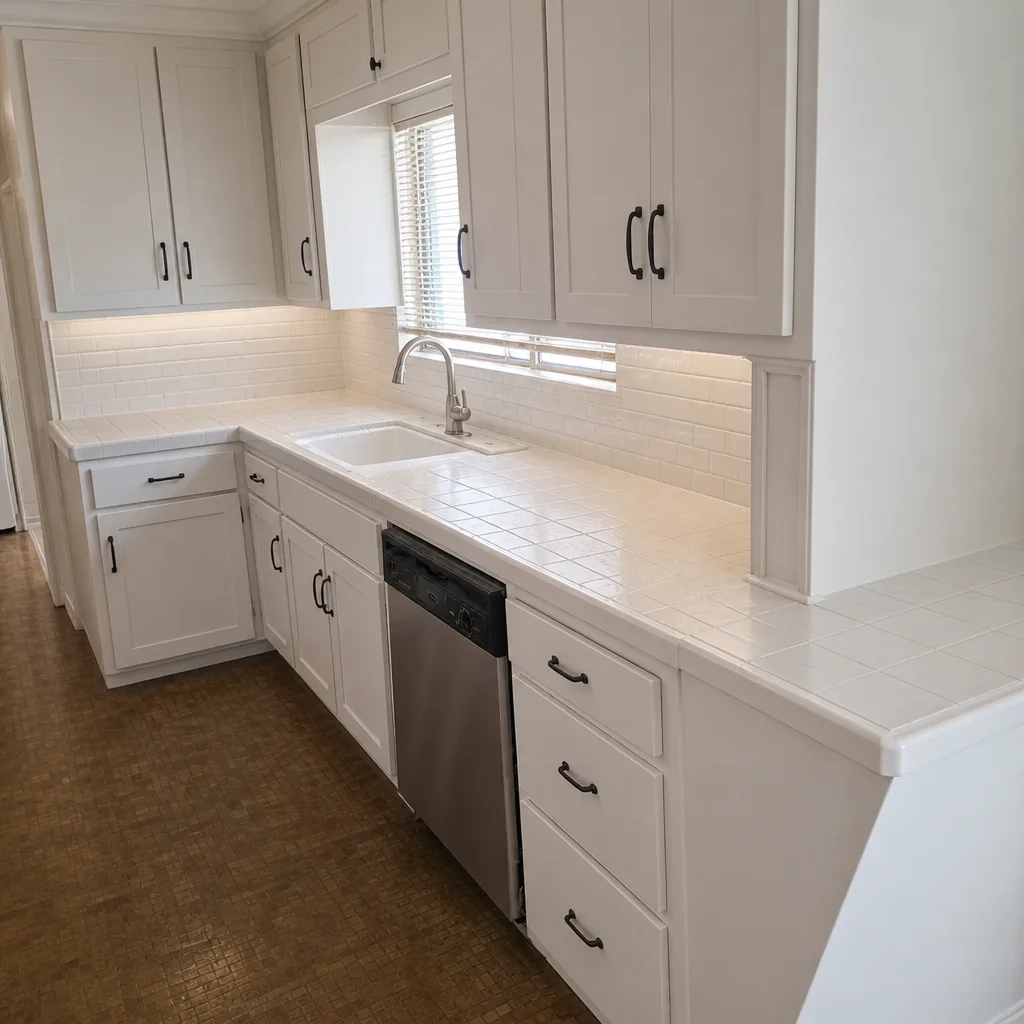
See the difference
 Before
 After
 Before
 After
 Before
 After
When to Call a Professional
If you’re reading this because a fence you already have is leaning, rusting, missing panels, or wobbling at the posts, that’s a call-a-professional situation, not a weekend project. A leaning gate post is usually a sign that the concrete failed and the post needs to be replaced, not anchored. A gate that drags or catches is a sign that the posts have shifted, and the fix is structural, not a hardware swap. On a new installation, call a pro before the first shovel anywhere a permit, setback, or utility question is in play. It’s not worth saving a few hundred on labor if the fence has to come down and get re-permitted.
Groundwork Construction Co. of West Covina offers free estimates in West Covina. Call (844) 662-2335, and we’ll walk the yard, confirm the setbacks, and put the number and the specs in writing, with line items, before you sign anything.
Frequently Asked Questions
Set fence posts at roughly one-third of the above-ground height and never less than 24 inches, so a 6-foot privacy fence needs about 30 to 36 inches of post below grade, and a 7- or 8-foot post needs 36 to 42 inches. West Covina’s hot, dry summers and Santa Ana wind loads make the deeper end of that range the safer call. Ask your installer to show you the depth on the gate posts before the concrete goes in. Call (844) 662-2335 for a free estimate.
A lump-sum price with no line items is the biggest single red flag, because it’s the one that hides every other shortcut. A bid missing linear footage, post count, material brand and rating, permit scope, and warranty terms leaves you with no way to hold anyone accountable when the fence fails. Ask for a written line-item bid before you compare two quotes. Call (844) 662-2335 for a free, itemized estimate.
Most rear yard fences at or under the zoning height limit in West Covina don’t require a building permit, but front-yard fences, corner-lot fences, and any fence over the allowed height for the zone usually do, and placement within the setback matters regardless. The safe move is to confirm zoning with the city before the first post goes in. A contractor who won’t bring up setbacks on the walkthrough is a warning sign. Call (844) 662-2335 for an estimate that covers the permit and setback questions upfront.
A new fence that leans within a year almost always points to a shallow post, dry-packed concrete, or both. When the post is set under 24 inches, or the concrete was the powder-in-the-hole shortcut, the first wet winter is enough to shift the post. The fix is to dig out the post, reset it at the correct depth in properly mixed concrete. Call (844) 662-2335 for an inspection and free estimate.
Yes. Properly mixed concrete (4,000 PSI bagged mix, or a wheelbarrow mix at the right ratios) holds a post plumb for 20+ years. Dry-pack shortcut concrete fails within 1 to 2 winters because the powder never fully hydrates. That difference shows up on the invoice two years later as a full reset bill. Ask your installer before the pour how they mix. Call (844) 662-2335 for a free estimate with written concrete specs.
Ask this exact question: “Have you called 811, and when’s the mark-by date?” In California, 811 notification is required at least two working days before any excavation, and a contractor who can’t answer that question cleanly either doesn’t know the rules or isn’t following them. Ask it before the shovel hits the dirt, and you’ll learn more than any review will tell you. Call (844) 662-2335 for a free estimate from a crew that runs 811 on every job.
The Bottom Line
A failing fence is rarely a surprise. The post was too shallow, the concrete was dry-packed, the quote didn’t specify materials, or the permit was skipped. Every warning sign in this guide is visible before the concrete cures, which means every one of them is catchable. Get a written line-item bid with brand-name material specs, ask the 811 question, watch the post depth on the gate post before it gets poured, and check plumb with a phone level on day one. Groundwork Construction Co. of West Covina provides free estimates for fence and full-scope home construction, backed in writing with the 730-Day Done Right Promise. Reach out to our team through the Groundwork Construction Co. of West Covina home page, or call to schedule a walkthrough.
Call (844) 662-2335 for your free estimate in West Covina. The number you see is the number you pay, the work is written into a 730-Day Done Right Promise, and a live person answers the phone, 24 hours a day, seven days a week.
Written by the team at Groundwork Construction Co. of West Covina.