Last updated November 18, 2026






Free written scope consultation - allowances, timeline, and change-order rules on paper before a single trade is scheduled
Bathroom Remodeling Maintenance Schedule: What to Do and When
Most bathroom caulk failures that void waterproofing warranties happen within 18 months. Not because the work was bad, but because no one told the homeowner what to check at month six. A bathroom remodel is only as good as what you do in the two years after the last tile is set, and in our experience across West Covina, that window is where investments either hold or quietly fail. This guide lays out the exact 30/90/180/365-day inspection sequence, shows you which tasks protect your contractor warranty and which are purely cosmetic, and explains how West Covina’s dry heat and hard water change the maintenance math. By the end, you’ll know what to check, when to check it, and what a failing shower pan actually looks like before water reaches the subfloor.
Quick Answer
A bathroom remodel needs a structured inspection at 30, 90, 180, and 365 days after completion, followed by a twice-yearly routine. The first year is about catching installation-related settling – grout shrinkage, caulk separation, and drain movement – while years two onward focus on sealing, re-caulking, and moisture control. Most of the tasks that protect your workmanship warranty take less than 20 minutes each. The ones that void it usually involve ignoring active water intrusion or using abrasive cleaners on sealed stone.
Styles & brands we work with
- Kitchen remodeling
- Bathroom remodeling
- Home additions & ADU
- Roofing
- Windows & doors
- Driveway & pavers
- Fence
Table of Contents
- Why a Post-Remodel Maintenance Schedule Matters
- The 30/90/180/365-Day Inspection Sequence
- Grout, Caulk, and Waterproofing: What Fails First
- How to Spot a Failing Shower Pan Liner
- West Covina Climate and Hard Water: The Local Factor
- Warranty vs. Cosmetic: What Maintenance Actually Protects
- The Twice-Yearly Routine After Year One
- Common Mistakes to Avoid
Why a Post-Remodel Maintenance Schedule Matters
A bathroom is the wettest room in your house. Tile and grout look permanent, but they’re a decorative skin over a waterproofing system that does the actual work. That system – the pan liner, the vapor barrier, the weep holes in the drain – has a service life measured in years, not decades, if it’s ignored. In West Covina, where summer humidity drops into the teens and winter brings occasional hard-water scale from the municipal supply, that system gets tested harder than most homeowners realize.
We’ve seen it hundreds of times. A homeowner spends $18,000 to $35,000 on a West Covina bathroom remodel, loves the finished tile, and then never thinks about the room again until water stains appear on the ceiling below. By then, the repair bill often runs $4,000 to $9,000 because the subfloor and framing have to be opened up. A maintenance schedule is not housekeeping. It’s construction discipline applied after construction ends.
Three things happen in the first year that most people don’t expect:
- Grout shrinks and micro-cracks. Cementitious grout cures over weeks and continues to move slightly with seasonal temperature swings. Hairline cracks in wet areas are normal at month three to six – and repairable – but only if you catch them.
- Caulk joints separate. Silicone caulk bonds well but moves with the substrate. Anywhere tile meets a different material (tub, shower frame, floor) is a stress point. Those joints fail first.
- Small leaks hide. A pinhole in a supply line behind the vanity, a loose shower valve packing, or a slow drain seal leak can damage framing for months before you see evidence.
We’re a construction firm, not a cleaning service. We don’t want to sell you a monthly checklist. But we do want you to understand that the difference between a bathroom that lasts 20 years and one that fails in five is often a homeowner who knows what to look for in the two years after the last tile goes down.
The 30/90/180/365-Day Inspection Sequence
This is the core of the guide: a dated schedule specific to newly installed tile, grout, and waterproofing. Print it. Set reminders on your phone. Each inspection takes 15 to 30 minutes and covers the same areas in escalating detail.
Day 30: The Settling Check
By day 30, materials have had a full month to settle. This inspection is about catching early movement before it becomes damage.
- Inspect every caulk joint. Run your finger along the seam where tile meets tub, floor, and shower frame. Any gap, discoloration, or soft spot needs attention. Silicone that’s pulling away at day 30 is a sign the joint wasn’t fully dry when applied – a fixable issue now, a mold problem in six months.
- Check grout lines in the shower floor. Hairline cracks are common and usually benign. Larger cracks (wider than a credit card edge) or grout that crumbles to the touch warrant a closer look.
- Test the shower drain. Run water for five minutes and watch around the drain flange. Any movement of the flange itself, or water pooling at the perimeter, is worth flagging.
- Look under the vanity and toilet. A quick visual for moisture, corrosion on supply fittings, or loose connections.
Day 90: The Waterproofing Check
At three months, seasonal temperature shifts start doing their work. Focus on the areas where waterproofing matters most.
- Re-inspect all caulk joints. Same routine as day 30, plus check the interior corners of the shower enclosure.
- Look for efflorescence. White, chalky streaks on grout indicate moisture pushing through from behind. A small amount can be scrubbed away, but recurring efflorescence in a new shower points to a waterproofing issue.
- Check the shower door and frame. Door sweeps and seals degrade within the first quarter. Worn sweeps let water track onto your bathroom floor without ever entering the shower drain.
- Inspect the exhaust fan. Hold a tissue to the grille – if it doesn’t pull the tissue flat, the fan is underperforming or ducted improperly. In West Covina’s dry climate, this gets overlooked, but bathroom humidity still needs extraction.
Day 180: The Deeper Look
Month six is the pivotal inspection. Most caulk failures that void waterproofing warranties show up here. This is exactly the check point the opening stat refers to.
- Re-caulk any failing joints. By month six, you’ll know which joints need re-doing. Scrape, clean, and re-apply 100% silicone – not paintable acrylic caulk.
- Seal natural stone and grout. Most sealers last 6 to 12 months in wet areas. If water beads now but absorbs within 5 minutes in a spot test, it needs resealing.
- Check the toilet base and flange area. A soft spot under the toilet, or lingering odor, can indicate a failing wax ring.
- Look up. Water stains on the ceiling below the bathroom (from a room underneath) are the single most common way hidden leaks get discovered. If you don’t have a room below, look at the drywall around the shower for bubbling paint or soft spots.
Day 365: The Annual Full Review
The one-year inspection resets you into the maintenance routine. Complete a thorough walkthrough of every fixture, seal, and drain, plus:
- Test the shower pan for hidden leaks. Plug the drain (using an inflatable test plug), fill the pan with about an inch of water, and let it sit four hours. Mark the water level. Any drop more than evapotranspiration indicates a leak. This is the single most valuable test in this guide.
- Inspect supply line conditions. Flexible hoses under vanities and toilets should be replaced every 5 to 7 years regardless of appearance. Look for bulges or abrasion.
- Check exhaust fan function and clean the grille.
- Re-seal all grout. The annual re-seal costs $50 to $150 in materials if you do it yourself.
Grout, Caulk, and Waterproofing: What Fails First
If you only learn one part of this schedule, learn this: caulk is your first line of defense, grout is your second, and the waterproofing membrane is the backup that fails silently. They fail in that order, which means if you maintain the first two, the third rarely gets tested.
Caulk is the flexible joint compound at every transition. It’s vulnerable because it sits at the intersection of two materials that move at different rates. Silicone caulk lasts 3 to 5 years in a well-maintained bathroom. It fails faster if applied over wet surfaces, if the wrong formulation was used (acrylic instead of silicone), or if the joint is repeatedly exposed to standing water.
Grout is the rigid material between tiles. Cementitious grout is porous and depends on sealer for water resistance. Epoxy grout doesn’t require sealing and lasts far longer, but it’s not universal in residential work. If your remodel used cementitious grout, sealer life is 6 to 12 months in showers, up to 24 months on dry bathroom floors.
Waterproofing membranes (sheet, liquid, or bonded) sit behind the tile. They’re designed to last decades. The way they fail is not through wear but through improper installation, or through gaps created when tile and grout allow persistent moisture to sit against the membrane. A pinhole in the membrane takes years to cause visible damage, and by the time the stain appears, the repair is significant.
Here’s where West Covina specifics matter. The municipal water here runs moderately hard, and the summer climate is dry enough that bathroom surfaces dry quickly between uses. That’s actually helpful. But two hidden factors work against you: the occasional monsoon-season humidity spikes can drive moisture into grout that looks dry, and the fireplace-to-shower temperature swings in homes with poor insulation can accelerate caulk movement. If you’ve noticed that your West Covina bathroom’s caulk needs re-doing every other year, you’re on schedule – most homes in the area are.
For homeowners weighing material choices on a new bathroom, the tile and grout system matters as much as the design. The brands that we work with, from Kohler fixtures to a curated set of tile suppliers, are chosen because they hold up to this exact maintenance cycle. If you’re still in the planning stage and comparing options, our Groundwork Construction Co. of West Covina home page has the full service picture, and a free design consult is the right way to lock in material decisions that fit how you’ll maintain the room.
How to Spot a Failing Shower Pan Liner
The shower pan liner is the waterproof layer under your shower floor tile. It’s installed before tile goes down and is designed to last 30 years or more. When it fails, water reaches the subfloor and framing before any visible indication appears in the shower. That’s why catching it early matters.
Here’s what a failing pan liner looks like from inside the bathroom, in the order these signs typically appear:
- Loose or hollow-sounding floor tile. Tap the shower floor tile with the handle of a screwdriver. A hollow “clack” versus a solid “thunk” can indicate the setting bed has separated, often because water is trapped beneath.
- Grout discoloration or efflorescence around the drain. White mineral streaks at the drain flange are often the first visible clue.
- Movement at the drain flange. If the drain ring shifts when you press on it, or if the caulk joint around it moves, the connection to the liner is compromised.
- Persistent odor. A musty smell that doesn’t clear after cleaning often means moisture is trapped in the pan assembly.
- Water staining on drywall or paint near the shower. Look at the bottom 12 inches of wall around the shower. Bubbling paint, soft drywall, or a stain line is a red flag.
- Concrete or floor substrate staining in an adjacent space. If any part of the shower footprint abuts a slab or a nearby floor, look for efflorescence or dampness there.
The four-hour water test described in the 365-day inspection is the definitive check. If the pan doesn’t hold water, the liner or the drain seal has failed. That’s a repair, not a maintenance task – and it’s exactly the kind of hidden damage a schedule catches before it becomes a $9,000 subfloor replacement.
The shrink and settle that bathrooms go through in the first year is real, and it’s why pan issues often surface between month 6 and month 18. In the West Covina market, we’ve seen slab-on-grade showers that developed pan leaks after the second summer – generally because the setting bed didn’t fully cure before the home’s seasonal thermal cycling kicked in. That’s not a reason to worry; it’s a reason to test.
West Covina Climate and Hard Water: The Local Factor
Maintenance schedules written for coastal California don’t map cleanly onto West Covina. The microclimate here is different in three ways that directly affect your bathroom.
Dry heat. Summer humidity in West Covina frequently drops below 30 percent, and afternoon temperatures regularly climb past 95°F. That dry cycle shrinks wood framing, stresses caulk joints, and can cause grout to hairline-crack faster than it would in a Pasadena or Whittier bathroom that runs a few degrees cooler. On the flip side, the dry air means fewer chronic moisture problems than coastal homes see. The maintenance response is to lean harder into the 90-day and 180-day caulk inspections, because those joints move more.
Hard water. West Covina’s municipal water runs moderately hard, and it’s the number one cause of premature grout sealer breakdown. Water spots, mineral buildup, and soap scum accelerate across the San Gabriel Valley. Sealer that would last 12 months with soft water often needs re-application at 8 or 9 months here. The spot test (a few drops of water on the grout; if it beads, sealer is working, if it absorbs within 5 minutes, it isn’t) is your friend.
Seismic activity and seasonal settling. West Covina sits in an active seismic region. Small tremors and the ground movement that comes with them don’t crack a properly built bathroom, but they do stress caulk joints and can open micro-cracks in grout over time. This is normal, and it’s another reason the 30/90/180/365-day schedule is worth keeping – you’re checking for movement-related issues that accumulate quietly.
Homeowners in neighborhoods like Cameron Park and the South Hills tend to have older housing stock, which means bathrooms with settled substrates that need closer attention than new construction. The newer developments around the mall and along the 10 corridor tend to hold their initial installation better but still follow the same maintenance curve. We’ve seen this difference play out in hundreds of West Covina homes, and it changes the emphasis of what to check, not the schedule itself.
The local factor extends to materials. If you’re comparing finish choices on a West Covina bathroom, pick materials that hold up in hard water – porcelain tile over natural stone if you want low maintenance, epoxy grout over cementitious if you want to skip the sealer cycle. The material decisions made at the design phase determine the maintenance labor you’ll do for the next 15 years.
Warranty vs. Cosmetic: What Maintenance Actually Protects
One of the most misunderstood parts of a bathroom remodel is which maintenance tasks protect your contractor warranty, and which are purely cosmetic. Get this wrong, and you can void coverage without realizing it.
Here’s the distinction we work with on every Groundwork bathroom project:
- Protects your warranty: Re-caulking failing joints within the first year. Fixing active water intrusion. Keeping the shower drain clear of hair and debris. Using appropriate sealers on grout and stone. Reporting visible movement at drains, fixtures, or tile within 30 days of noticing it.
- Cosmetic, warranty-neutral: Scrubbing mineral stains. Replacing a worn shower door sweep. Upgrading the towel bar. Repainting the drywall above the tile.
- Can void or limit coverage: Using abrasive cleaners on sealed natural stone or cured epoxy grout. Ignoring active water intrusion for weeks or months. Attempting a DIY re-caulk that traps moisture. Allowing standing water on a floor not designed for it.
This is where the Groundwork Construction Co. of West Covina 730-Day Done Right Promise matters. If something we installed fails because of workmanship, we make it right – for two full years after your project closes. That covers installation defects: a shower pan that leaks because the liner was installed wrong, a tile that pops loose because of improper thin-set, a drain that loosens after a few months. It does not cover damage that comes from ignoring maintenance or from normal wear.
The distinction is fair, and it’s why this guide exists. The 730-Day Done Right Promise is designed to protect you from our mistakes. Your maintenance schedule is designed to protect you from everything else. Both are working toward the same goal: a bathroom that’s still performing at year 15.
If you’re considering a bathroom remodel or have questions about which of your current issues might be covered, we’d rather have that conversation now than after damage sets in. Free estimates are always available – that’s a standing offer.
The Twice-Yearly Routine After Year One
After the first-year sequence, drop to a twice-yearly routine. Schedule the two visits in spring and fall, and align them with daylight savings changes so you don’t forget.
Spring (or move-in anniversary):
- Re-seal grout and natural stone.
- Inspect all caulk joints and re-caulk anything failing.
- Test the shower pan with the four-hour water test.
- Clean or replace the exhaust fan grille; verify airflow.
- Check under all sinks and around the toilet for leaks, corrosion, or soft substrate.
- Replace flexible supply hoses if they’re 5 or more years old.
Fall (or start of cooling season):
- Deep-clean tile and grout with a pH-neutral cleaner (not vinegar on natural stone).
- Inspect caulk joints again – the temperature drop in West Covina often opens small gaps.
- Check shower door seals and sweeps.
- Test GFCI outlets in the bathroom (monthly is best practice, but fall is the minimum).
- Look at ceiling and adjacent walls for any water staining.
- Test the toilet flapper and water level.
Each seasonal routine takes 45 to 90 minutes. Total cost in materials runs $50 to $150 a year. The alternative – ignoring it – typically costs 10 to 60 times that in repairs within a decade. That’s the entire economic argument for the schedule in one sentence.
If you’re extending your maintenance window into a broader home system, the same logic applies to exterior surfaces. Driveways and pavers need sealing on a similar rhythm and are exposed to the same West Covina sun, so a coordinated maintenance calendar makes sense. We’ve outlined the surface care cycle on our Driveway & Pavers in West Covina page if you want the full property-wide view.
Common Mistakes to Avoid
- Skipping the 180-day inspection. Month six is when caulk failures that void waterproofing warranties appear. Missing this inspection is the single most common reason we see preventable water damage in West Covina bathrooms. The fix costs $30 in caulk; the delay costs thousands.
- Using the wrong caulk. Acrylic caulk should never go in a shower or tub surround. It’s mold food. 100% silicone is the standard, and it needs 24 hours cure time in a dry bathroom – a rule that gets skipped constantly.
- Sealing over dirty grout. Sealer applied over soap scum or hard-water deposits doesn’t bond. In West Covina’s hard water, this means the sealer fails within weeks. Clean, dry, then seal – in that order.
- Ignoring a soft spot under the toilet. A soft subfloor under the toilet is a failing wax ring, and it doesn’t self-correct. In our experience, this is the most ignored early warning sign in the entire room.
- Vinegar on natural stone. Vinegar is a great hard-water cleaner for ceramic tile and glass, and it will etch marble or travertine. In West Covina, where hard-water scale is common, this mistake is easy to make.
- Assuming the warranty covers wear. The 730-Day Done Right Promise covers workmanship. It does not cover damage from ignored maintenance. Read the maintenance section of your contract once; it’ll save an argument later.
- Skipping the shower pan water test. It takes four hours of waiting and about 10 minutes of labor. It’s the only reliable way to know whether the liner under your shower floor is intact.
See the difference
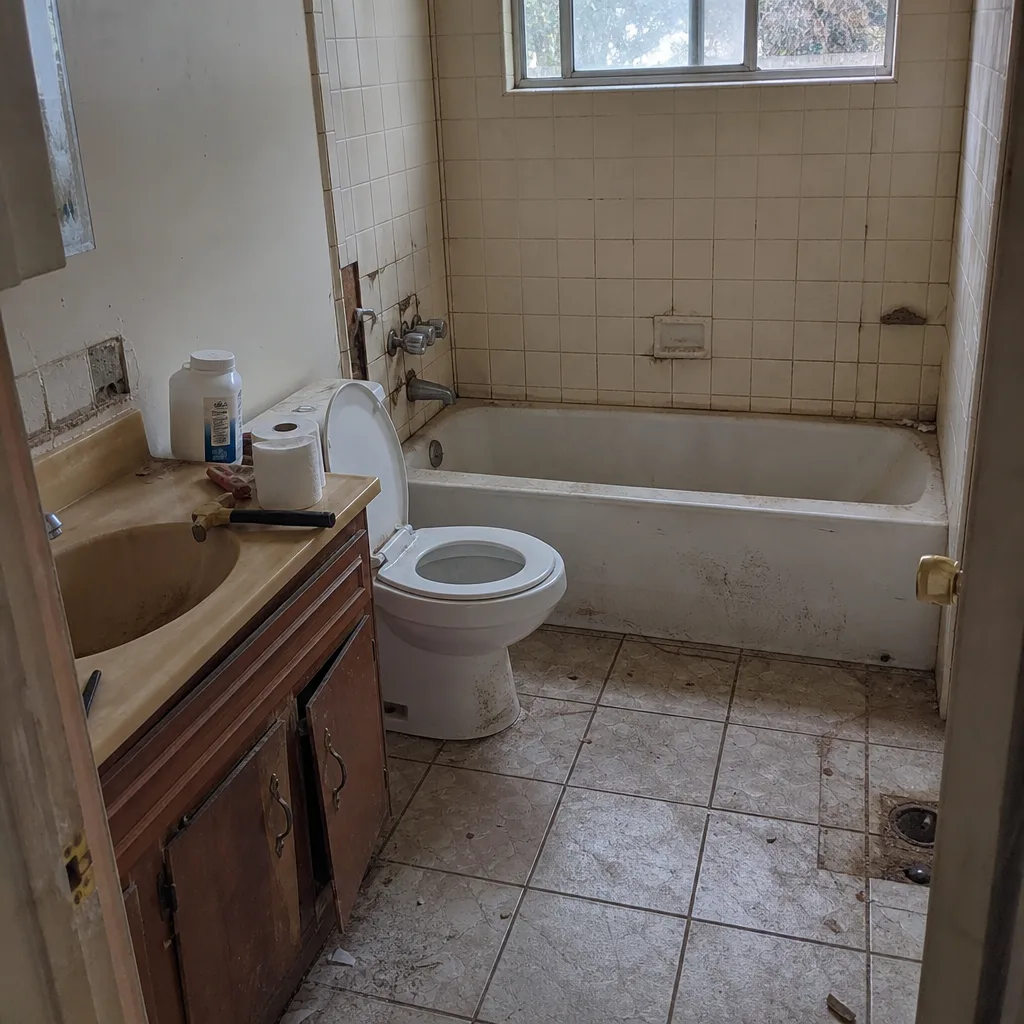 Before
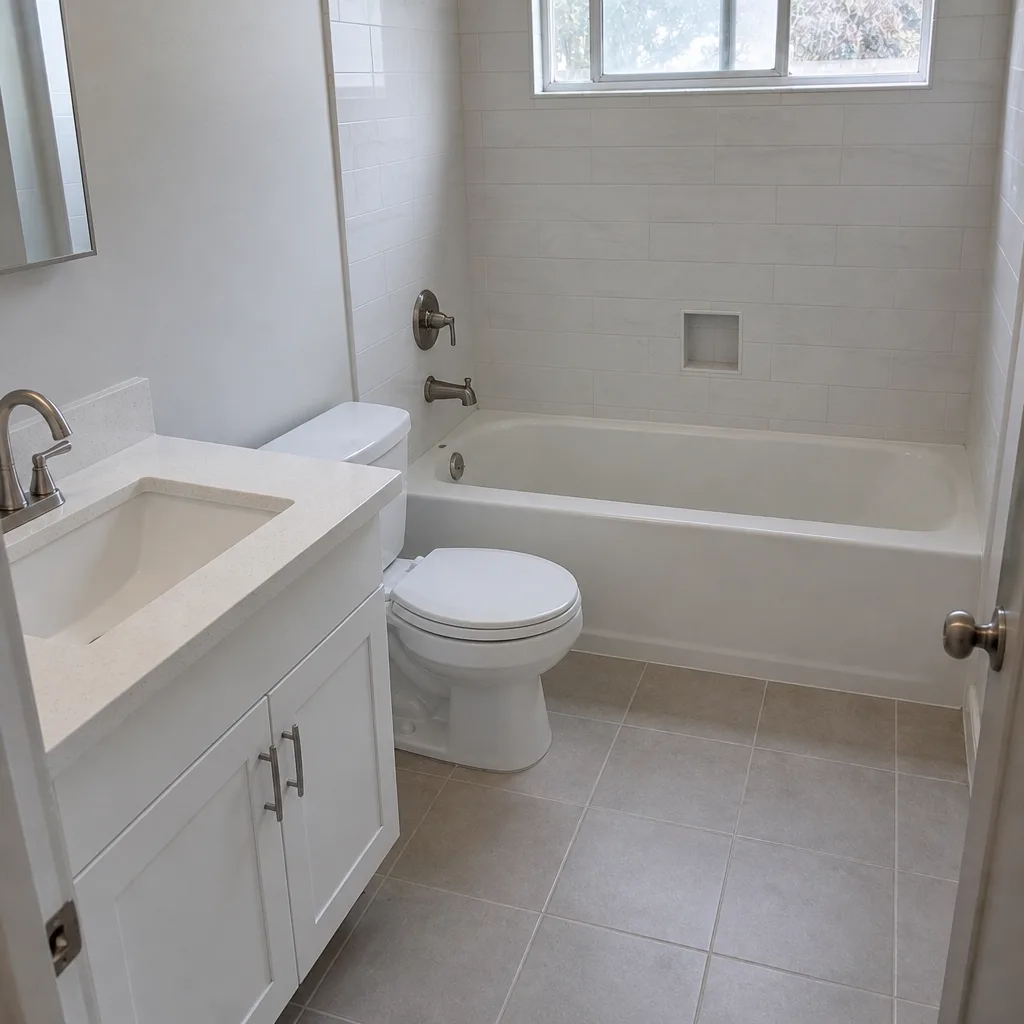 After
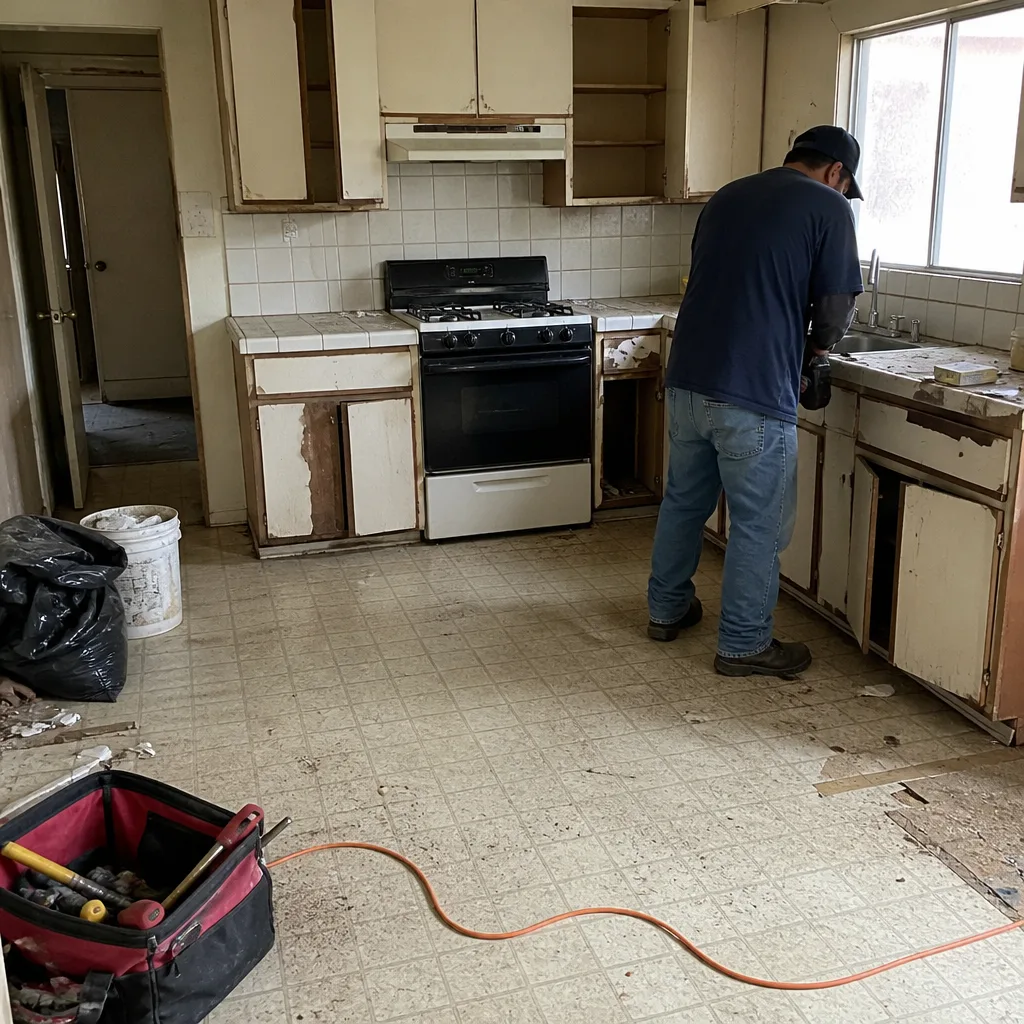 Before
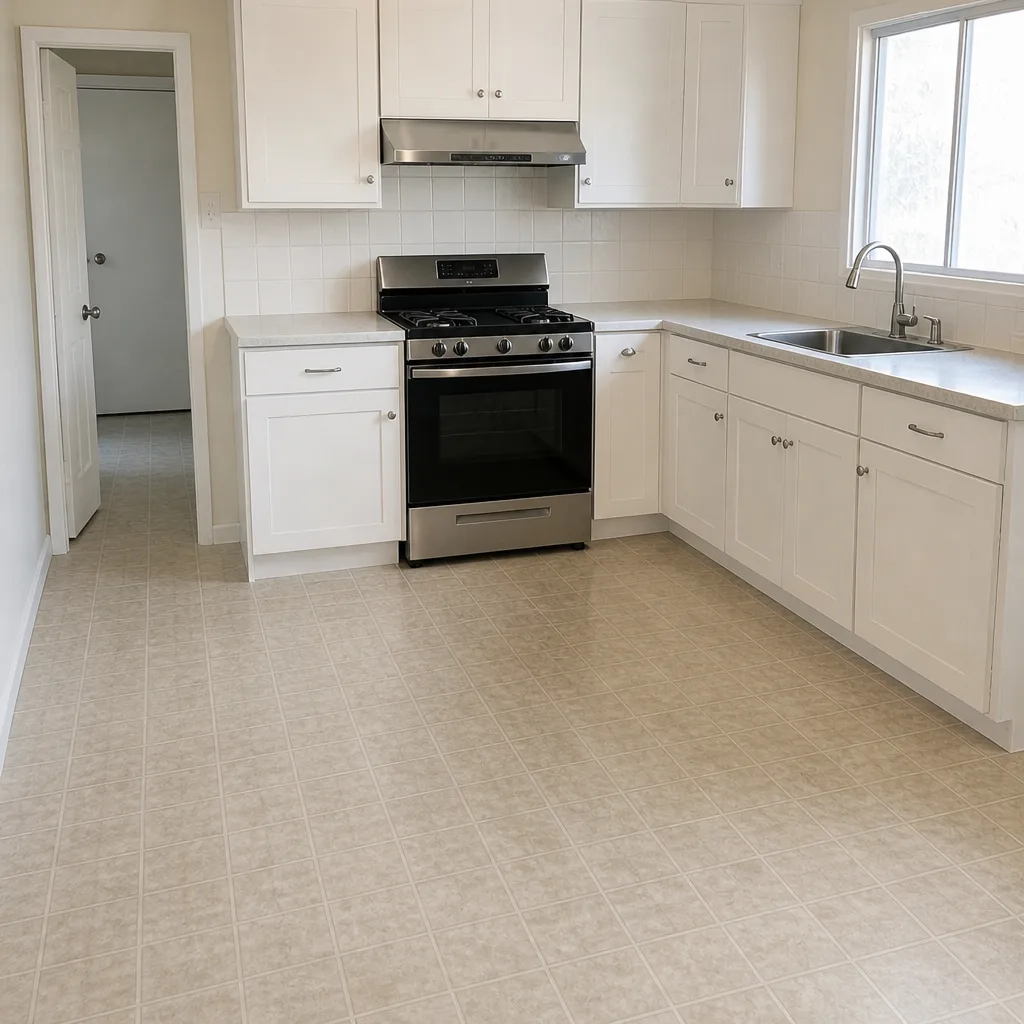 After
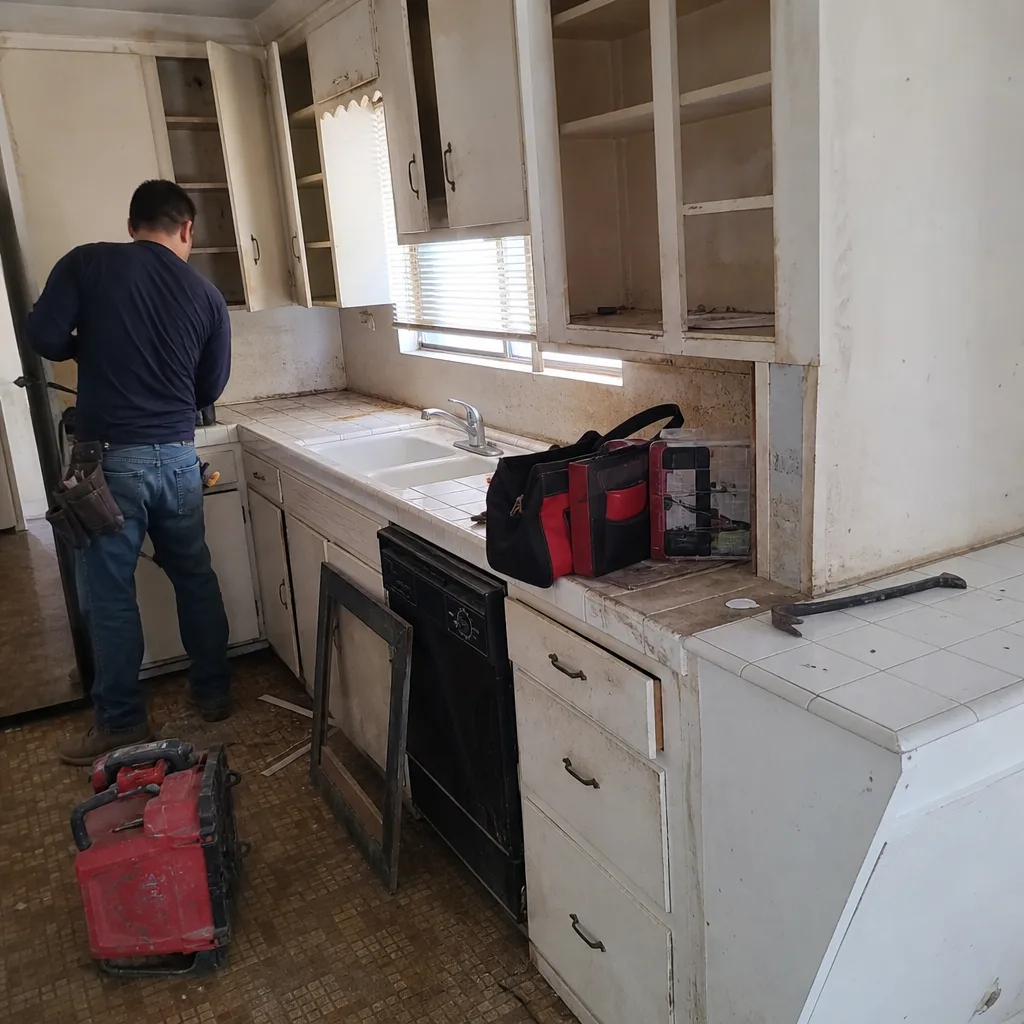 Before
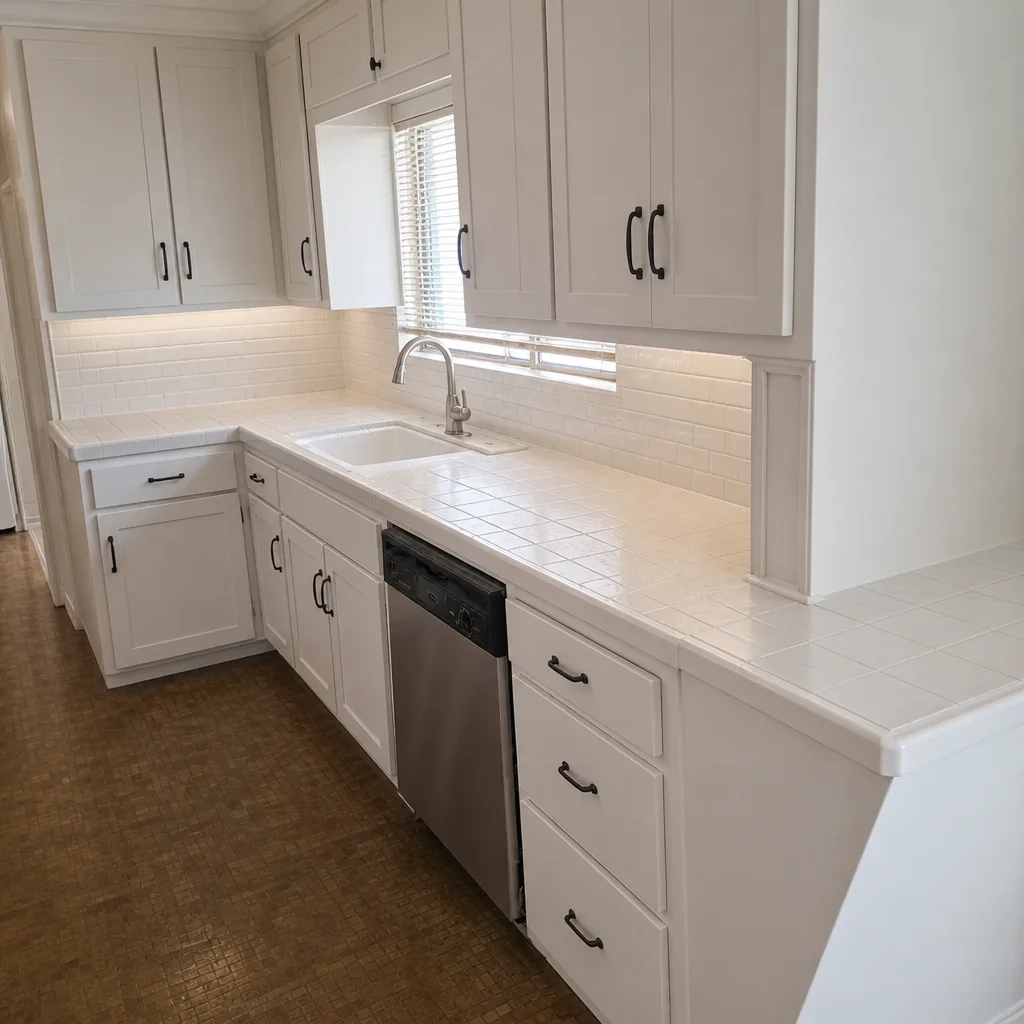 After
When to Call a Professional
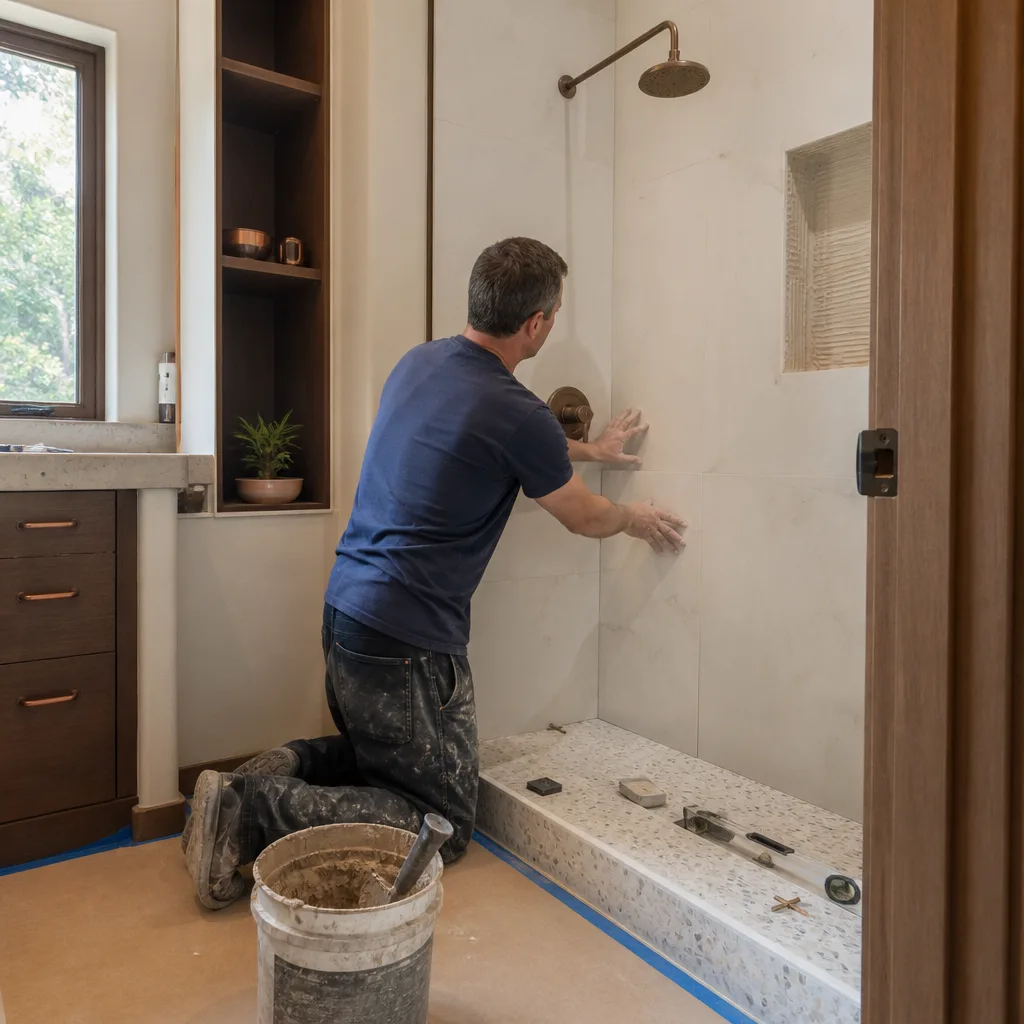
Some maintenance you handle. Some you shouldn’t. Call a professional when you see: water stains on a ceiling below the bathroom, soft or spongy flooring near the shower or toilet, a shower drain that moves or leaks, tile that sounds hollow when tapped, persistent musty odors that return after cleaning, or a failed shower pan water test. These are signs that the waterproofing system has already been compromised, and the repair scope expands with every week of delay. Do not attempt to patch a failing pan liner, re-seal a leaking drain flange, or open up a shower wall to diagnose moisture – these are licensed-trade repairs, and errors here can turn a $900 fix into a $9,000 rebuild.
Groundwork Construction Co. of West Covina offers free estimates in West Covina – call (844) 662-2335. We’ll tell you what’s maintenance, what’s wear, and what’s a workmanship issue. If it falls under the 730-Day Done Right Promise, we make it right.
If your bathroom project is still ahead of you rather than behind, the planning stage is the best time to lock in materials and waterproofing details that will make maintenance easier for years. Our Home Additions & ADU in West Covina page covers the broader whole-home construction picture if your bathroom is part of a larger project.
Frequently Asked Questions
Plan on re-caulking shower and tub joints within the first 12 to 18 months, then every 2 to 3 years after. West Covina’s dry summers and day-night temperature swings move caulk joints faster than coastal climates, so the initial re-caulk rarely lasts the full 3 to 5 years a silicone joint would ideally achieve. Inspect at 90 and 180 days and re-caulk as soon as you see any gap or discoloration. Call (844) 662-2335 if you want our team to walk the joints with you – estimates are free.
It can limit it, yes. The 730-Day Done Right Promise covers installation defects, not damage caused by ignored maintenance. If a shower pan leaks because the liner was installed wrong, that’s covered. If a pan leaks because standing water was left against a failing caulk joint for six months, that’s wear and tear, which isn’t covered. The line between them is usually clear once the inspection history is documented – which is another reason to keep the 30/90/180/365-day schedule.
Hollow-sounding floor tile, white efflorescence at the drain, a drain flange that moves under pressure, and a persistent musty odor are the four earliest signs. The definitive test is a four-hour water hold using an inflatable test plug in the drain – if the water level drops, the liner or drain seal has failed. Any of these signs warrants a professional look. Call (844) 662-2335 to schedule an evaluation; the estimate is free.
Warranty-protecting maintenance is anything that keeps the waterproofing system intact: re-caulking failing joints, sealing grout on schedule, keeping drains clear, and reporting active leaks within 30 days. Cosmetic tasks like cleaning mineral stains, replacing a shower door sweep, or repainting the drywall above the tile don’t affect coverage. If you’re unsure which category a task falls under, ask before you skip it – a two-minute question can protect a two-year guarantee.
Expect $50 to $150 per year in materials if you handle the routine yourself – sealer, caulk, minor hardware. If you outsource the annual inspection and re-sealing, budget $250 to $500 per year. Compare that with the $4,000 to $9,000 cost of a pan leak repair or subfloor replacement, and the math is clear. Call (844) 662-2335 for an exact quote on annual maintenance service – estimates are free.
Yes. A failing pan liner can show no visible surface symptoms for months – the water is traveling below the tile where you can’t see it. The four-hour water hold test is the only reliable check. Do it at 365 days after a remodel, then annually. If the pan doesn’t hold water, stop using the shower until it’s evaluated by a professional.
The Bottom Line
A bathroom remodel is a 20-year investment that depends on what happens in the first 24 months. The 30/90/180/365-day inspection sequence catches caulk and grout failures before they reach the waterproofing system, and it’s the single best protection you have beyond a solid workmanship warranty. West Covina’s dry heat and hard water accelerate the maintenance cycle, so local homeowners should plan on slightly more frequent re-sealing than the statewide average. The 730-Day Done Right Promise covers what we installed; the maintenance schedule covers everything else. Together, they’re how a bathroom stays a bathroom instead of becoming a repair project. If your bathroom is due for a checkup – or you’re planning a West Covina remodel and want a free estimate and design consult – call (844) 662-2335. Live person on the other end, 24/7.
Written by the team at Groundwork Construction Co. of West Covina.