Last updated November 18, 2026
Free written scope consultation - allowances, timeline, and change-order rules on paper before a single trade is scheduled
The Complete Driveway & Pavers Guide for West Covina Homeowners
Most driveway paver failures in the San Gabriel Valley happen within 3 years – and roughly 90% trace back to base prep decisions made in the first two days of the job, long before a single paver is laid. If you live in West Covina, that statistic matters more than it does almost anywhere else in Southern California, because the ground under your driveway is trying to move. This guide explains why West Covina’s clay-heavy soil and brutal summer heat cycles wreck poorly built driveways, how to specify a base that survives them, and which material actually holds up on a west-facing slope. We’ll cover permits, drainage, and the exact questions to ask a contractor before you sign. By the end you’ll know why a driveway is a structural system, not a cosmetic upgrade.
Quick Answer
A driveway that lasts in West Covina needs a compacted aggregate base of 8 to 12 inches (deeper than the 4 to 6 inches many crews install), engineered drainage that moves water away from the slab, and a paver material matched to high-UV, high-heat exposure. Expect to pay roughly $14 to $28 per square foot installed for concrete pavers, with natural stone and premium permeable systems running higher. The base work you can’t see is what determines whether your driveway looks new in year ten or looks like a jigsaw puzzle in year three.
Styles & brands we work with
- Kitchen remodeling
- Bathroom remodeling
- Home additions & ADU
- Roofing
- Windows & doors
- Driveway & pavers
- Fence
Table of Contents
- Why West Covina’s Clay Soil Breaks Driveways
- The Base Course: Where Every Driveway Is Won or Lost
- Concrete Pavers vs. Natural Stone vs. Permeable Pavers
- Slope and Drainage Engineering for Hillside Lots
- West Covina Permits and HOA Rules for Driveway Replacement
- Questions to Ask a Contractor Before You Sign
- What Pavers Cost in West Covina
- Keeping a New Driveway Looking New
Why West Covina’s Clay Soil Breaks Driveways
The soil across much of West Covina is expansive clay, the kind that swells when it drinks and shrinks when it dries. That’s not a minor detail. Expansive clay can move an inch or more between a wet winter and a dry September, and it does it slowly, unevenly, and with enormous force. A driveway sitting on a shallow base transmits that movement straight up into the pavers, and that’s when you get the telltale symptoms: rocking stones, sand joints washing out, hairline cracks spreading from the corners, and heaving where one section lifts while its neighbor drops.
We’ve watched this play out block after block in West Covina. The neighborhoods near the base of the hills, where lots transition from flatter ground into slope, see the worst of it because water also concentrates there. A driveway that was beautiful at handoff in April can look ten years old by the following spring if the base was built to a generic Southern California spec that assumes stable, sandy soil.
The fix isn’t complicated, but it is deliberate. You break the clay’s grip with a properly graded, compacted aggregate base that spreads load and gives water somewhere to go. You cut and compact in lifts rather than dumping a foot of rock at once. You verify compaction instead of eyeballing it. In our experience, the driveways that survive a decade of West Covina summers are the ones where the crew treated the soil as the adversary, not an afterthought.
- Swelling and shrinking: clay expands when wet and contracts when dry, lifting and settling the pavers above it
- Water trapping: poorly drained clay holds moisture against the base, softening it season after season
- Uneven movement: one section of yard drains differently than the next, so the driveway moves in patches
- Heat cycling: West Covina’s hot, dry summers pull moisture out fast, accelerating shrinkage cracks
The Base Course: Where Every Driveway Is Won or Lost
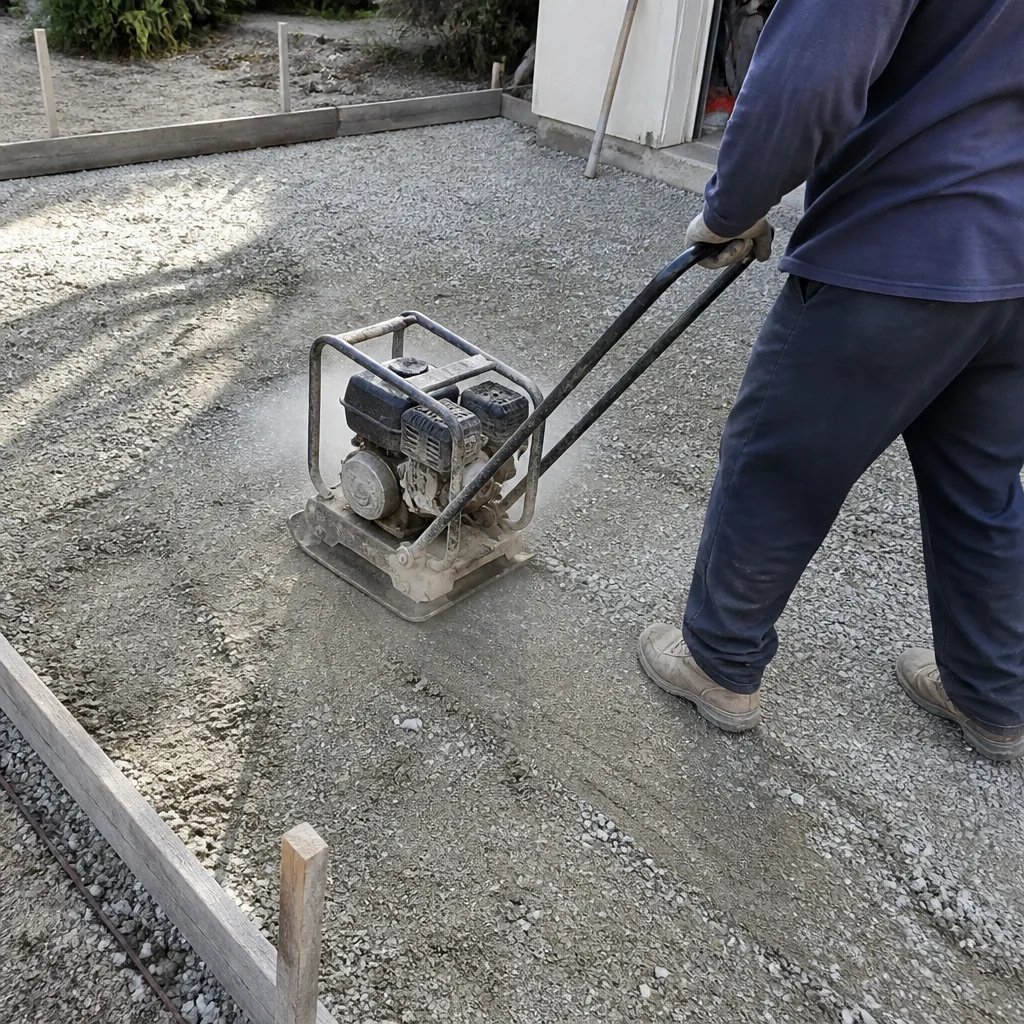
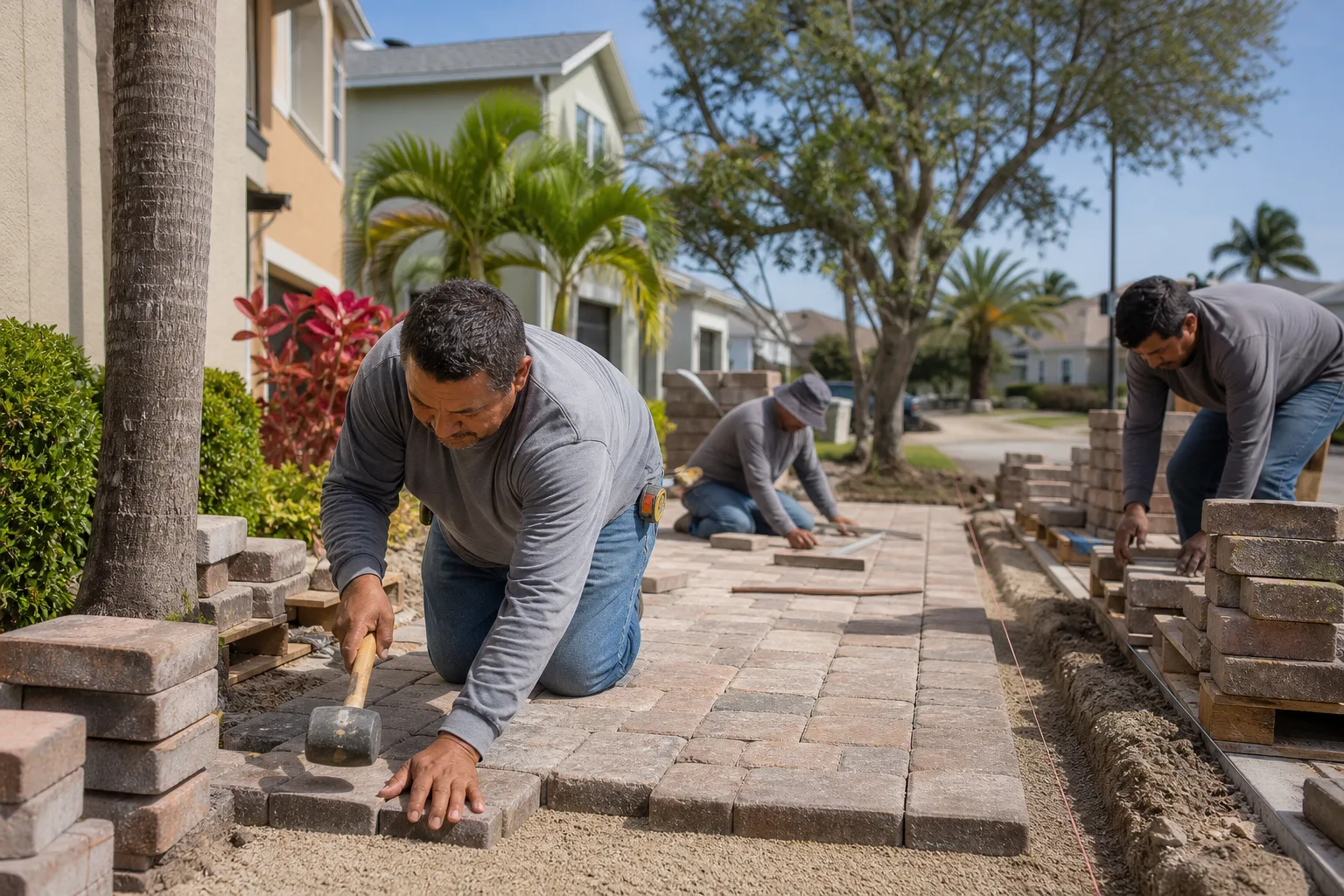
Ask a contractor how deep they’re going on the base and listen carefully. Standard specs for much of Southern California call for 4 to 6 inches of compacted aggregate. For expansive clay in West Covina, that’s often not enough. A base built to handle clay movement typically runs 8 to 12 inches, installed in lifts of 2 to 3 inches and compacted each time with a plate or roller. For driveways carrying heavier vehicles or sitting on the steeper lots, going toward the deeper end is money well spent.
Here’s how a base that actually performs gets built, step by step:
- Excavate to depth. Remove the existing surface and enough subsoil to reach the target base thickness. Cutting corners here means a thin base that flexes.
- Grade and compact the subgrade. Shape the exposed clay so water sheds rather than pools, then compact it before any rock goes down.
- Lay geotextile fabric. A separation fabric keeps clay fines from migrating up into the aggregate and fouling it over time.
- Add aggregate in lifts. Place crushed base rock in 2 to 3 inch layers, watering and compacting each lift before the next.
- Verify compaction. A pro checks density rather than assuming. Loose base is the number one cause of early paver failure.
- Set bedding sand and screed. A thin, uniform sand layer lets the pavers seat evenly across the whole field.
The two days of base work are the days nobody photographs. They’re also the days that decide whether your investment holds. When we quote a West Covina driveway, the base depth and compaction method are line items in writing, not assumptions buried in a lump sum. That’s part of how we keep the Driveway & Pavers in West Covina work accountable to a standard instead of a deadline.
Concrete Pavers vs. Natural Stone vs. Permeable Pavers
Material choice matters more in West Covina than in cooler, cloudier places because the sun here is relentless. A west-facing driveway takes the full afternoon blast of San Gabriel Valley heat, and some materials handle that punishment far better than others. Here’s how the three main options compare under high-UV, high-heat conditions.
Concrete Pavers
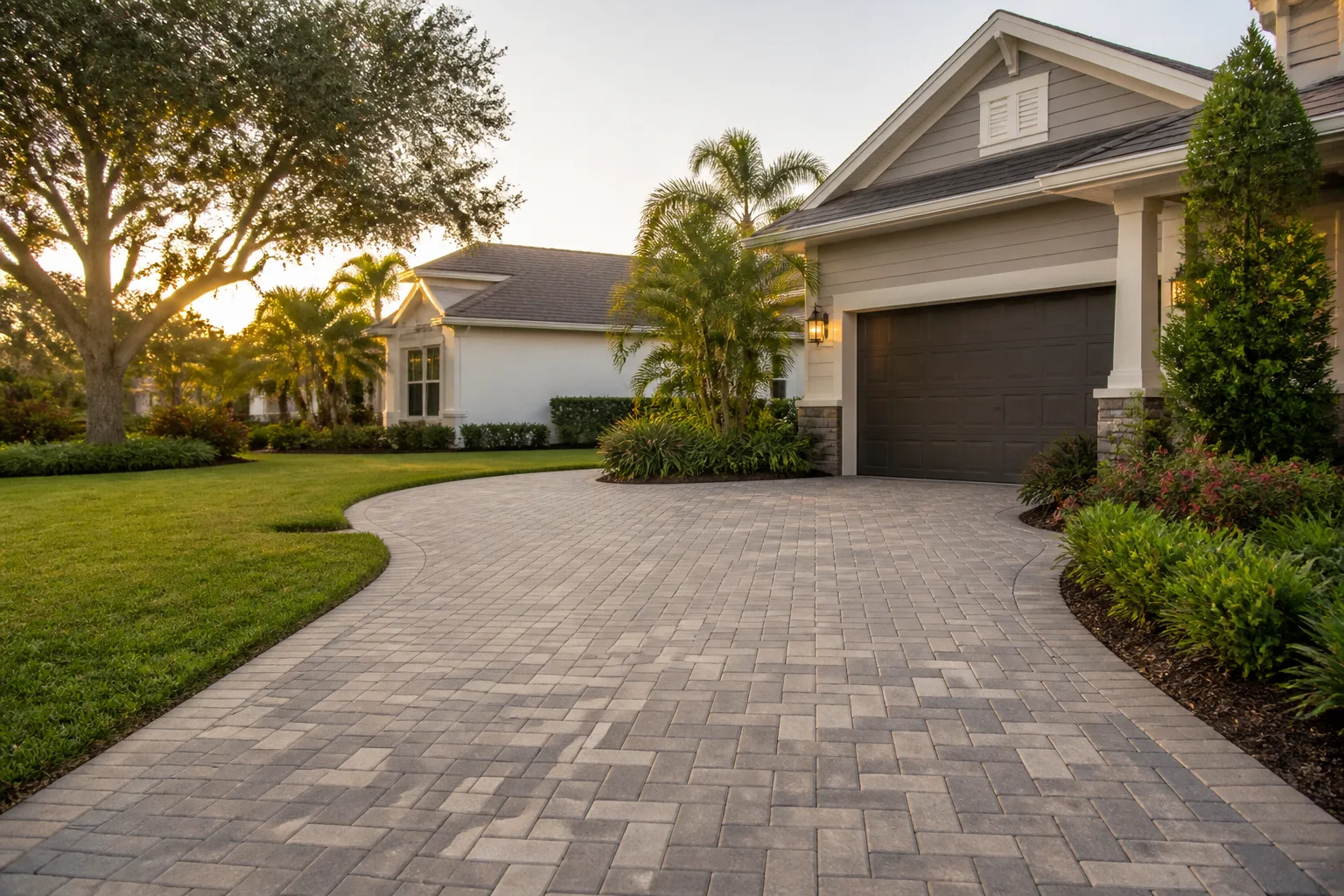
Concrete pavers are the workhorse choice for most West Covina homes. Modern pavers from quality manufacturers are colorfast and UV-stable, so they resist the fading that cheap stamped concrete suffers. They’re modular, which means a cracked or stained paver can be pulled and replaced without tearing up the whole driveway. Brands we specify, like Belgard, hold their color and edge under heat far better than the bargain alternatives. They’re also the most budget-friendly of the three per square foot.
Natural Stone
Natural stone such as travertine, flagstone, or granite delivers a look concrete can’t match, and it handles heat with grace. The catch is that natural stone is heavier, pricier, and less forgiving of a marginal base. On a west-facing West Covina slope, that weight and rigidity mean the sub-base has to be flawless. Stone that shifts because the ground moved underneath it is a very expensive repair.
Permeable Pavers
Permeable pavers let water pass through the joints and into a designed storage layer below, which reduces runoff and helps manage the heavy rain events that soak the San Gabriel Valley in wet years. For a West Covina lot with clay soil and limited drainage, a permeable system can be the smart call, but it only works if the sub-base is engineered for water storage. Permeable pavers dropped onto a shallow base without that design is a recipe for failure. Expect to pay more up front for a system built correctly.
- Best heat and fade resistance: quality concrete pavers and natural stone
- Easiest spot repair: concrete pavers
- Best for drainage-challenged lots: engineered permeable systems
- Most demanding of a perfect base: natural stone
Slope and Drainage Engineering for Hillside Lots
A driveway is a drainage structure disguised as a parking pad. If water can’t get off it and away from the house fast, it will find a way into the base, soften the ground, and start the washout and heaving patterns that plague hillside West Covina neighborhoods. This is where a lot of generic installation advice falls apart: flat-ground specs simply don’t apply to a driveway climbing a grade.
The core principle is that every surface needs a slope to shed water. A well-built driveway holds a consistent grade, usually a minimum fall of about 1 to 2 percent away from the garage and toward the street or a designed drain. On steeper lots, crews add channel drains or trench drains at the low points where water would otherwise pond, and they tie those into the storm system or a dispersal area rather than dumping onto a neighbor’s property.
On expansive clay, drainage does double duty. Moving water away from the base also keeps the clay beneath it from swelling unevenly, which is the root of most heaving. We’ve seen driveways in the hillside pockets of West Covina that cracked within two seasons because the contractor graded toward the house and let the base soak. Runoff also needs to clear the garage slab and foundation, or you trade a driveway problem for a much more expensive framing and foundation problem. Get the drainage wrong and no paver, no matter how good, will save the job.
West Covina Permits and HOA Rules for Driveway Replacement
Before anyone swings a shovel, find out what the City of West Covina requires. Driveway work that alters grading, changes drainage, or touches the public right-of-way near the sidewalk or curb apron usually needs a permit, and any structure or retaining wall involved in the project likely triggers its own review. The city’s building department can confirm what applies to your specific address. Skipping the permit step feels like saving time until an inspector or a future buyer complicates a sale.
HOA rules matter just as much, and they’re easy to overlook. West Covina has a number of planned communities and neighborhoods with associations that govern exterior materials, colors, setbacks, and sometimes the maximum paved area allowed on a lot. Some associations require approval of the specific paver product before installation. Get that sign-off in writing early. The last thing you want is a finished driveway that matches your taste but not the association’s standards.
A contractor who handles permitting as a routine part of the job will pull the right application, coordinate the inspections, and keep the project moving. One who asks you to file it yourself is telling you something about how the rest of the job will go.
- Confirm whether your project triggers a City of West Covina building permit
- Check whether drainage changes or grading near the right-of-way need separate approval
- Read your HOA’s architectural rules and get material approval in writing
- Keep all permit and inspection paperwork for your records and resale
Questions to Ask a Contractor Before You Sign
This is the part that protects your investment. The wrong answers should send you looking elsewhere, and they usually do within a few questions. Ask these before any contract is signed, and write down the responses.
- “How deep is the base, and how do you compact it?” Look for a specific number and lift-by-lift compaction. “Standard depth” or a vague shrug is a red flag for clay soil.
- “Will you pull the permits, and are you insured and bonded?” A licensed, insured crew pulls permits and can show proof. Reluctance here is your exit sign.
- “What’s your written pricing, and can it change after work starts?” You want a line-item quote with the base, drainage, and materials spelled out, not a lump sum that grows.
- “What warranty do you offer on workmanship?” A serious warranty covers the install itself, not just the materials. Our 730-Day Done Right Promise backs the work for two full years – if it’s not done right, we make it right.
- “How will water drain off this driveway?” A pro answers with grades, drains, and where the water ends up. Silence on drainage means they haven’t thought about it.
- “Can I see the grading and drainage plan?” A crew that can’t show you a plan can’t guarantee your driveway sheds water away from the house.
When you’re vetting any contractor for a larger project, these same instincts apply across the board. If you’re rethinking the whole exterior of your property, it helps to look at how a full-scope partner handles Fence Installation in West Covina or a Home Additions & ADU in West Covina build – the questions about permits, base work, drainage, and warranty are the same. You can get oriented on how the company approaches full-scope work at the Groundwork Construction Co. of West Covina home page.
What Pavers Cost in West Covina
Pricing is where vague bids do the most damage, so here’s a realistic range. Driveway paver cost in West Covina depends on square footage, base depth, drainage complexity, and material choice. The figures below reflect installed cost, including base prep and drainage, not just the pavers themselves. Your exact number depends on your lot, so treat these as a planning range.
| Line item | Typical installed range | Notes |
|---|---|---|
| Concrete pavers (standard) | $14 – $22 / sq ft | Most common choice for West Covina homes |
| Premium concrete pavers | $20 – $28 / sq ft | Colorfast, high-UV brands |
| Natural stone | $28 – $45+ / sq ft | Heavier; demands a flawless base |
| Permeable paver system | $20 – $32 / sq ft | Includes engineered storage layer |
| Deep base prep (8-12 in.) | Included in the figures above | The line that separates good jobs from failures |
| Drainage / channel drains | Quoted per project | Essential on sloped or hillside lots |
A typical two-car driveway runs several hundred square feet, so the total often lands in the low-to-mid five figures, with base depth and drainage driving much of the spread. Upfront pricing, no surprises, means the number we quote is the number you pay. We back larger projects with 0% financing for 18 months and $1,000 off projects over $10,000, so the scope you actually need doesn’t have to get scaled down to fit a budget. For a precise figure on your address, call (844) 662-2335 and we’ll walk your property and put the line items in writing.
Keeping a New Driveway Looking New
A properly built driveway is low maintenance, not no maintenance. The simple habits below add years to the surface and let you catch small issues before they turn into base problems.
- Re-sand joints when needed. Joint sand locks pavers together and keeps weeds out. Top it up when it settles, especially after the first wet season.
- Keep water moving. Clear leaves and debris from drains and channel grates so the drainage you paid for keeps working.
- Watch for rocking pavers. A single loose paver is an early warning that something under the base moved. Get it checked before it spreads.
- Seal selectively. Quality concrete pavers hold color on their own; a sealer can help with stains and dust in high-traffic areas, but it’s optional.
- Avoid de-icing salts. West Covina rarely needs them, but if you use them, they can erode the surface of concrete pavers over time.
The lot itself deserves attention too. Grading around the edges, gutter discharge, and how your roof drains all feed or starve the base. A little routine care keeps the system working together.
Common Mistakes to Avoid
- Accepting a shallow base for clay soil. A generic 4 to 6 inch base built for sandy ground will fail on West Covina’s clay. Insist on the deeper spec.
- Skipping the geotextile fabric. Without separation fabric, clay fines migrate up into the aggregate and the base slowly loses its strength.
- Ignoring drainage on a slope. Grading toward the house or letting water pond at the low point is the fast track to heaving and washout.
- Choosing materials on looks alone. A beautiful west-facing paver that fades in two summers is a costly mistake. Match the material to the sun and heat.
- Forgetting the HOA approval. A finished driveway that violates the association’s material rules can mean a redo at your expense.
- Signing a lump-sum bid with no base detail. If the quote doesn’t spell out base depth, compaction, and drainage, you’re not comparing apples to apples.
- Testing for compaction by eye. Loose base looks fine at the surface. Only a real density check catches the problem before the pavers go down.
See the difference
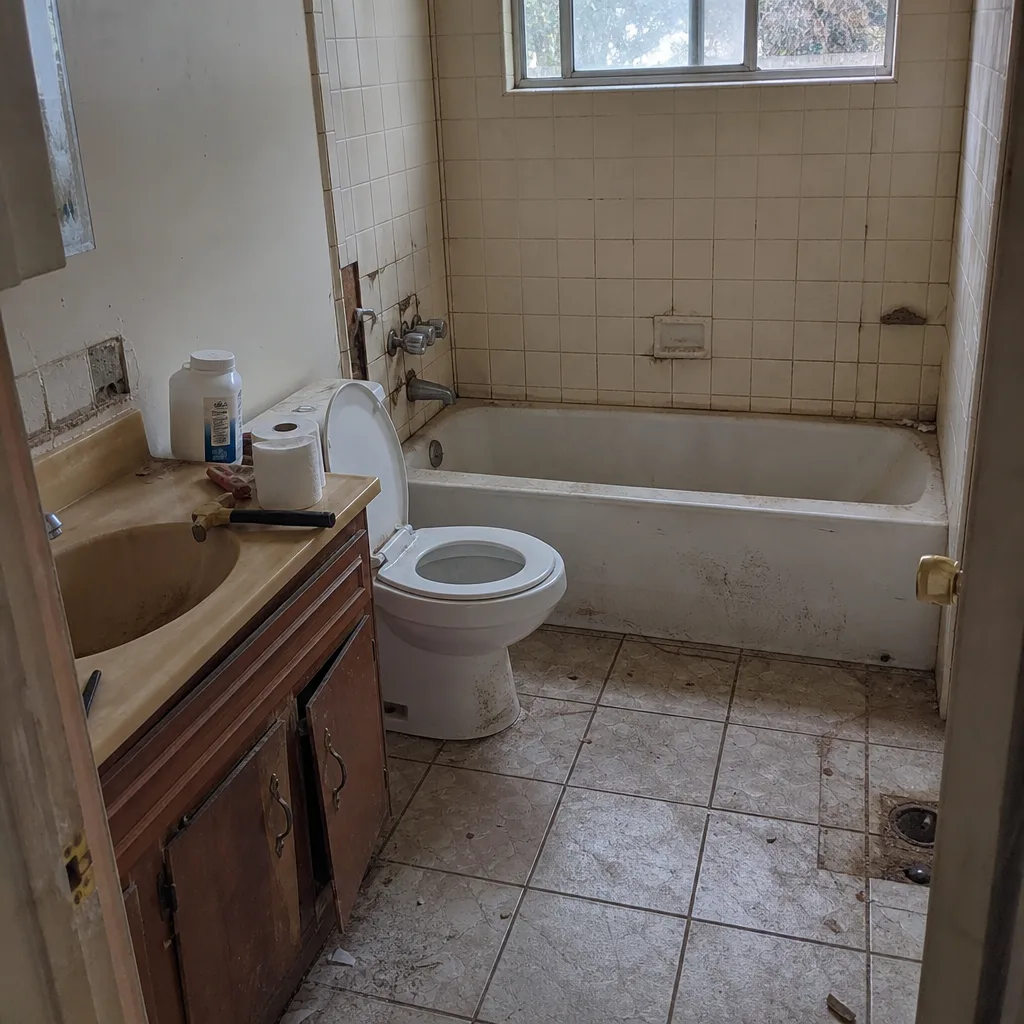 Before
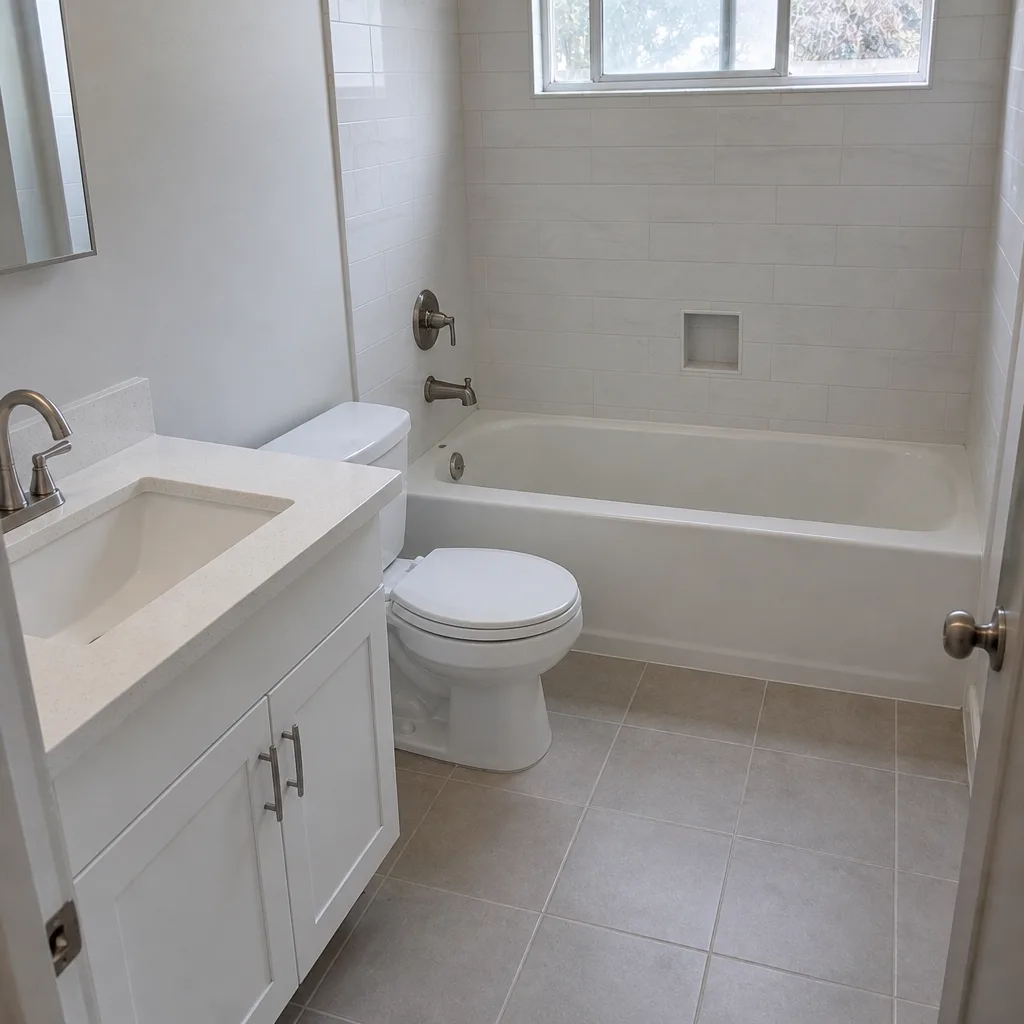 After
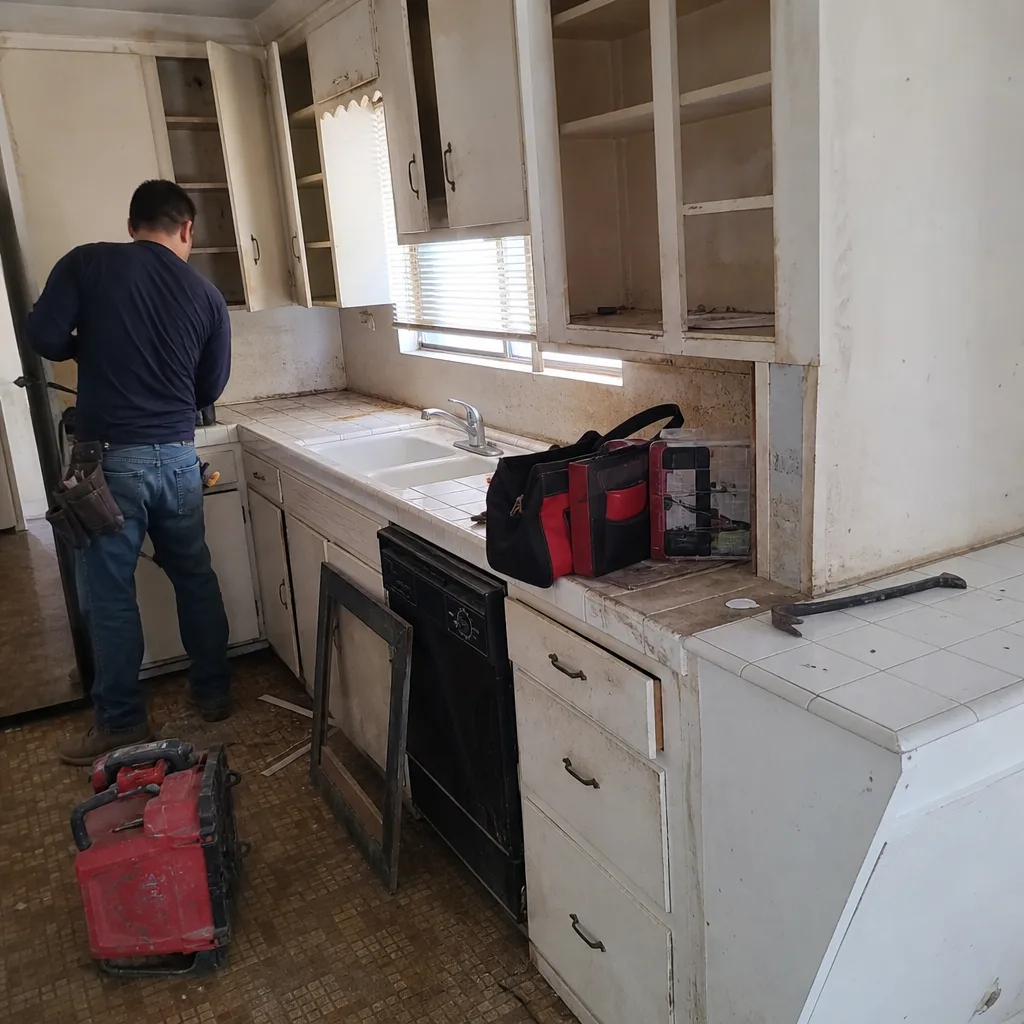
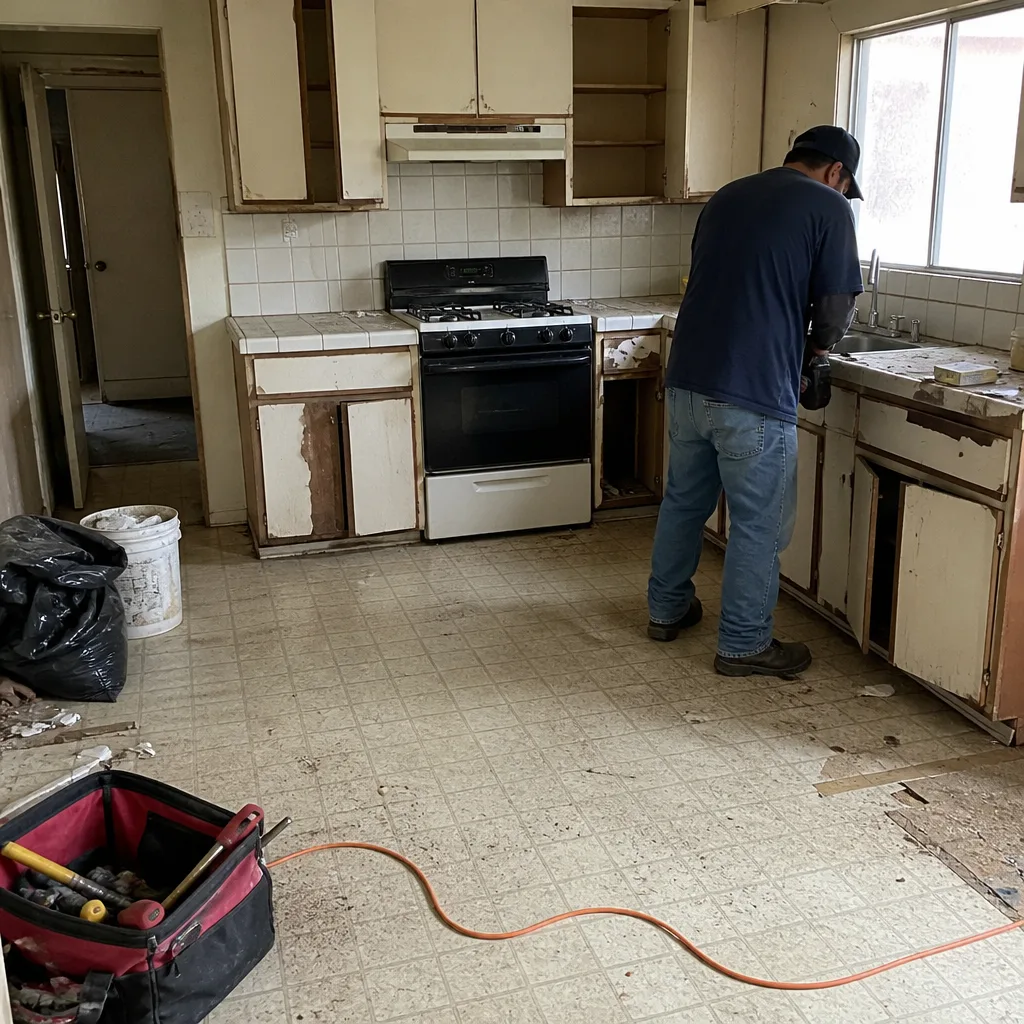 Before
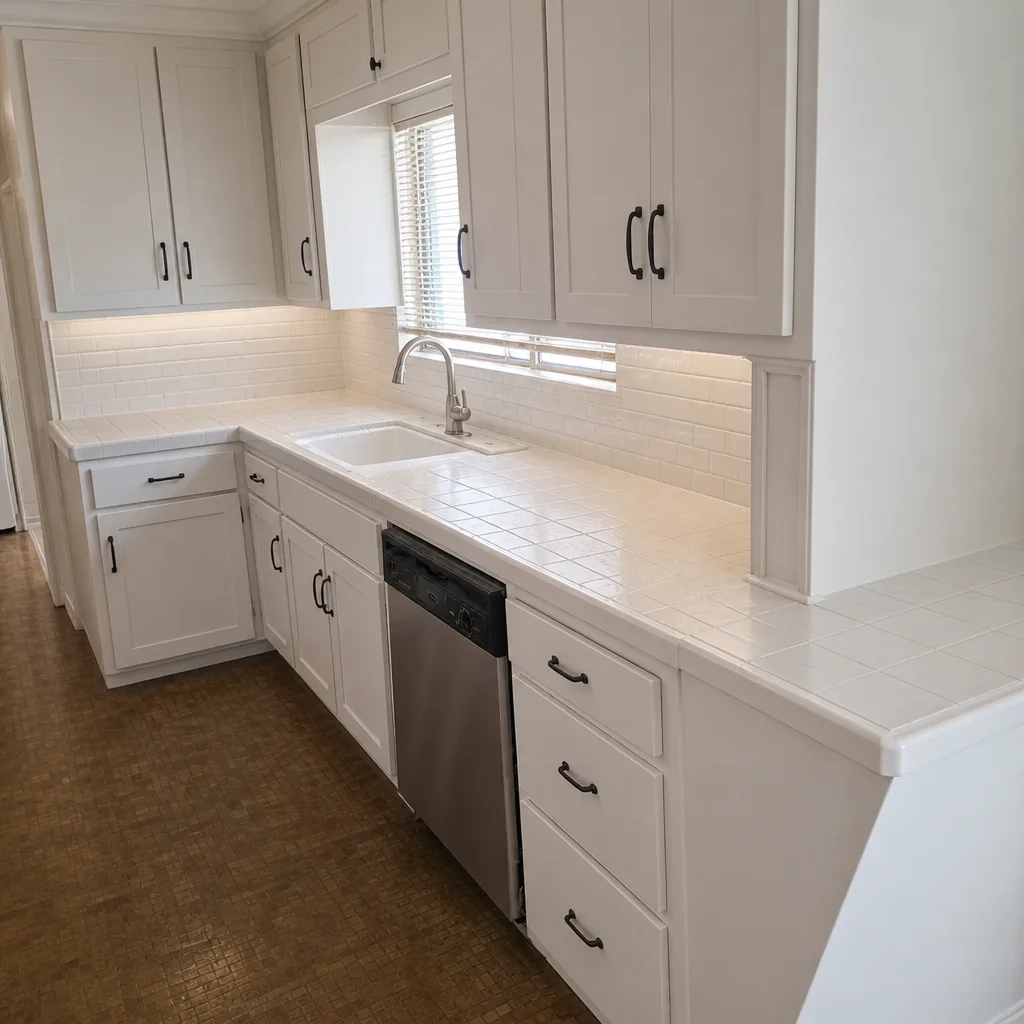
 After
 Before
 After
When to Call a Professional
Some driveway problems are cosmetic and some are structural, and knowing the difference saves you money. Call a professional when pavers are rocking or sinking, when cracks are spreading, when the joints keep washing out after every rain, or when water is pooling against the garage. Those are signs of a base or drainage failure, and no amount of surface patching fixes them. Call before a full replacement, too, if you’re on expansive clay or a slope, because the design of the base and drainage is the part that requires real engineering judgment. Groundwork Construction Co. of West Covina offers free estimates in West Covina, with background-checked, uniformed technicians and upfront pricing, no surprises – call (844) 662-2335.
Frequently Asked Questions
Concrete pavers in West Covina typically run about $14 to $28 per square foot installed, with natural stone and premium permeable systems costing more. The total depends on square footage, base depth, and drainage complexity, and the base is usually what drives the spread. Call (844) 662-2335 for an exact quote – estimates are free.
Often yes, especially if the work changes grading, alters drainage, or touches the public right-of-way near the sidewalk. Requirements depend on your specific address, so confirm with the City of West Covina building department before work starts. A reputable contractor pulls the permits as a routine part of the job.
For expansive clay, plan on 8 to 12 inches of compacted aggregate installed in lifts, which is deeper than the 4 to 6 inch spec used in much of Southern California. The extra depth spreads load and gives water room to move. Shallow bases are the most common reason West Covina driveways fail early.
It shouldn’t. A proper quote is a written, line-item estimate that specifies base depth, drainage, and materials up front, so the number you see is the number you pay. If a contractor can’t commit to that in writing, that’s a signal to keep looking.
Quality concrete pavers are the practical pick for most west-facing West Covina driveways, because they resist UV fading and heat far better than cheap alternatives and are easy to spot-repair. Natural stone looks stunning but demands a flawless base. Match the material to your sun exposure and budget.
Yes, when they’re installed on a proper base with working drainage. The pavers themselves are tough; it’s the ground beneath them that needs to move with the clay and shed water. Build the base right and the surface handles the heat and rain fine.
We handle permitting and inspections as part of the project and back the install with the 730-Day Done Right Promise – if it’s not done right, we make it right. Calls are answered by a live person, 24/7, so you’re never stuck in a voicemail void. Call (844) 662-2335 to get started.
The Bottom Line
A West Covina driveway lives or dies 12 inches below the surface. The clay under your lot will move, and the heat will bake the surface – so the base depth, compaction, and drainage are what decide whether your pavers look new in year ten or look like a puzzle in year three. Specify an 8 to 12 inch compacted base, engineer the water away from the house, match your material to the sun, handle the permits and HOA rules up front, and ask hard questions before you sign. Do that and the driveway you see at the surface will still look right long after the job is done. Built to last, backed in writing.
Ready to price your project? Call Groundwork Construction Co. of West Covina at (844) 662-2335 for a free estimate and design consult. Calls are answered by a live person, 24/7, with upfront pricing and no surprises – and your project is covered by the 730-Day Done Right Promise.
Written by the team at Groundwork Construction Co. of West Covina.