Last updated November 18, 2026

Free written scope consultation - allowances, timeline, and change-order rules on paper before a single trade is scheduled
DIY vs Professional Bathroom Remodeling: What’s Safe to Do Yourself
Swapping a vanity mirror is DIY. Installing a new shower drain that ties into your existing p-trap is not. YouTube makes both look equally approachable, and that’s exactly the problem. The gap between those two jobs isn’t skill. It’s consequence. A crooked mirror is a crooked mirror. A shower drain that misses the p-trap by half an inch quietly rots the subfloor under your tile for two years before you notice. This guide draws the line at what happens when you’re wrong, not how confident you feel. We’ll walk through the tasks that are genuinely safe to own, the ones California code won’t let you touch, and the real math behind DIY savings in a West Covina bathroom.
Styles & brands we work with
- Kitchen remodeling
- Bathroom remodeling
- Home additions & ADU
- Roofing
- Windows & doors
- Driveway & pavers
- Fence
Quick Answer
Safe DIY bathroom tasks are cosmetic and reversible: painting, swapping fixtures, replacing a toilet, installing a vanity top, hanging mirrors and hardware. Anything that touches the waterproofing envelope, the drain or supply plumbing inside the wall, or the electrical circuit requires a licensed contractor and usually a permit. In West Covina, moving a shower drain, replacing a shower pan membrane, or rewiring a GFCI circuit is professional-only territory, and the failure costs of getting it wrong run far past what you’d save in labor.
Table of Contents
- The Consequence Framework: Judge the Task by What Fails, Not How Hard It Looks
- What’s Actually Safe to Do Yourself in a Bathroom
- What California Code Requires a Licensed Contractor For
- Waterproofing: The Most Confident DIY Job and the Most Expensive Failure
- Rough-In Plumbing: Why Moving a Drain Six Inches Crosses the Line
- The Honest Cost Comparison: DIY Savings vs. Remediation
- What Gets Flagged at Resale in West Covina
- Common Mistakes to Avoid
- When to Call a Professional
- Frequently Asked Questions
- The Bottom Line
The Consequence Framework: Judge the Task by What Fails, Not How Hard It Looks
Most DIY advice sorts tasks into “easy” and “hard.” That’s the wrong axis. Difficulty tells you whether you can finish the job. Consequence tells you what happens if you don’t. A hard job done poorly might just look ugly. An easy job done poorly can destroy a house. We’ve walked into West Covina bathrooms where a homeowner saved $400 on waterproofing and spent $9,000 rebuilding a rotted subfloor and the ceiling below it.
Sort every bathroom task into one of three buckets before you pick up a tool.
- Cosmetic and reversible. Paint, mirror, towel bars, cabinet hardware, a new vanity top, a fresh light fixture on an existing circuit. If it goes wrong, you undo it. Worst case is a wasted Saturday and a trip back to the store.
- Structural or permanent. Tile setting, shower pan installation, vanity cabinet anchoring to studs, drywall finishing in wet zones. If it goes wrong, the failure shows up weeks or months later, usually behind a wall or under a floor. This bucket is where amateur remodels quietly fail.
- Systems that cross into code territory. Any change to drains, supply lines, the electrical circuit, or the moisture barrier behind tile. If it goes wrong, it fails an inspection, fails a home sale, voids insurance coverage in a water-damage claim, or all three. This bucket is professional-only, full stop.
Here’s the trap. The bucket-two and bucket-three tasks often look easier than the bucket-one tasks. Laying a shower pan membrane looks like rolling out a sheet of plastic. In reality, a proper preslope, a correctly lapped pan liner, and a flood test are three separate steps that most amateur installs skip entirely. The easy-looking jobs are the dangerous ones. That’s the whole problem with judging a task by how it looks on a video.
The question to ask before any task is not “can I do this?” It’s “if I get this wrong, what does it cost to fix, and who pays?” Answer that honestly and the DIY line draws itself. If you’re weighing a full bathroom remodel against doing part of it, a professional estimate gives you the real number to compare against. Groundwork Construction Co. of West Covina offers a free project estimate and design consult so you’re comparing against a firm number, not a guess.
What’s Actually Safe to Do Yourself in a Bathroom
Plenty of a bathroom remodel is safe for a careful homeowner with the right tools. The safe zone is everything cosmetic, everything reversible, and everything that doesn’t touch water inside a wall or power behind a switch. If the task fails, you’re out an afternoon and a return trip. Nothing rots.
These jobs are genuinely fine to own:
- Painting and trim. Bathroom paint needs a mold-resistant formula rated for high humidity. A West Covina summer gets humid enough that a cheap flat paint will show mildew along the ceiling line within two seasons.
- Swapping the vanity mirror and light fixture. A direct one-for-one fixture swap on an existing, correctly wired circuit is straightforward. Replacing the switch itself is also fine.
- Replacing a toilet. Pulling an old toilet and setting a new one on a fresh wax ring is a legitimate DIY job. The one caveat: if the flange is broken or the subfloor is soft around the base, stop and call someone, because a leaking flange is a slow floor-killer.
- Installing a new vanity top and faucet. If the supply lines and drain stay exactly where they are, swapping the top is safe. Running a new supply line to a relocated sink is not.
- Hardware, towel bars, shelving, caulking. All fine. Use a mold-resistant silicone in the wet zones, not a cheap latex caulk that cracks in a year.
- Cabinet hardware and organizing. Trivial, reversible, no risk.
Note what’s not on this list: anything involving tile-over-membrane, shower pans, drains in concrete, or wiring a new circuit. That’s the tell. The safe list is short and reversible. If your job plan doesn’t fit on it, the next sections are why. When we quote a bathroom remodel in West Covina, we itemize exactly which parts of the work are labor-heavy (tile, waterproofing, plumbing) so a homeowner who wants to paint and set the vanity themselves can see exactly what that saves them.
What California Code Requires a Licensed Contractor For
California is specific about this, and it’s not a gray area. Under the California Business and Professions Code, any construction project with a value over $500 in combined labor and materials requires a licensed contractor. That threshold is low deliberately, and a bathroom remodel blows past it in the first hour. More to the point, the work itself is regulated.
- Permits. A bathroom remodel that moves or adds plumbing, changes a drain, adds a new electrical circuit, or alters the structure requires a building permit from the City of West Covina. Cosmetic work (paint, tile-over-existing, new vanity top) typically doesn’t. The distinction is systems versus surfaces.
- Inspections. Permitted plumbing and electrical work must be inspected before it’s covered by drywall and tile. A licensed plumber and electrician are needed to pull the permit and sign off. You can’t legally do this work yourself and self-certify it as a homeowner in a permitted remodel.
- Water heater and gas work. Any gas line modification or water heater relocation requires a licensed plumber and a permit. Don’t touch it.
- Electrical circuit changes. Bathroom receptacles must be GFCI-protected per California Electrical Code, which follows the NEC. Adding a circuit, moving a receptacle, or wiring a new light on a new circuit is licensed electrician work with a permit.
Here’s the part that bites homeowners years later: unpermitted work becomes a disclosure problem at sale. If a West Covina bathroom was remodeled without permits and a buyer’s inspector flags the plumbing or electrical, escrow stalls or the price drops. Some buyers walk. That’s the real cost of skipping the permit, and it dwarfs the permit fee. If you want to understand the full scope of what a permitted, inspected bathroom remodel involves, our main service page for Groundwork Construction Co. of West Covina covers the process end to end.
Waterproofing: The Most Confident DIY Job and the Most Expensive Failure
Here’s a pattern we see repeatedly in West Covina. A homeowner watches a video on installing a shower tile-over-membrane system, feels confident, and does the work. Six to eighteen months later, the ceiling of the room below the bathroom shows a brown stain. By the time you see the stain, the damage behind the wall is already extensive and the repair cost has tripled. Waterproofing is the single element most often DIY’s with total confidence and most often fails.
Why does it fail? Because a proper shower waterproofing assembly is a sequence, and skipping any step doesn’t show up immediately:
- The preslope. The shower floor must slope toward the drain before the liner goes down, so water that reaches the liner flows to the drain instead of pooling. Many amateur installs skip the preslope and rely only on the tile surface. Water then sits on the liner and eventually finds a seam.
- Liner lapping and corners. The pan liner must lap over the curb and damage-prone corners, and those corners need proper pre-formed or glued corners. A glued corner done with the wrong adhesive or a wrinkled liner traps water.
- The flood test. After the liner is installed, the pan is plugged and filled with water for 24 hours to prove it’s watertight before tile goes down. Skipping the flood test is how failures get sealed behind tile.
- Wall membrane continuity. The wall waterproofing (a bonded sheet or liquid membrane) must overlap the pan liner and terminate correctly at the drain and curb. A gap of even an inch at the transition point channels water into the wall framing.
In West Covina’s climate, a bathroom takes a daily beating from two things: high indoor humidity from long showers and heavy seasonal summer heat that moves moisture and wood as it expands and contracts. A watertight assembly handles both. A marginal one cracks at the seams within a year. This is the job where we most often get called to fix a “small problem” that’s actually a full bathroom demolition and rebuild. If you’re remodeling a bathroom and considering the waterproofing yourself, this is the one place we’d urge you to stop and call. Our bathroom-remodel adjacent Home Additions & ADU work in West Covina uses the same licensed subcontractors who handle our wet-zone waterproofing.
Rough-In Plumbing: Why Moving a Drain Six Inches Crosses the Line
“Rough-in plumbing” is the term for everything that happens before the finished surfaces go on. The drains, the supply lines, the venting. It’s the skeleton of the bathroom. And it’s the part most homeowners don’t realize is a plumbing-and-boards-of-health inspection zone. Moving a shower drain even six inches sounds like a tiny tweak. It’s not. Here’s why.
- It changes a fixture’s location on the permit. Your plumbing plan is written on the permit. Moving a fixture means the plan changes. The inspector looks at the plan and the rough-in together.
- It requires new vent connections. Drain plumbing has a vent stubbing off to the roof or a shared vent. Moving a drain that far usually means reworking the vent stack, which is a plumbing code question, not a tile question.
- It opens the slab or the subfloor. In a West Covina home built on a concrete slab, moving a drain means cutting into the slab, rerouting the pipe, and patching the slab. That’s a licensed plumber’s job with a permit.
- It sets the slope wrong if you guess. Drains must fall at the correct slope for waste to flow. Guess wrong and you get slow drains, backups, and a re-do under fresh tile.
The same logic applies to supply lines. Moving a sink, swapping a tub for a shower, or adding a bidet line all cross into rough-in territory. This is the exact category the opening hook was pointing at: the six-inch drain move looks like a half-day project and is genuinely a licensed plumber plus permit job. If you’re doing a full bathroom remodel, the rough-in is where the money and the risk live. Groundwork Construction Co. of West Covina ties every plan to licensed plumbing and electrical subcontractors and passes the inspections before anything gets covered up.
The Honest Cost Comparison: DIY Savings vs. Remediation
Every DIY conversation comes down to this number. What do you actually save, and what does it cost when it fails? Here’s the honest version, based on what we see across bathroom projects. These are typical ranges in West Covina, not quotes, and your number depends on fixture quality and layout.
| Task | Professional cost (typical) | DIY labor savings | Failure remediation |
|---|---|---|---|
| Interior painting and trim | $800 – $1,800 | $600 – $1,400 | Repaint only: $400 – $900 |
| Vanity top and faucet swap (no plumbing moved) | $400 – $1,000 | $250 – $700 | Leak at drain: $200 – $800 |
| Toilet replacement | $300 – $650 | $200 – $500 | Flange leak into subfloor: $1,500 – $4,000 |
| Shower tile and waterproofing | $4,500 – $12,000 | $2,500 – $7,000 | Membrane failure: $8,000 – $20,000+ |
| Moving a shower drain | $1,200 – $3,000 (with permit) | Not advisable | Wrong slope or vent: $3,000 – $8,000 |
| Electrical circuit for vanity or fan | $400 – $1,200 (with permit) | Not advisable | Code fail/GFCI issue: full re-do |
Read the remediation column again. The waterproofing and drain jobs are the ones where the potential failure cost is more than double the professional labor. That’s the entire argument. DIY the paint and the vanity top and save $1,000. But DIY the $5,000 waterproofing job and a failure can cost you $15,000. The math on a single shower-pan failure wipes out every dollar you saved on the whole project. That’s why the consequence framework beats the difficulty framework every time.
There’s also a middle path most homeowners don’t consider. Many of our West Covina customers do the cosmetic work themselves (paint, hardware, the caulking) and hire out only the systems work (waterproofing, plumbing, tile). That split lets you keep the safe savings and hand off the risk. If you’re budgeting a full remodel, our Driveway & Pavers in West Covina page shows the same transparent, itemized pricing approach in case your project is extending outside the house.
What Gets Flagged at Resale in West Covina
Here’s a question most DIY guides never answer: when does a bathroom decision come back to you? At resale. When you sell a West Covina home, the buyer’s inspection is going to look at the bathroom closely, and the things a licensed inspector flags are exactly the things the consequence framework warned you about.
- Unpermitted plumbing or electrical. If the bathroom remodel required a permit and none was pulled, that’s a disclosure item. Buyers and their agents treat it as a negotiating lever, usually to the tune of five figures off the price, or a demand that the work be updated after close.
- Visible water staining or soft areas. An inspector who sees a ceiling stain below the bathroom will call for further evaluation. That means opening the wall or floor. That’s rarely a small finding.
- Amateur tile over a bad substrate. Hollow-sounding tile, cracked grout lines that track water, or a shower floor that visibly slopes away from the drain all get noted.
- Missing GFCI protection. Bathroom receptacles are required to be GFCI-protected; an inspector who finds a non-GFCI outlet near a sink calls it out as a safety item.
- Improperly vented drains or slow drain findings. Slow drains during an inspection often trace to poor slope or a missing vent, and a plumbing review gets called in.
The permit fee on a bathroom remodel is a few hundred dollars. The resale haircut for an unpermitted one is far more, and it delays the sale. Pull the permit. Get the inspections. Any professional contractor who’s worth hiring will build that into the estimate without being asked. If you’re planning any structural changes beyond the bathroom, our Fence Installation in West Covina page shows the same permit-and-inspection discipline applied outdoors.
Common Mistakes to Avoid
- Judging tasks by how they look on video. Laying a shower pan liner looks like rolling out plastic. A proper preslope, lapped corners, and a 24-hour flood test are what make it waterproof, and videos rarely show all of them. Skipping any one seals a failure behind your tile.
- Moving a drain “just a few inches.” Six inches is not a small move. It changes the permit plan, requires reworking the vent stack, and usually means cutting the slab in a West Covina home. This is a licensed plumber job, not a project to attempt yourself.
- Skipping the flood test. After the shower pan liner goes in, the pan has to hold water for a full day before tile goes over it. Skipping it means you find out about the failure in the ceiling below.
- Using the wrong caulk and membrane at the wet boundary. Latex caulk in a shower cracks in a season. Chemically incompatible sealants and membranes can fail along the transition. West Covina’s summer humidity swings are hard on marginal materials.
- Forgetting the permit to save a couple hundred dollars. Unpermitted plumbing and electrical become a disclosure problem at resale. The permit fee is cheaper than the haircut on the sale price every time.
- Wiring a bathroom receptacle without GFCI protection. Bathroom outlets require GFCI protection under California code, and a non-GFCI receptacle near a sink gets flagged on inspection as a safety item.
- Restoring a toilet on a soft flange. If the floor around the toilet flange feels soft, stop. Setting a new toilet on top of a rotting subfloor guarantees a slow leak into the floor. Fix the subfloor first.
- Assuming tile is the waterproof layer. Tile and grout are not waterproof. The membrane behind them is. This is the most expensive misconception in bathroom remodeling and the one that fails most often when homeowners DIY the shower.
When to Call a Professional
Call a licensed professional the moment your project touches any of the following: waterproofing a shower pan or wet area, moving or adding any drain or supply line, adding or relocating an electrical circuit or GFCI outlet, gas lines, or structural changes. Also call when a scope feels uncertain, when a prior DIY job has a visible symptom (water stain, cracked grout that tracks water, a soft floor), or when you’re renovating a bathroom for resale and need permits and inspections handled properly. Those are the exact jobs where the failure cost exceeds the labor savings, and where a permit and a licensed professional protect the home’s value.
Groundwork Construction Co. of West Covina offers free estimates in West Covina. Our technicians have up to 12 years of experience, we’re background-checked and uniformed on every job, and every project comes with our 730-Day Done Right Promise so if it’s not done right, we make it right. Call (844) 662-2335 for a free estimate.
Frequently Asked Questions
Installing the waterproofing yourself and then having a pro lay tile over it splits responsibility in a way that’s risky. If the shower leaks, the tile contractor will point to the membrane and the membrane you installed is now behind tile. The better pattern is to have a single licensed contractor own both waterproofing and tile so the shower has one warranty on the wet-zone assembly. Call (844) 662-2335 to talk through the right split for your project in West Covina.
You need a permit when the work touches plumbing, electrical circuits, gas, or structure, which is most of a real bathroom remodel. Cosmetic work like painting, re-tiling over existing surfaces, or swapping a vanity top typically doesn’t require one. When in doubt, ask the City of West Covina Building Department before you start; it’s a two-minute question that saves a resale headache.
Typical full bathroom remodels in the West Covina market run from roughly $12,000 to $40,000 depending on size, fixture quality, and whether the layout moves. A cosmetic refresh (paint, vanity top, toilet, fixture swap) runs far less, often under $5,000. Call (844) 662-2335 for a free, itemized estimate – the number you see is the number you pay.
Waterproofing the shower is the biggest DIY risk in a bathroom remodel. Waterproofing is the most frequently attempted and most frequently failed amateur job because the failure doesn’t show up for months. By the time a water stain appears below the bathroom, the repair is a full teardown of the shower and often the floor. That’s the one job we’d urge every homeowner to leave to a licensed professional.
No. Moving a drain even six inches means reworking the vent stack, cutting and patching a concrete slab in a typical West Covina home, and updating the permit plan. It has to be done by a licensed plumber with a permit and inspected before the tile goes over it. Attempting it yourself risks a slow drain, a venting problem, or a water leak into the slab.
Yes. Every Groundwork Construction Co. of West Covina bathroom project that requires permits has them pulled by our licensed subcontractors and inspections passed before any finished surface covers the work. That means the permit and inspection records exist at resale. It’s part of every estimate we write, and part of the 730-Day Done Right Promise. Call (844) 662-2335 to schedule your free estimate.
The Bottom Line
The real DIY vs professional bathroom remodeling question is never about confidence. It’s about consequence. Paint, hardware, a toilet swap, a vanity top: safe to do yourself, are reversible, and if you get them wrong you’re out an afternoon. Waterproofing, drains, electrical circuits, and anything behind a wall: professional-only, and the failure cost is more than the labor savings, usually by a wide margin. West Covina’s climate and California code both make that line sharper, because the work behind the tile has to hold up against regular humidity and seasonal temperature swings, and the permit records travel with the house. Do the cosmetic work if you want. Hand off the systems. Get the estimate, get it in writing, and let the failure-risk math drive the decision, not the video.
When you’re ready to get a real, itemized number for the parts you shouldn’t touch yourself, Groundwork Construction Co. of West Covina offers free estimates, transparent pricing with no change orders, and financing options that make a full-scope remodel accessible. Built to last, backed in writing. Call (844) 662-2335 to schedule your free estimate today.
Written by the team at Groundwork Construction Co. of West Covina.
See the difference
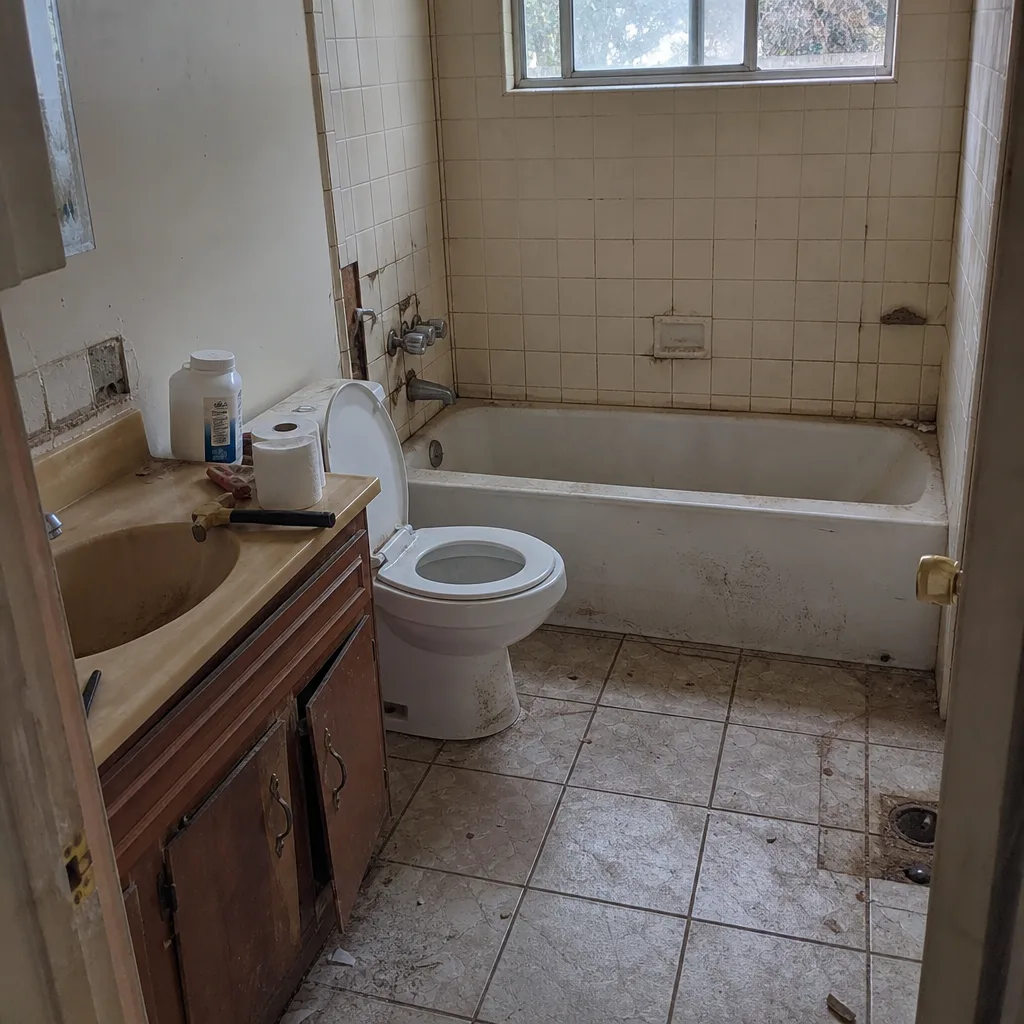 Before
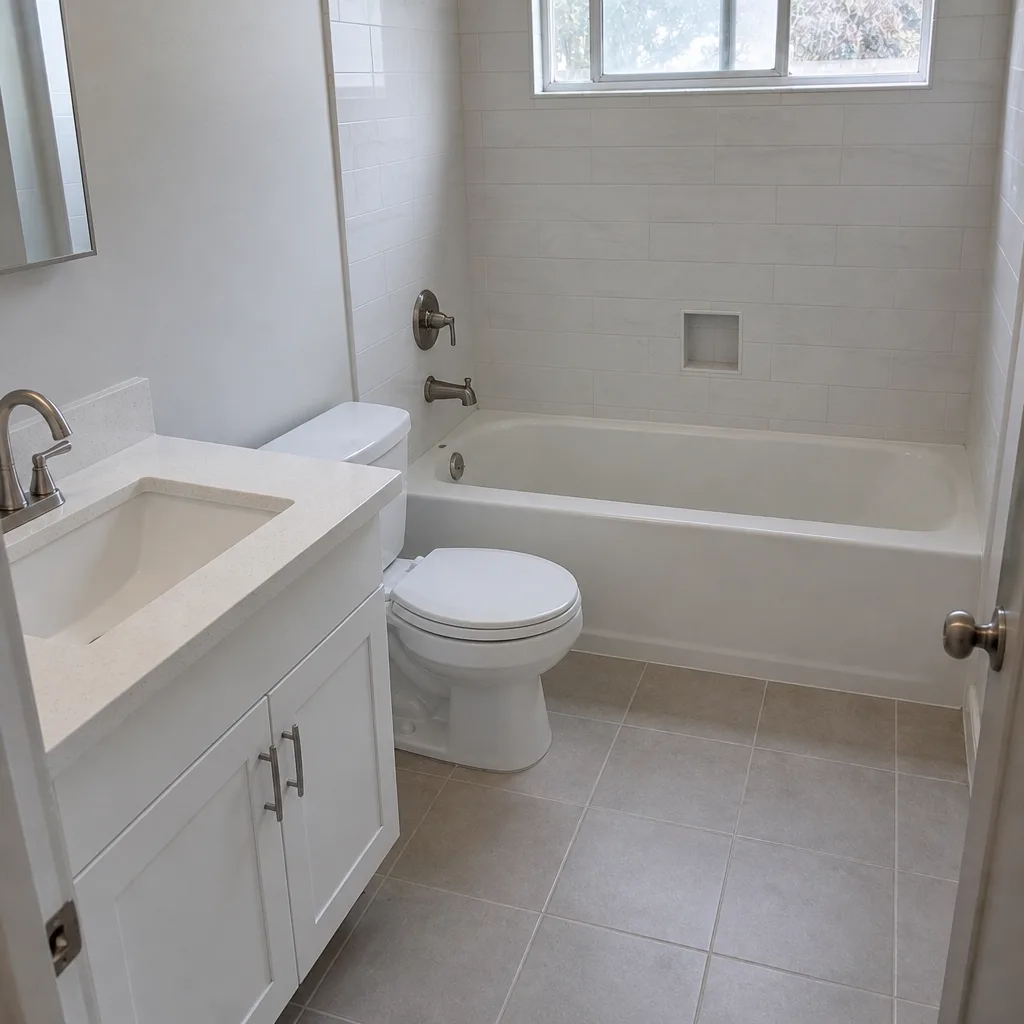 After
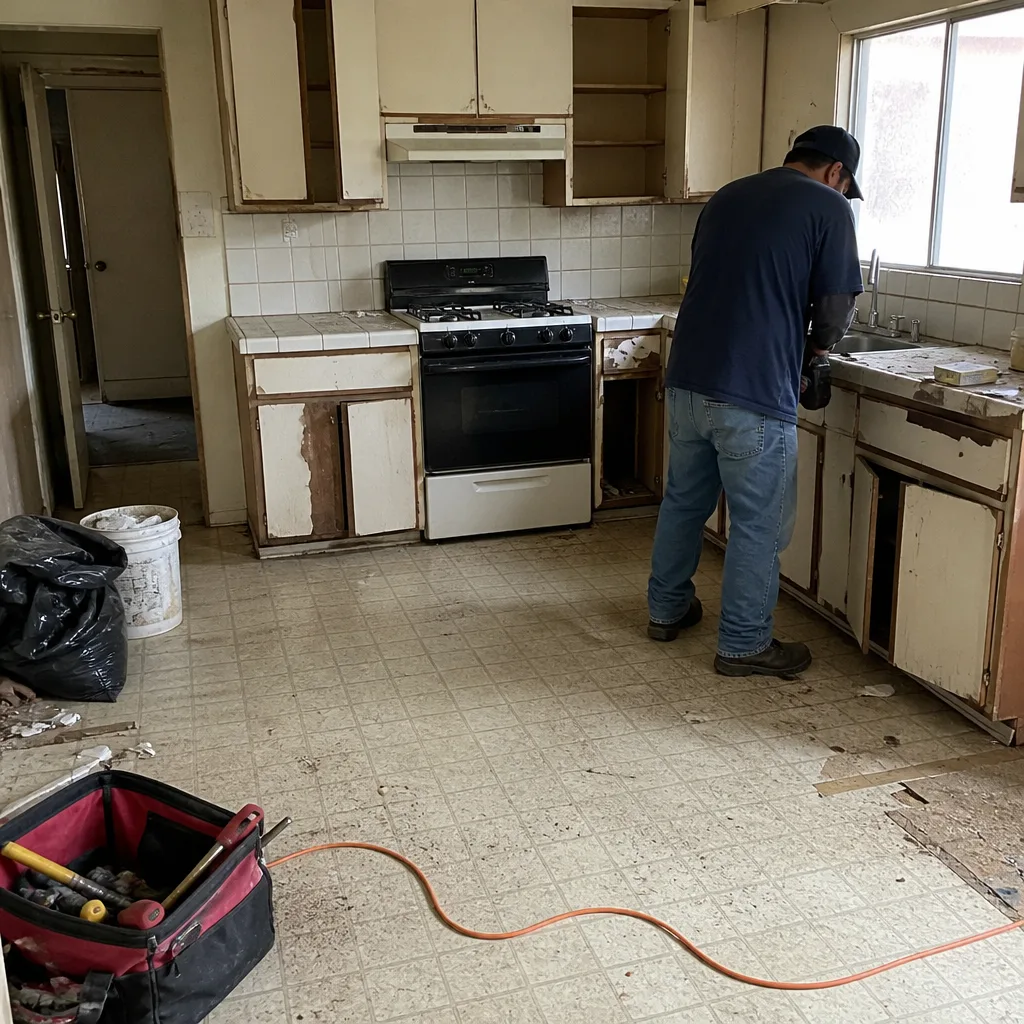 Before
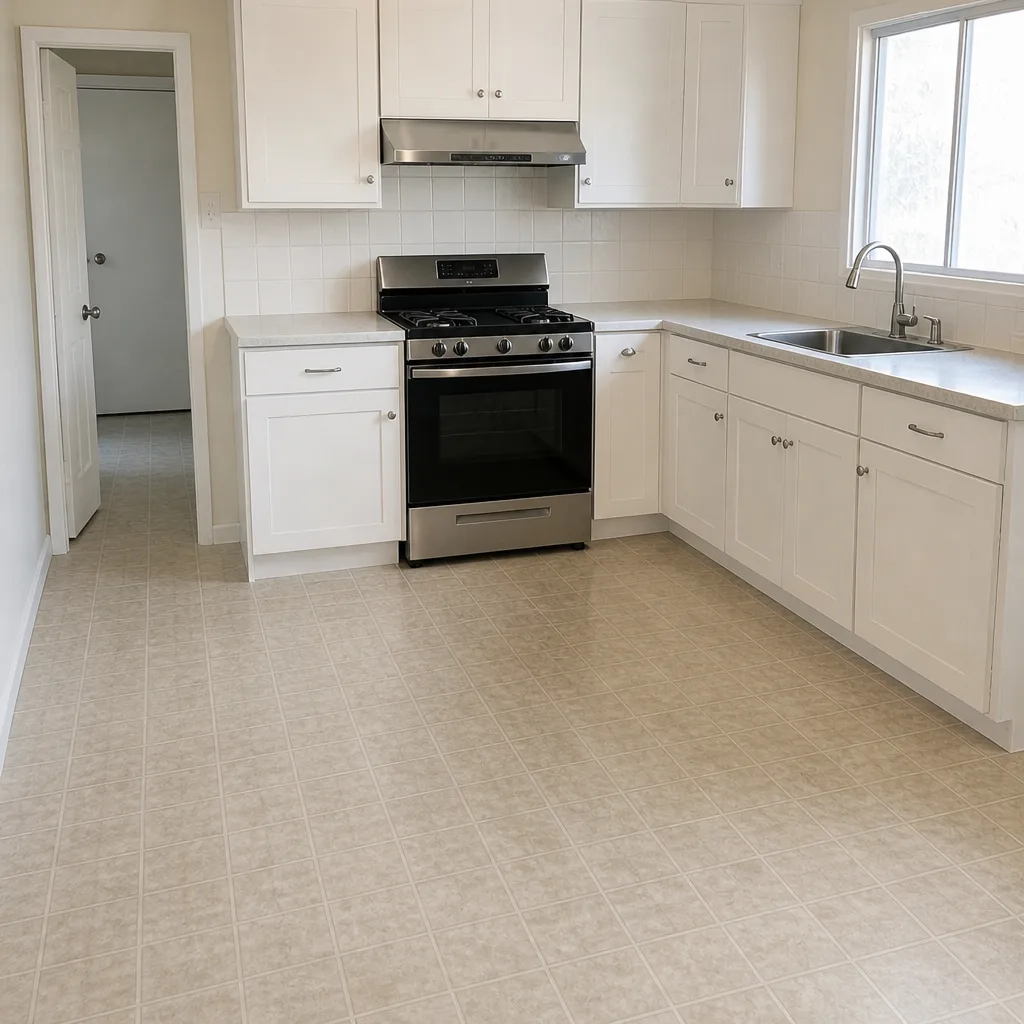 After
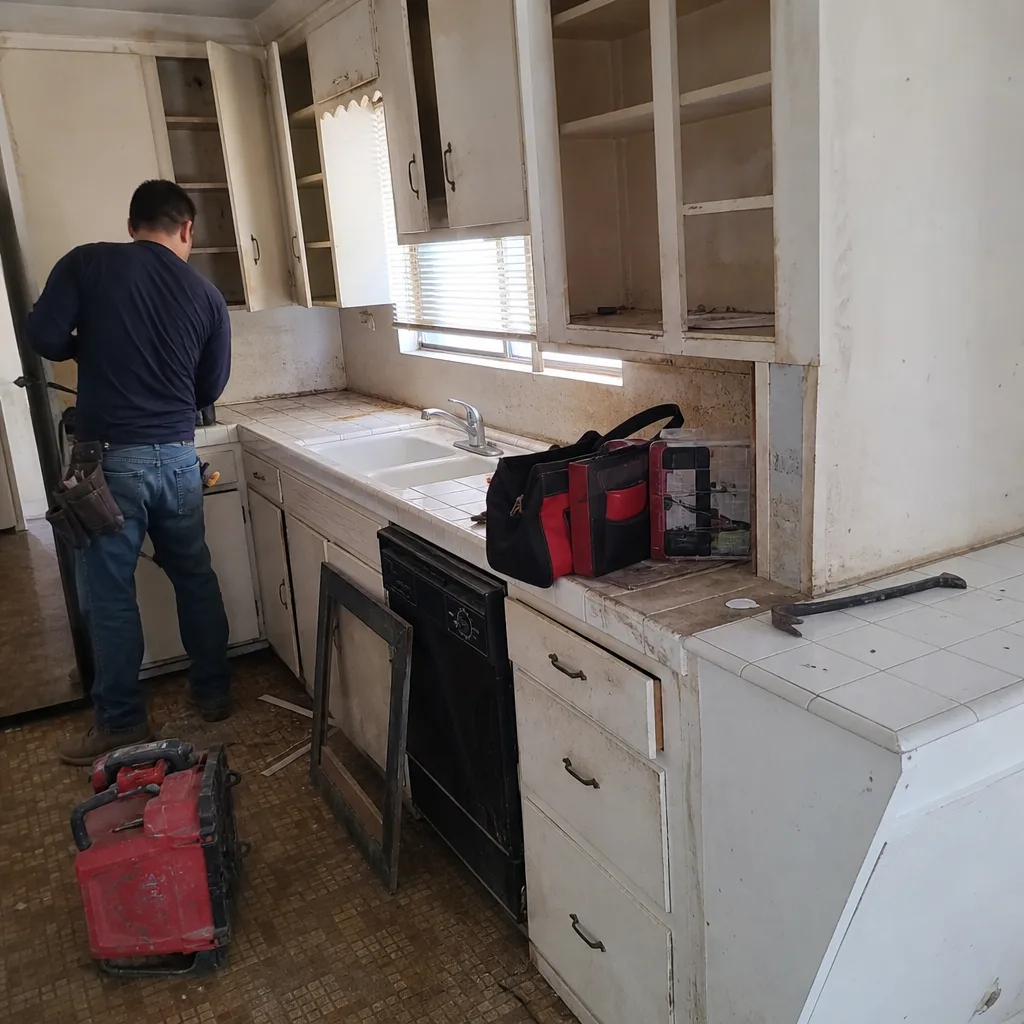 Before
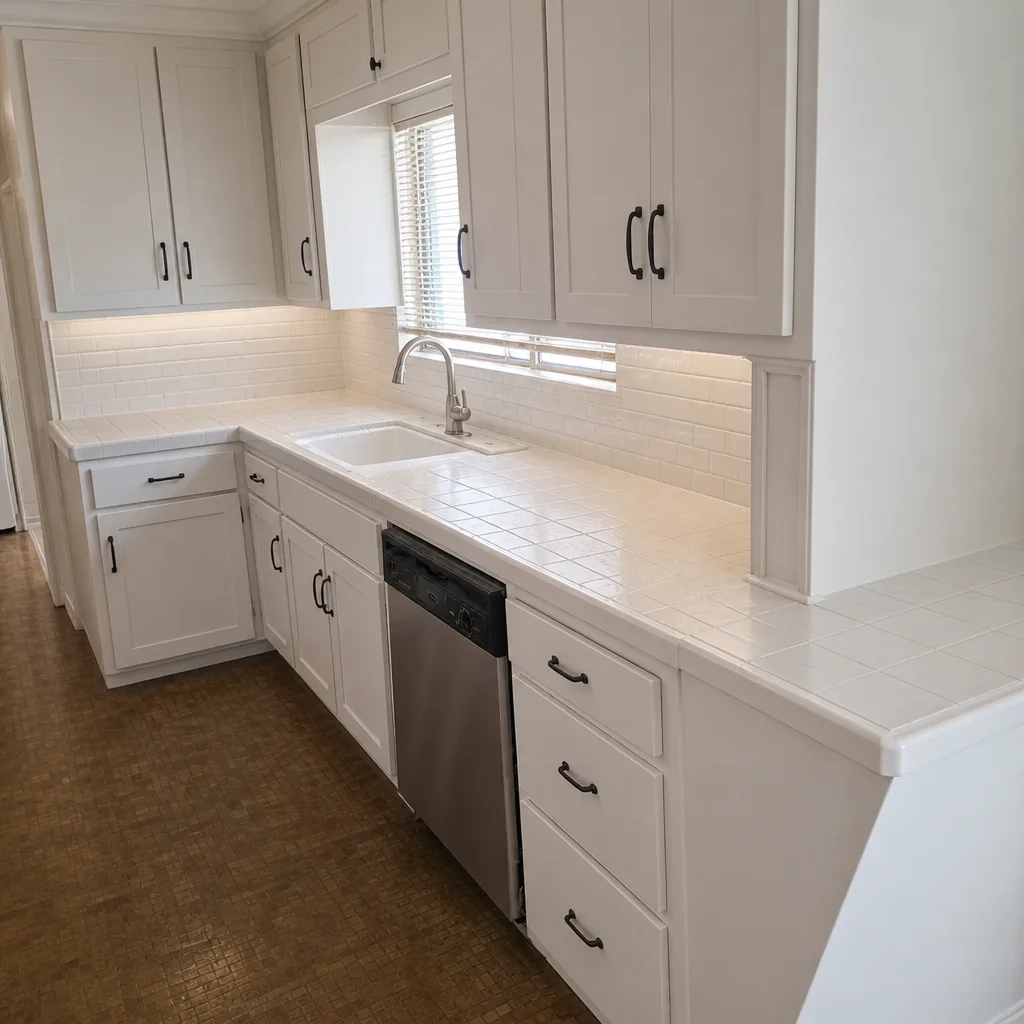 After