
Free written scope consultation - allowances, timeline, and change-order rules on paper before a single trade is scheduled
Styles & brands we work with
- Kitchen remodeling
- Bathroom remodeling
- Home additions & ADU
- Roofing
- Windows & doors
- Driveway & pavers
- Fence
See the difference
 Before
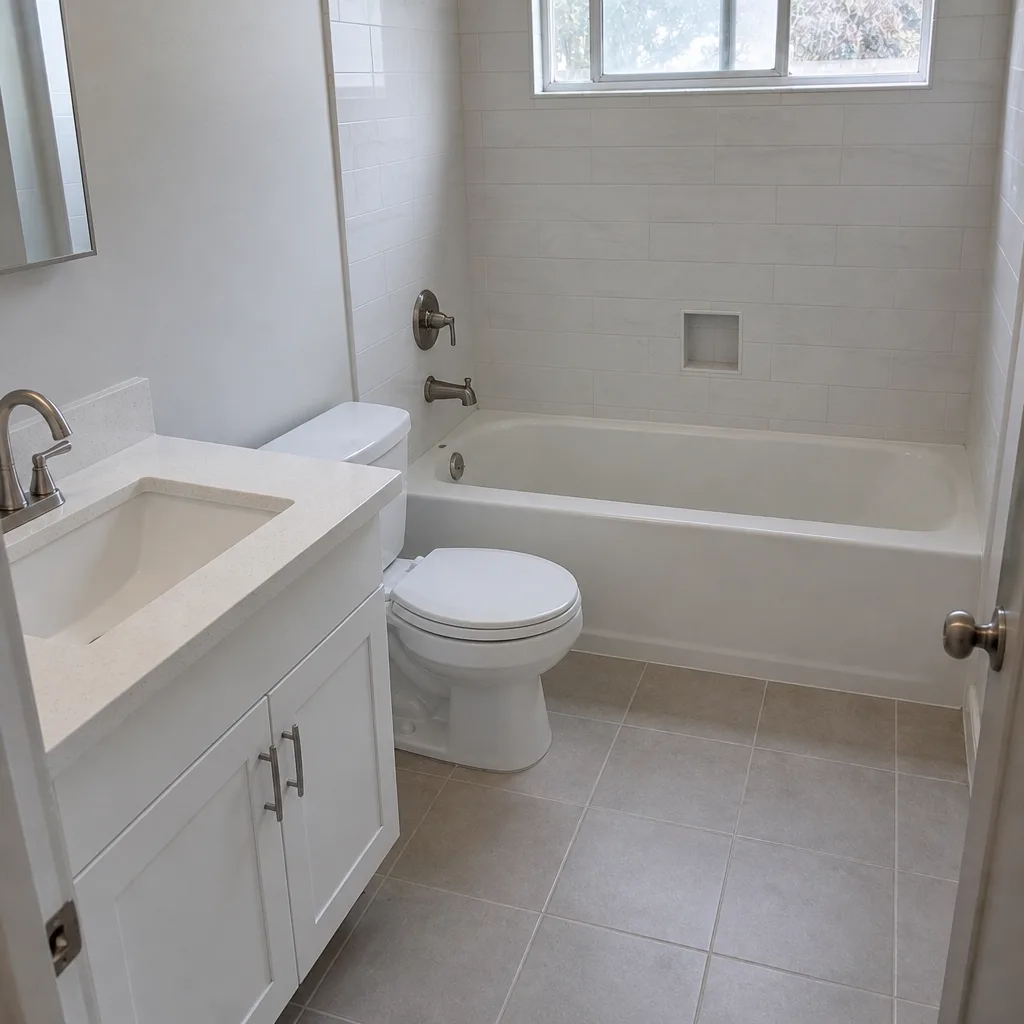 After
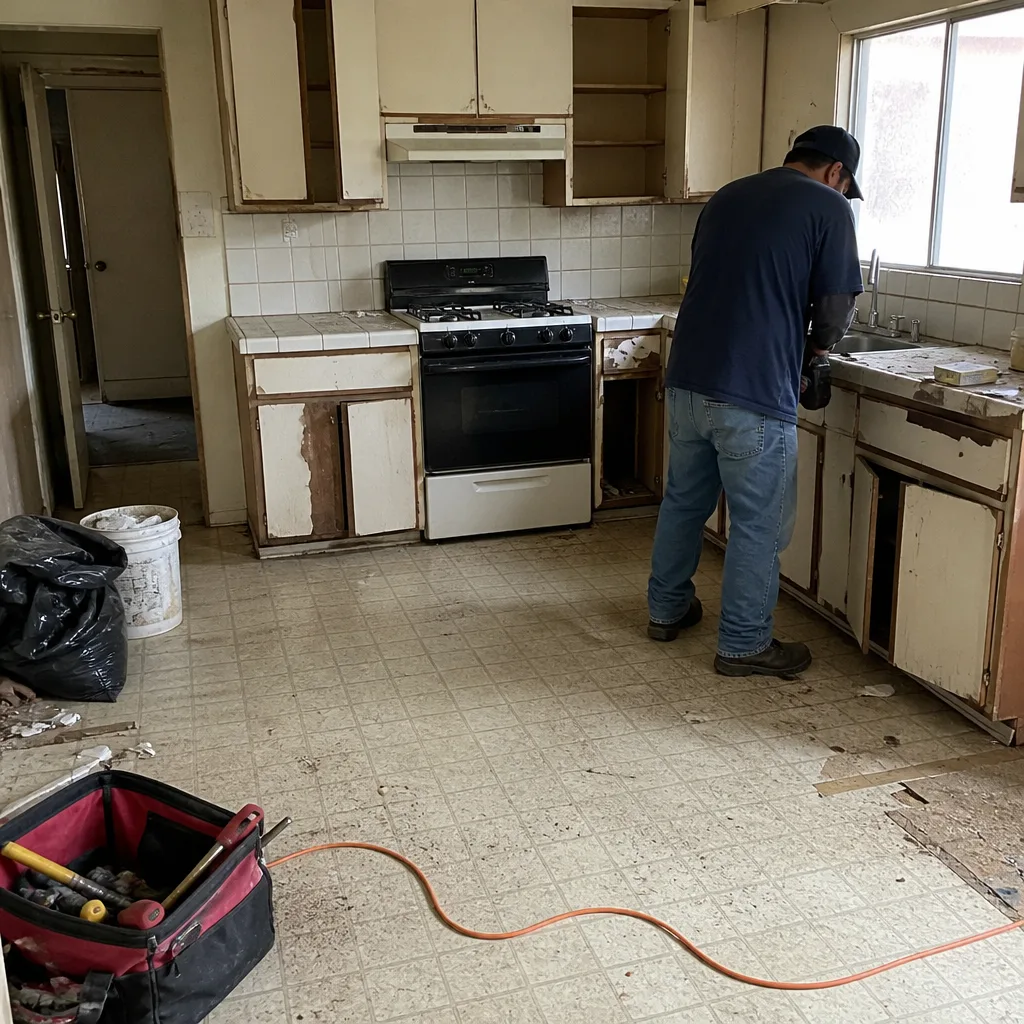 Before
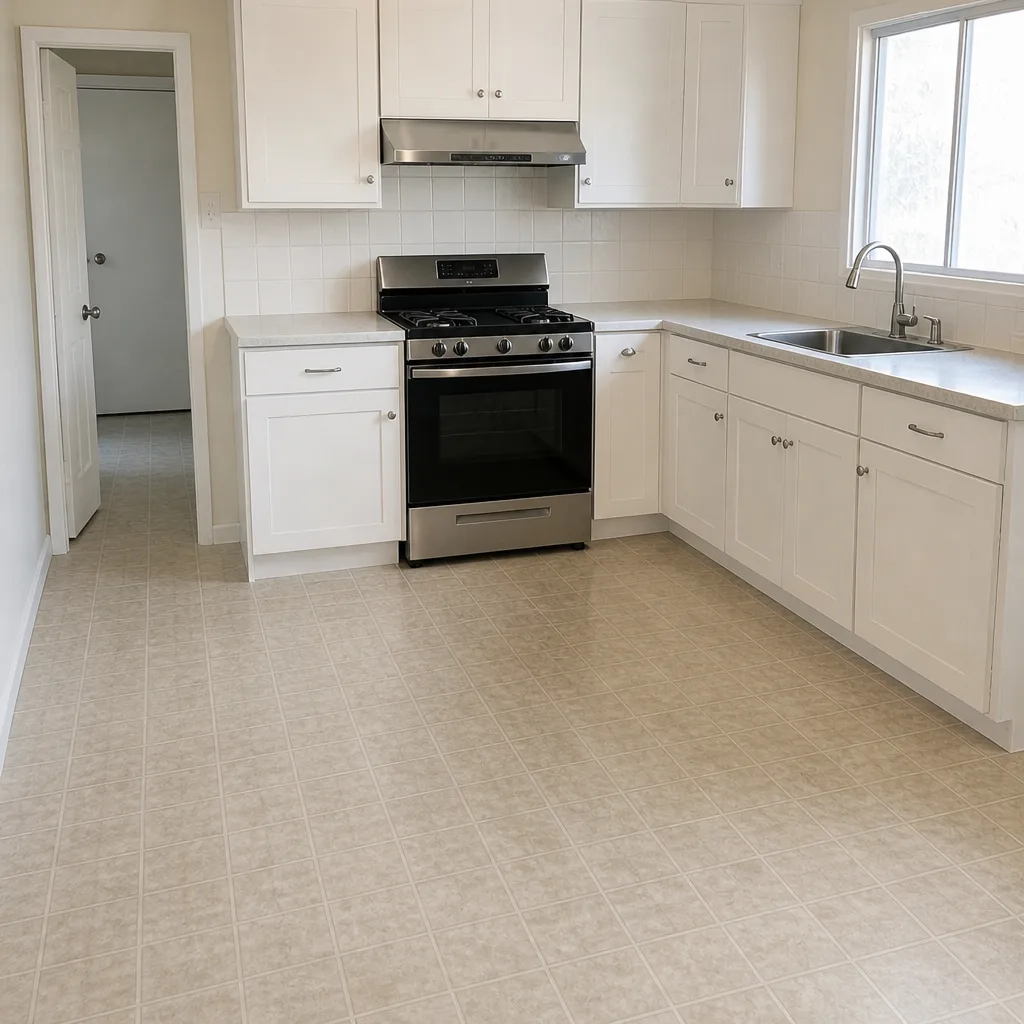 After
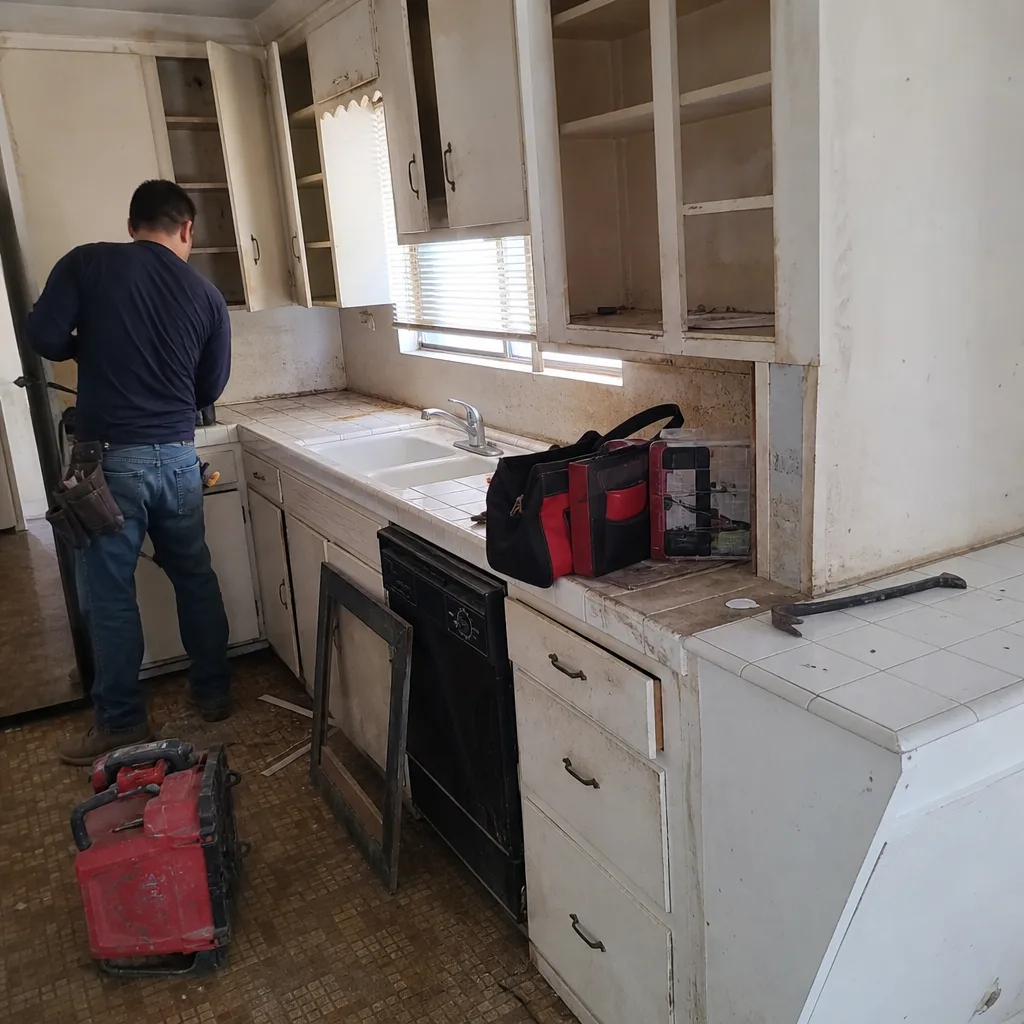 Before
 After
Stamped Concrete vs Pavers in West Covina, CA: Which Holds Up Better on Clay Soil?
Choose pavers unless your budget is the only variable that matters. On West Covina’s expansive clay soils, stamped concrete’s fatal flaw isn’t looks or price – it’s repairability. When a stamped section cracks (and it will, as the clay swells and shrinks through our wet winters and dry summers), matching the original color, texture, and tooled pattern after years of sun is close to impossible. A single paver can be pulled and reset with a new unit from the same batch and you’d never know it happened. For a free, no-pressure assessment of your specific driveway or patio, call (844) 662-2335.
Why Repairability Decides This Debate in West Covina
The generic stamped concrete vs pavers argument lives in Instagram photos and price-per-square-foot charts. That’s the wrong frame for this city. The decisive question is what happens five years in, after the ground under your slab has moved.
West Covina is largely built out, and most of the housing stock went up in the 1950s and ’60s. Older tracts on hillside and near-creek lots frequently sit on expansive clay that swells in the winter rains and shrinks hard in our hot, dry summers. That seasonal movement is relentless, and it’s exactly the condition that punishes a rigid slab.
Here’s the operator detail most articles skip: stamped concrete has decorative scoring lines pressed into the surface to mimic grout joints and stone edges. Those grooves aren’t just cosmetic – they’re stress points. When clay movement puts tension in the slab, the pattern lines become crack pathways, so a design feature turns into the first place the surface fails. And once it fails, you’re in what installers call “ghosting” – a repair patch that never quite matches the surrounding color or texture no matter how carefully it’s color-matched, because the original surface has weathered and the new patch hasn’t.
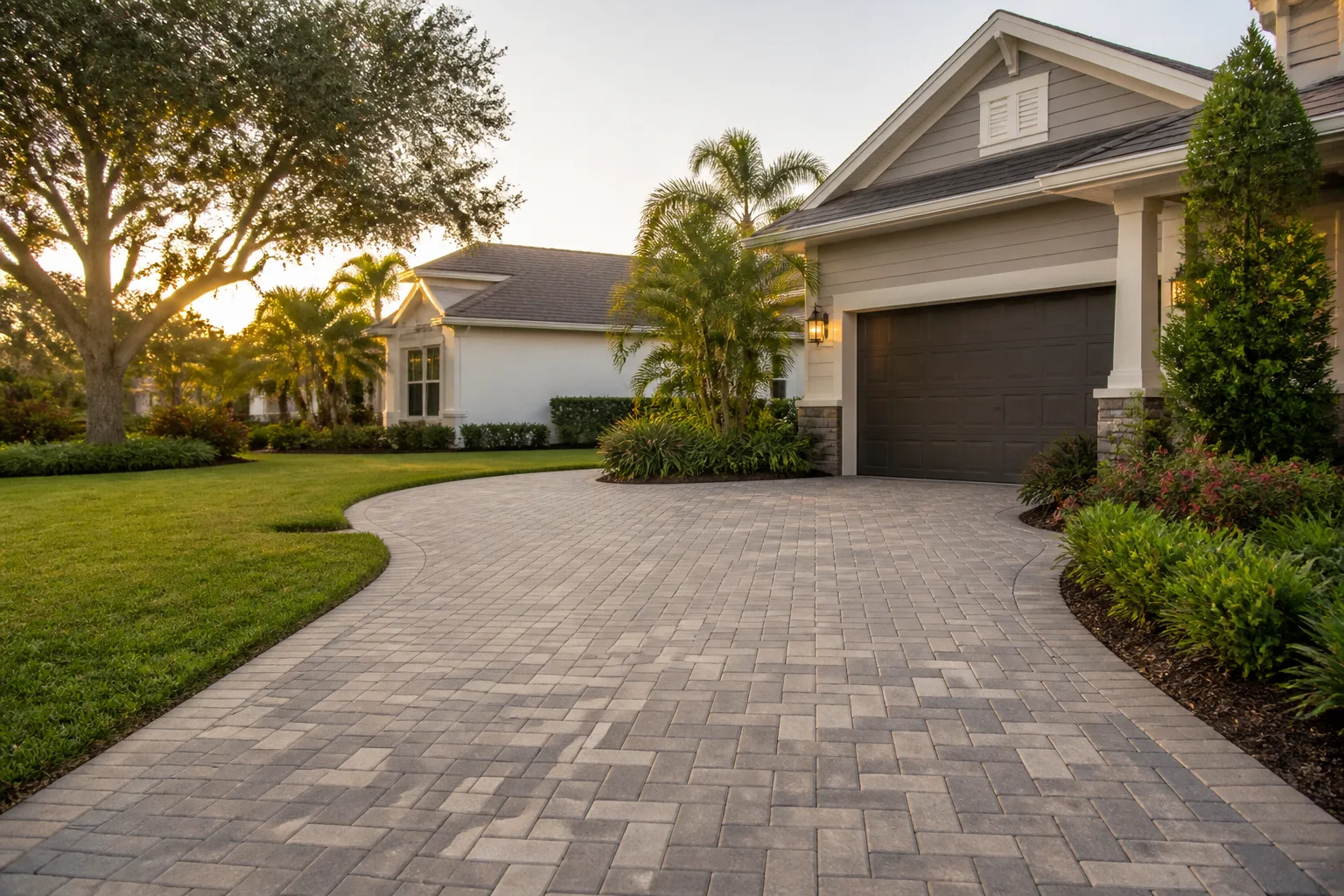
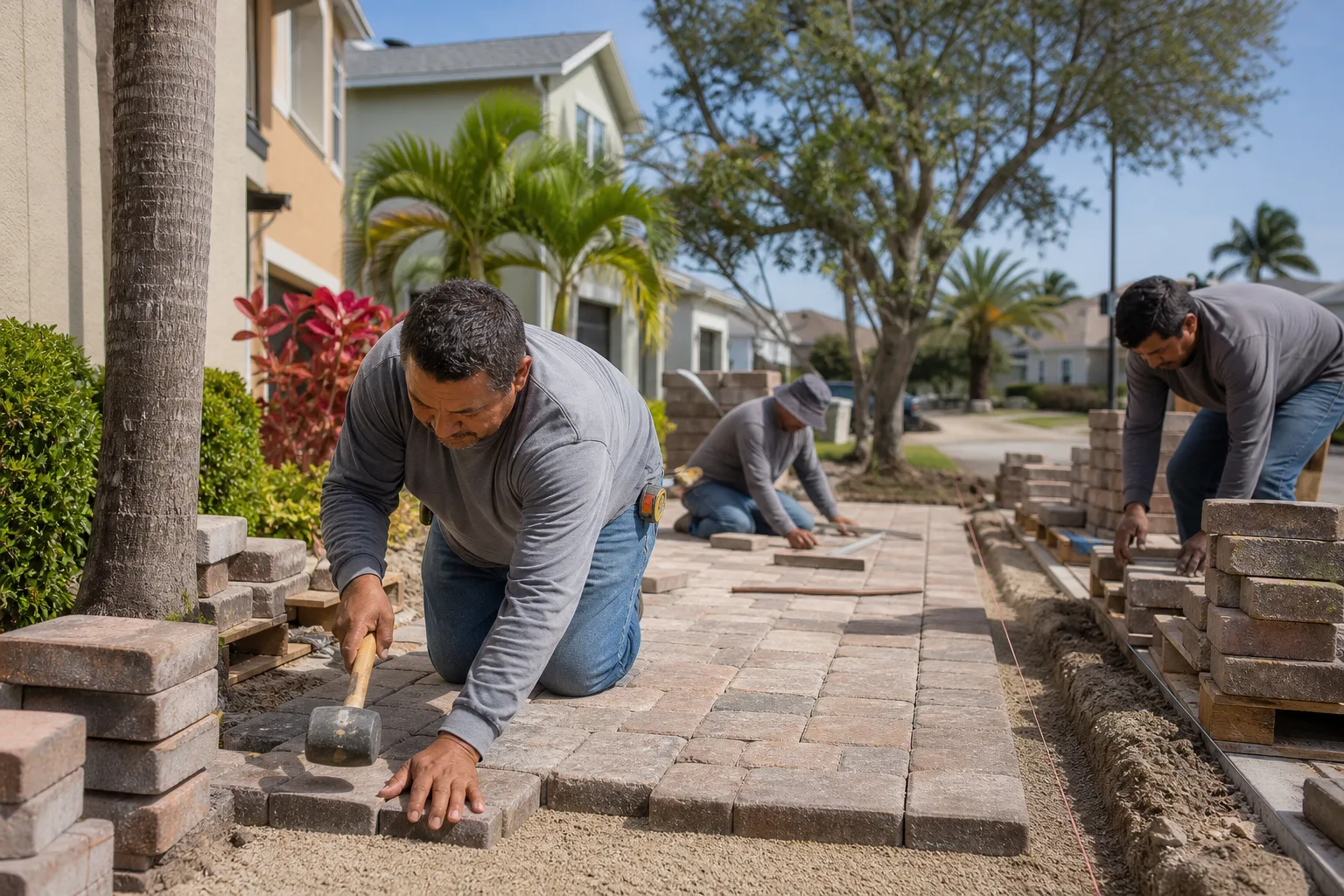
Pavers sidestep all of it. They’re a flexible system sitting on a compacted base. When one settles or cracks, you lift it, reset the base, and drop in a replacement from the same production run. The repair disappears.
The wet-winter slip question nobody asks
December rain changes the safety math too. A smooth, sealed stamped finish gets slick fast – especially on any slope, like the driveways that step up toward the foothill streets. Textured or tumbled pavers keep their grip when wet because the surface has actual tooth to it. If your driveway has any grade at all, that difference matters more than the pattern.
Stamped Concrete vs Pavers: Side-by-Side
| Factor | Stamped Concrete | Pavers |
|---|---|---|
| Invisible repair after a crack | Nearly impossible (ghosting) | Yes – swap a single unit |
| Behavior on expansive clay | Rigid slab; pattern lines crack first | Flexible system; individual units reset |
| Slip resistance when wet | Slick when sealed and smooth | Textured or tumbled keeps grip |
| HOA / design-review ease | Custom pattern can raise questions | Natural look usually passes easily |
| Typical West Covina driveway cost | $4,500-$12,000 | $7,000-$18,000 |
That price gap is real, and we won’t pretend it isn’t. Pavers cost more up front. But price the repair you’ll likely face on a cracked stamped slab in a clay-soil tract and the gap narrows quickly. For patios, paver installation in West Covina typically runs $3,500-$11,000; a full paver driveway lands in the $7,000-$18,000 range, while a fresh concrete driveway is $4,500-$12,000.
What This Looks Like on Real West Covina Lots
Every property is a little different, but a few scenarios come up again and again across the tracts here.
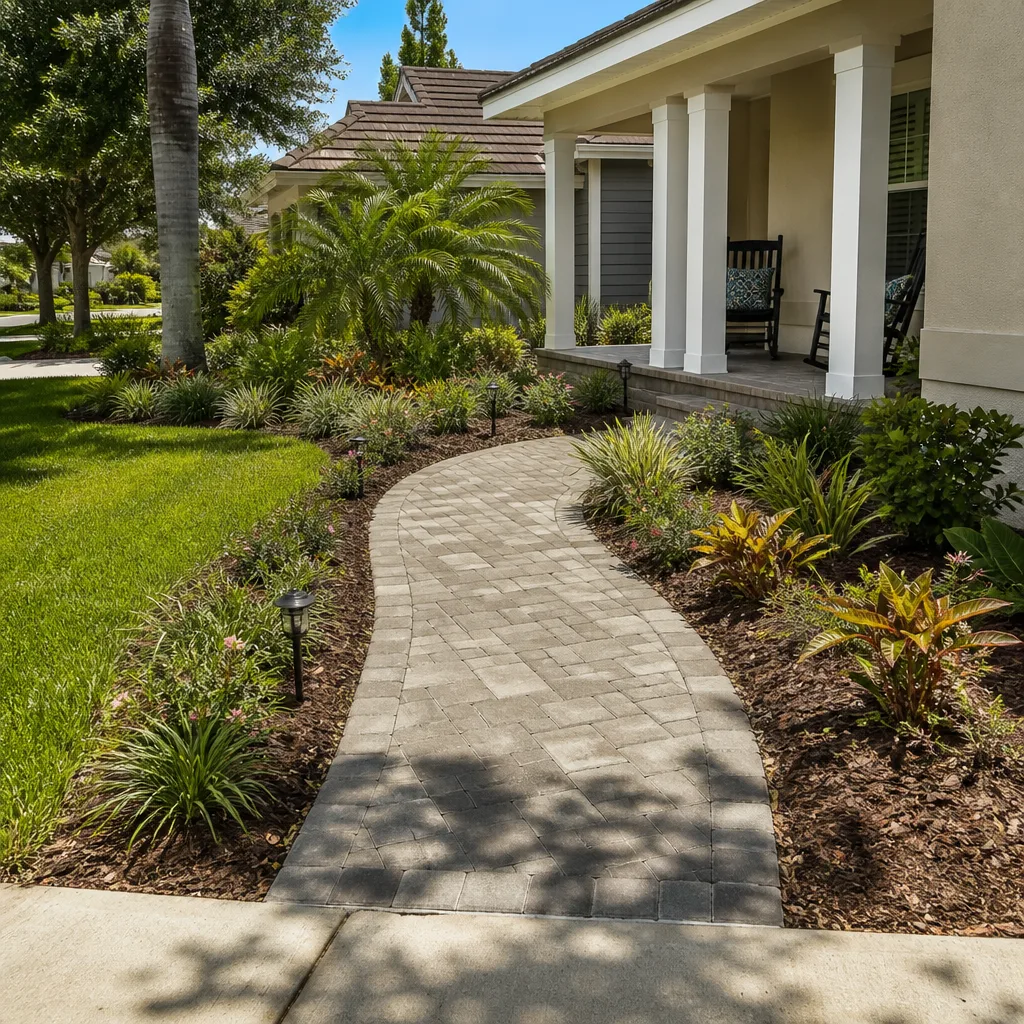
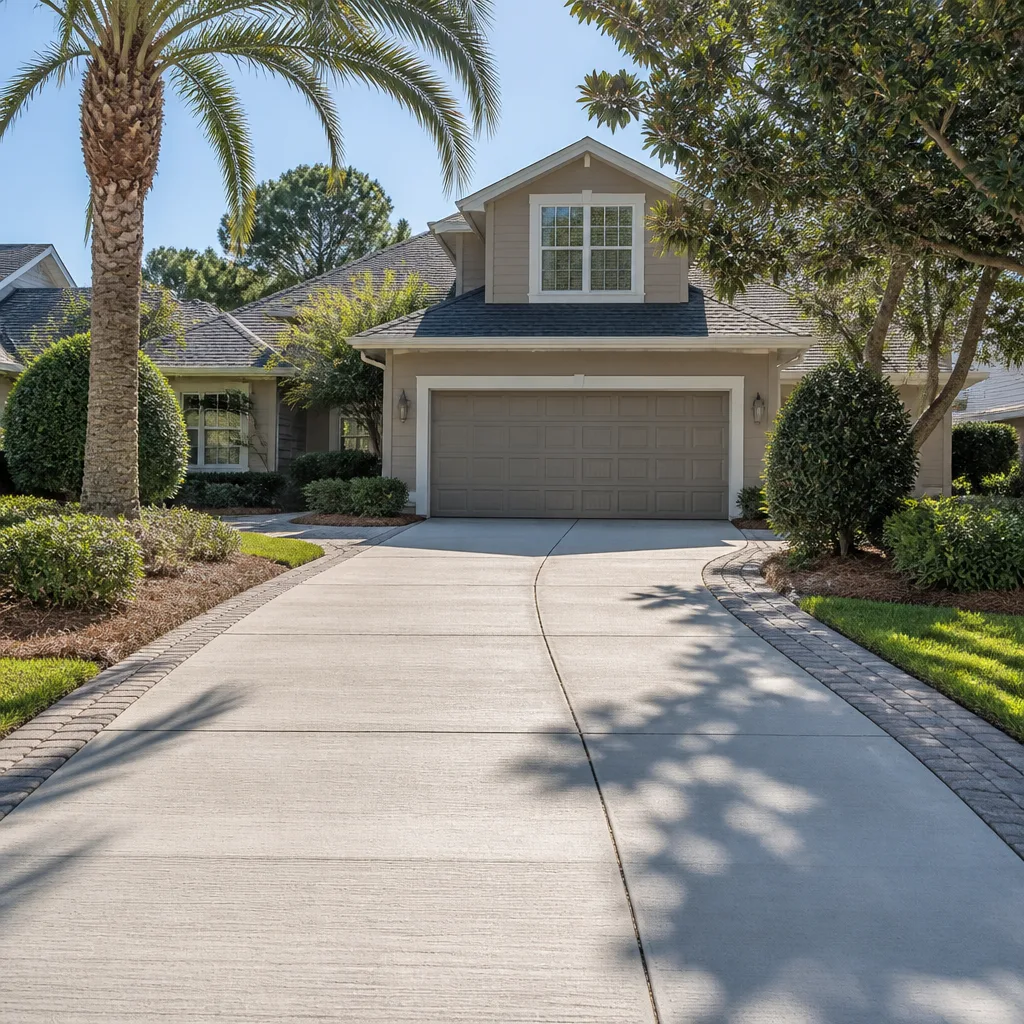
- A 1962 tract home with a sloped driveway. The clay under the pour shifts seasonally, and a stamped pattern that looked sharp at install starts showing hairline cracks along the faux joints within a few winters. The wet-winter slip risk on the grade is the second problem. Textured pavers solve both.
- A near-creek lot where drainage was never great. Winter rains expose a poorly drained base. With pavers, we can pull up a section, correct the base and drainage, and put it back. With concrete, that’s a break-out and repour, and the new patch won’t match.
- An HOA-governed mid-century neighborhood with visible-hardscaping rules. A natural-look paver field is generally easier to get through design review than a custom stamped pattern, because it reads as classic rather than novelty to a review board.
- A homeowner sold on stamped concrete purely for the look. Fair enough – a well-built stamped patio can look great on day one. We’ll say so honestly, then walk them through exactly what a future crack will cost to live with.
We bring this same straight-talk approach to every hardscape job. You can see how we handle the full scope on our Driveway & Pavers page, and if a project runs deeper into the house, our home page lays out the seven trades we cover from foundation to finish line.
Who Should Pick Stamped Concrete, and Who Shouldn’t
Stamped concrete makes sense in a narrow set of cases: a small, flat, well-drained area where budget is tight and you accept that a future crack may mean a full replacement rather than a tidy fix. If that’s genuinely you, it’s a defensible choice.
For most West Covina homeowners weighing stamped concrete vs pavers on a driveway, patio, or walkway that will see clay movement and winter rain, pavers are the lower-regret call. The up-front cost buys you a surface you can actually maintain – not one you cross your fingers on every spring.
When we install either option, we use top-tier material brands like Cambridge Pavers and Oldcastle for the paver side, so the unit colors and textures stay available for future repairs. Every installation is backed by the 730-Day Done Right Promise: if the stamped surface flakes or a paver base settles inside that window, we make it right at no cost to you. And if something looks off on a Sunday night, a live person answers at 24/7 – no voicemail black hole until Monday.
FAQs
Yes, stamped concrete usually costs less up front – roughly $4,500-$12,000 for a driveway versus $7,000-$18,000 for pavers. The savings shrink once you price in repairs, since a cracked stamped slab in our clay soil often needs a full section replaced and never matches. Call (844) 662-2335 for a free estimate on both options.
Rarely. Color and texture matching a weathered stamped surface after a crack is what installers call “ghosting,” and the patch usually stays visible. A paver, by contrast, can be lifted and replaced with a matching unit from the same batch. Call (844) 662-2335 and we’ll assess what your slab realistically needs.
Pavers hold up better because the system is flexible and each unit can be reset when the clay swells and shrinks. Stamped concrete is a rigid slab, and the decorative scoring lines act as built-in stress points, so cracks start there first. Call (844) 662-2335 to talk through your lot.
Textured or tumbled pavers keep their grip in the rain; a smooth, sealed stamped finish can get dangerously slick, especially on a slope. In West Covina’s wet winters that matters on any graded driveway. Call (844) 662-2335 for a walkthrough.
If you’d rather have it looked at, Groundwork Construction Co. of West Covina offers a no-pressure assessment in West Covina – call (844) 662-2335 and we’ll tell you straight which surface fits your lot.
Written by the team at Groundwork Construction Co. of West Covina, serving West Covina, CA.