
Top Signs You Need Construction Service – Don’t Ignore These
A hairline crack in stucco can cost around $200 to seal and paint over. That same crack left alone through 18 months of West Covina’s thermal swings – hot afternoons cooling hard into cold nights, dry summers into wet winters – can open a path for moisture into your framing and turn into a $12,000 conversation. Most homeowners call the first sign an eyesore and the later sign a crisis. The truth sits in between: your house is constantly sending you diagnostic data through cracks, stains, soft spots, and sticking doors. This post teaches you to read it.
If you’d rather have a trained eye look before you start guessing, call (844) 662-2335 and we’ll set up a free estimate.
1. Cracks: Settling vs. Structural Movement

A crack isn’t a verdict. It’s a clue. The skill is telling the harmless kind from the kind that means business, and you can learn the difference without an engineering degree by looking at four things: width, direction, displacement, and location.
Settling cracks are usually cosmetic. They’re thin (about the width of a credit card or less), stair-step along mortar joints, appear near corners of windows and doors, and don’t move over time. Older West Covina neighborhoods built on expansive clay soil see plenty of these, and most get sealed and forgotten.
Structural movement cracks behave differently:
- Width: wider than 1/4 inch, or getting wider over a few months
- Direction: vertical cracks that run beyond the corners of a door or window, or diagonal cracks wider at one end than the other
- Displacement: one side of the crack sits proud of the other – you can catch a fingernail on it
- Doors and windows: a door that suddenly won’t latch, or a window that sticks when it never used to, is a crack telling you the frame has moved
In our experience, the giveaway in West Covina is timing. A crack that shows up and stays put through a full wet-dry cycle is often settling. A crack that widens every August and never quite closes in January is asking for a pro. When in doubt, get it looked at before the rainy season, not after.
2. The Shared Root Cause: Soft Roofs, Water Stains, and Heaving Driveways
Here’s what a lot of homeowners miss: the soft spot in the roof, the brown ring on the ceiling, and the driveway slab lifting at the edge often aren’t three problems. They’re one problem wearing three costumes – water where it doesn’t belong, moving soil underneath, or both.
West Covina sits on clay-heavy ground that swells when it’s wet and shrinks when it’s dry. That movement works on everything at once:
- Driveway heaving happens when the soil beneath a slab shifts or a tree root pushes up from below. The slab lifts, water pools against the edge, and the freeze-thaw-free cycle of Southern California’s wet winters works on the seam.
- Roof soft spots usually mean the decking underneath has taken on moisture – often from a failed flashing detail or worn shingles – and the plywood has begun to give. Under IKO or Atlas shingles the deck is still wood, and wood tells you when it’s wet.
- Interior water stains on a ceiling are the roof or a plumbing line announcing itself. A stain that grows after rain, not after showers, points up.
What ties them together is grading. If your soil slopes toward the house instead of away, water sits against the foundation and against your pavers, and you get the crack-and-heave cycle on repeat. Fix the water path once and three “separate” repairs stop coming back. We regularly see this in West Covina homes where an old hardscape was poured tight to the wall with no fall at all.
3. The Timeline Problem: Why Deferred Repairs Cost More Than You Think
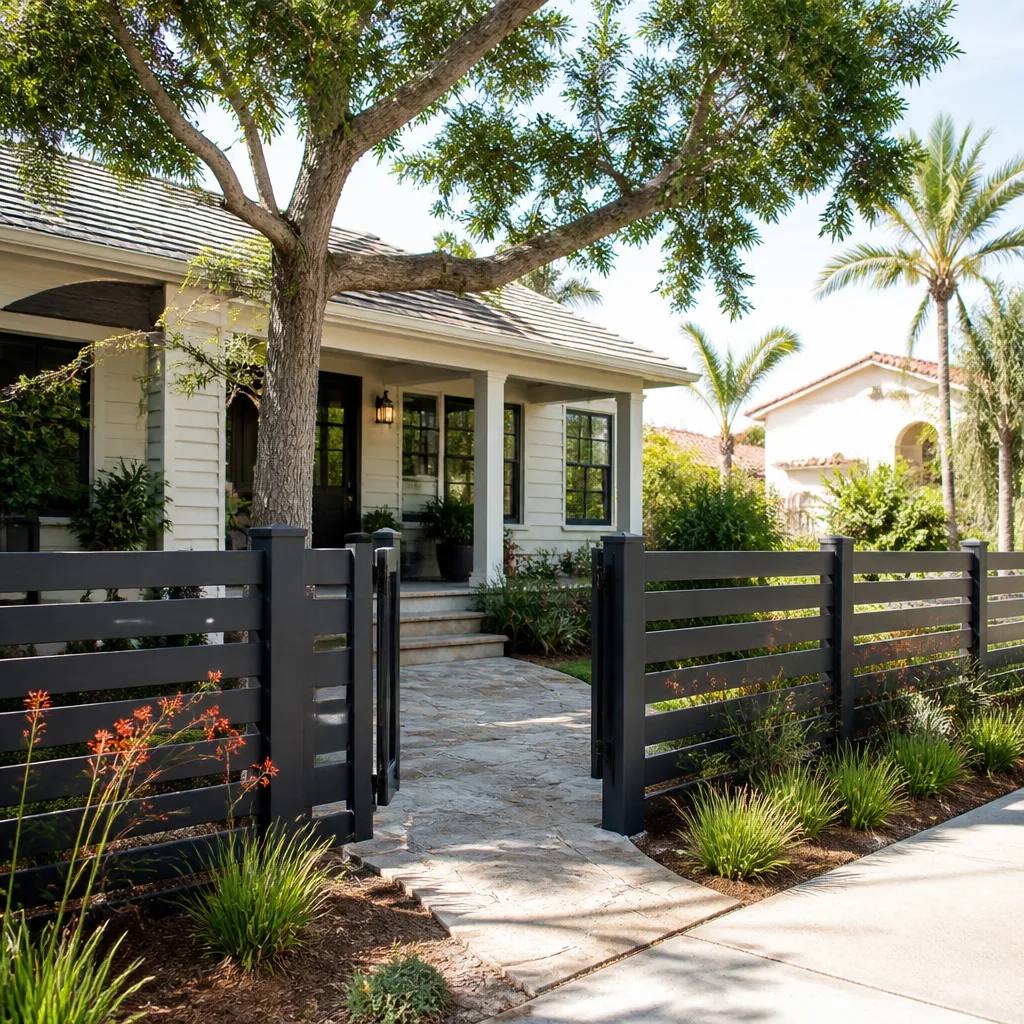
Maintenance doesn’t wear out in a straight line. It compounds. A small repair ignored doesn’t just stay a small repair – it invites a second problem that makes the first worse, and the cost curve steepens as you go.
Picture a worn shingle on a roof. Year one, it’s a $150 fix. Year two, water’s getting under the field and the flashing detail is compromised. Year three, the decking is soft and a fascia board is rotting. Year four, you’re into structural repair and the number looks nothing like where you started. Southern California’s climate makes this sharper than most people expect: months of dry heat crack and shrink materials, then the first real rain pushes water into the gaps that opened. A roof that looks fine in September can be leaking by February.
The same math hits driveways and stucco. A hairline crack traps water, water lifts the edge, the edge becomes a trip hazard, and suddenly you’re not patching – you’re replacing a slab or re-grading the whole approach. A modest fix in spring beats an emergency repair in December every time. That’s the argument for acting while the problem is still small, not because you’re being sold on it, but because the invoice is genuinely smaller.
4. HOA and City Code Triggers: When Repair Stops Being Optional
West Covina homeowners face a wrinkle that turns a “someday” project into a “this week” project: rules. A repair you’re choosing to defer can become one you’re required to complete, with fines attached.
The usual triggers:
- HOA architectural rules. If you’re in an HOA community, fence height, materials, and visible conditions (a leaning fence, peeling paint, a damaged driveway) are often governed. A neighbor complaint can start a compliance clock.
- City code enforcement. Failing fences, unsafe roof conditions, and nuisance standing water can draw a notice. Code violations generally carry deadlines and escalating penalties, and they don’t care that you were planning to get to it next year.
- Permit and inspection requirements. Larger fixes – a home addition, a fence over the typical height threshold, certain paver and hardscape changes – often need permits and inspections. Skipping them means redoing work or paying twice.
Here’s the practical part: a permit pulled and inspected up front is a small line item. A code violation on the books can affect a future sale and add fines on top. If you’re unsure whether your project crosses a threshold, ask before you build. Pulling permits and passing inspections is standard practice on the work we coordinate, and it saves homeowners headaches.
5. Same-Week Call vs. Same-Day Call: A Clear Framework

No hedging here. Some signs you can book a visit for this week. Some mean you pick up the phone now.
Same-day call
- Water actively coming through the roof or ceiling, or a ceiling that’s bulging
- A crack that’s widened noticeably in days, or a wall that’s visibly bowing
- A fence or hardscape leaning or lifting into a public walkway, or anything that could fall onto someone
- Water pooling against the foundation after every storm
Same-week call
- A soft spot in the roof you found but that isn’t yet leaking
- A stain that didn’t grow after the last rain but hasn’t gone away
- Cracks that are stable but wider than 1/4 inch
- A driveway heave that’s a nuisance, not yet a hazard
- Doors or windows that have started sticking through the season change
The rule of thumb: if water is moving or something could hurt someone, it’s a same-day call. If a problem is visible but holding steady, it’s a same-week call – schedule it before the next rain. When to call a pro: the moment a sign has displacement, active water, or a rule attached. Those don’t get better on their own.
Roof structure and framing are not DIY territory. Walking a roof to chase a soft spot, or opening a wall to check a crack, is how a small problem becomes an injury. That’s the work for a trained professional.
6. What Groundwork Brings to a West Covina Diagnosis
Once you’ve spotted the signs, the next step is a real assessment rather than a guess. Groundwork Construction Co. of West Covina is a full-scope construction partner, from foundation to finish line, which matters here – because the roof soft spot, the heaving driveway, and the cracked stucco often share one root cause, and it helps to have one team read all three.
A few things that set the work apart:
- Upfront pricing, no surprises. The number you see is the number you pay, with the line items written down before the work starts. We offer a free project estimate and design consult.
- The 730-Day Done Right Promise. If it’s not done right, we make it right. That’s one of the longest workmanship guarantees in the residential construction space, and it’s there because the repairs we do here are built to last, backed in writing.
- Live person, 24/7. Calls are answered by a real human around the clock – no voicemail black hole when a storm hits at 9 p.m.
- Background-checked, uniformed technicians on every job.
- Premium material partners across every trade – the kind of names that hold up in West Covina’s sun and rain. On roofs we work with manufacturers like IKO and Atlas; on hardscape and masonry, Boral and similar brands are in the mix.
There’s also standing help on cost: $1,000 off projects over $10,000 and 0% financing for 18 months. Our technicians have up to 12 years of experience on the tools. And when the scope is bigger than a repair – a new addition, a fence line, a driveway rebuild – we handle it under one roof instead of handing you off to three contractors who each swear the other guy caused the problem.
If you’re working through whether the sign you spotted is cosmetic or structural, our team is a good second set of eyes.
The Bottom Line
The signs you need construction service are almost always there before the bill is. Read them for what they are – diagnostic data, not just decorating problems:
- Cracks wider than 1/4 inch, cracks that widen over time, and doors or windows that suddenly stick mean get it looked at.
- Soft roof spots, ceiling stains, and heaving driveways often share one root cause in West Covina – water and moving soil.
- Deferred repairs compound. Fix while it’s small.
- HOA and city code can turn a “someday” fix into a mandatory one with fines.
- Water moving or anything that could hurt someone = same-day call. Everything else that’s holding steady = same-week call.
If you’re in West Covina and need help reading the signs on your own house, Groundwork Construction Co. of West Covina offers free estimates – call (844) 662-2335 and we’ll take a look. Upfront pricing, a 730-day promise behind the work, and a live person when you call.
Frequently Asked Questions
A settling crack is typically thin, runs along mortar joints near window and door corners, and stays the same width over time. A structural crack is wider than 1/4 inch, often diagonal with one end wider than the other, may have displacement you can feel with a fingernail, and keeps widening. If you’re unsure, that’s exactly what a free estimate is for – call (844) 662-2335.
A soft spot means the decking underneath has likely taken on moisture, even without an active leak. It’s a same-week call, not a same-day one, unless water is coming through. Left alone, it spreads into framing and fascia. Call (844) 662-2335 to get it assessed before the next rain.
Often, yes. Soil that’s moving under the house and water that isn’t draining away can cause both. Fixing the water path and grading once can stop three “separate” repairs from coming back. We see this regularly in West Covina homes on older hardscape. Call (844) 662-2335 for a free estimate that looks at the whole picture.
Not under upfront pricing – the number you see is the number you pay, with line items written before work begins. And all projects are backed by the 730-Day Done Right Promise. Call (844) 662-2335 for your free estimate.
Written by the team at Groundwork Construction Co. of West Covina.
Need Construction Help?
Call Groundwork Construction Co. of West Covina - licensed & insured, here with fast after-hours help in West Covina.
(844) 662-2335