
Home Additions & ADU: Repair or Replace? How West Covina Homeowners Decide
California’s ADU law removed most local barriers to building – but it didn’t remove the foundation, electrical panel, and sewer lateral limitations hiding inside homes built before 1980. The real first question in West Covina isn’t “build or don’t build.” It’s whether the structure you already own can support what you want to add without $40,000 in remediation you didn’t budget for. We’ve watched homeowners sign ADU contracts before checking their panel amperage, and almost every one of them came back to that decision with regret.
If you’d rather have someone walk the property and run the numbers before you commit, call (844) 662-2335. No pressure, no sales script.
Why the Repair-or-Replace Question Comes First in West Covina
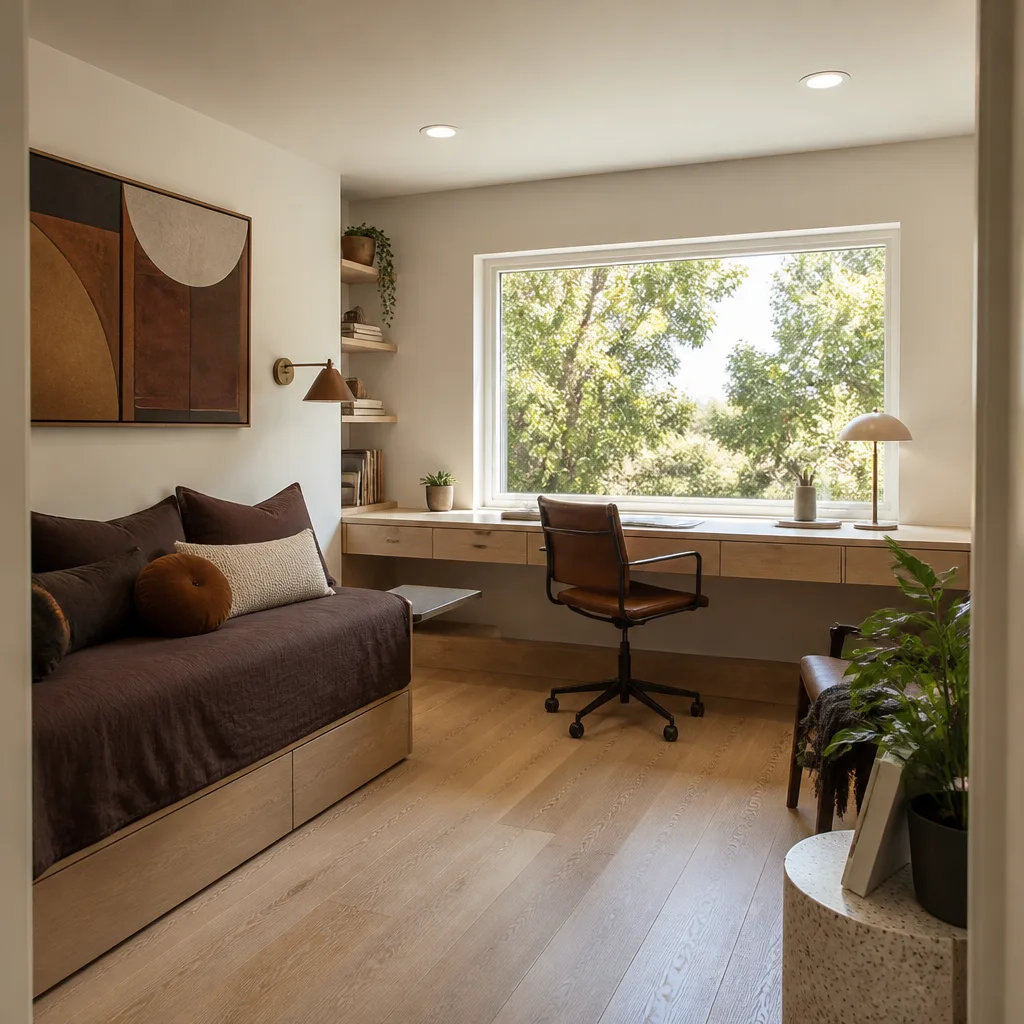
Most ADU guides start with square footage and rental projections. That’s the second conversation. The first one is about what’s underground and inside the walls of the primary house. West Covina has a large stock of ranch homes built between 1955 and 1975, and those houses were wired and plumbed for a fraction of the electrical load a modern ADU demands. A 100-amp panel running a 1970s kitchen won’t carry a second dwelling unit with its own HVAC, water heater, and appliances. Upgrading to a 200-amp service is a real cost, and depending on the run from the meter and the condition of the interior wiring, it can climb well past $8,000.
The sewer lateral is the other one. Older clay laterals under the front yard of many West Covina properties have been quietly root-infested for years. They handle a single household fine because there’s slack in the system. Add an ADU tenant and the line fails within months. We pulled one out of a garage conversion over near Shadow Oak Park last year where the lateral had a crack long enough to slide a hand into – nobody knew until the second bathroom started backing up.
Before you price a single ADU design, you want a structural assessment that covers:
- Foundation type and condition – slab-on-grade, raised, or post-and-pier, plus any visible cracking, settling, or moisture intrusion
- Electrical service capacity – panel amperage, available breaker space, and whether the service drop can be upgraded
- Sewer lateral condition and size – camera inspection, not a guess
- Roof load and age – especially if you’re adding a second story or a rooftop deck
- Lot coverage and setbacks – the existing footprint counts toward your allowance, and so does the new unit
That assessment is a few hundred dollars. Doing it in the wrong order costs thousands. If you’d rather not dig into this yourself, that’s exactly what our Home Additions & ADU in West Covina team handles on a free estimate visit.
When Converting a Garage or Basement Beats a Detached ADU (And When It Doesn’t)
Converting an existing garage into a livable ADU is usually the cheaper path in West Covina. The foundation is already there, the roof is already there, and you’re not adding new impervious surface to the lot. That last point matters more than most homeowners realize, because lot coverage rules count everything under roof. A garage conversion sidesteps that calculation entirely.
The math usually looks like this:
- Garage conversion: roughly $95,000 to $175,000 for a full, permitted, livable unit – new insulation, drywall, flooring, kitchenette, bathroom, separate entrance, and utility tie-ins. You’re building inside a shell that already exists.
- Detached new-construction ADU: roughly $180,000 to $320,000 for a comparable 500 to 700 square foot unit, before site work. That figure climbs fast when the lot needs grading, a new utility trench, or a longer sewer run.
So when does conversion lose? When the existing structure is too compromised to be worth saving. A garage with a failing slab, termite damage through the top plates, or a roof at the end of its service life often costs more to rehabilitate than to tear down and reframe. We see this a lot in the older blocks near Cortez Park, where converted garages from the 1960s were done without permits and later covered over. Unpermitted work almost always costs more to correct than it saved the previous owner.
The honest rule: if the structural repair to make the existing space code-compliant runs past about 40% of the cost of building new, replace rather than repair. Below that line, convert.
How West Covina’s Setback, Lot Cover, and Occupancy Rules Shape the Decision
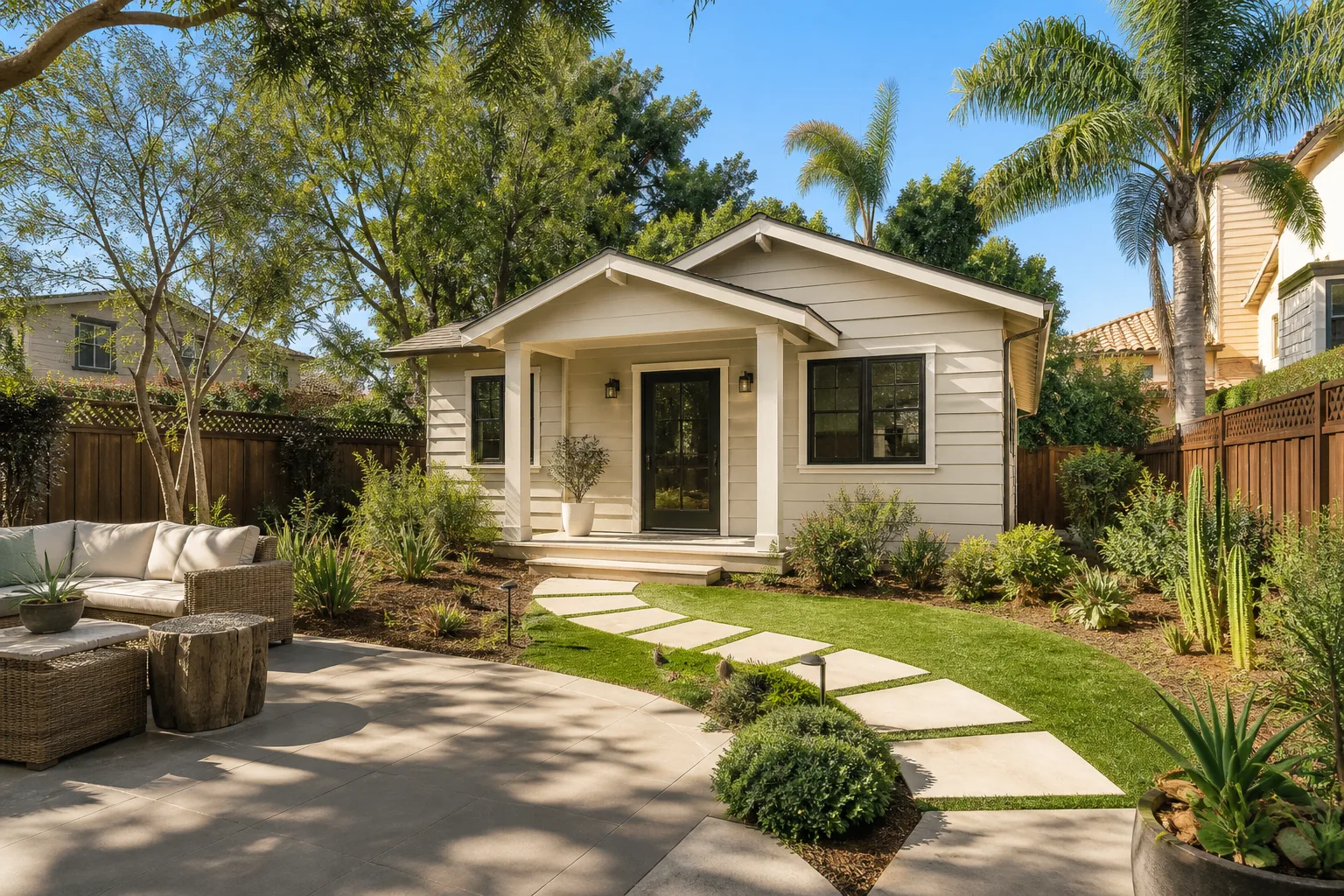
State law loosened the local obstacles to ADUs, but it didn’t erase the geometry of your lot. West Covina lots are commonly in the 6,000 to 7,500 square foot range, and once you subtract the primary house, the driveway, and the required rear and side setbacks, the buildable pocket for a detached unit can shrink to something that barely fits a 400 square foot studio. That’s still allowed under state rules – but a 400 square foot detached ADU often costs nearly the same per square foot as a 700 square foot one, because the expensive parts (foundation, utilities, roof, kitchen, bathroom) don’t scale down much.
The practical questions to run through before you commit to detached:
- Does the buildable area clear the rear and side setbacks with room for a walkway and access?
- Will the new unit push the property over the allowed lot coverage?
- Is the owner-occupancy requirement or its exemption status clear for your situation?
- Can the utility runs reach the new unit without crossing a driveway or a mature tree’s root zone?
Owner-occupancy rules in California have shifted more than once in recent years, and the details matter for whether you can rent both the primary house and the ADU. This is a “call the city and confirm in writing” item, not something to take from a blog post – including this one.
Cosmetic Renovation vs. Structural Repair: What Actually Unlocks ADU Potential
Homeowners often come to us wanting a cosmetic refresh on an aging space they intend to convert later. New flooring, fresh paint, updated fixtures. That work is fine if the space is going to stay a rec room. It’s wasted money if the goal is a legal, rentable ADU, because none of it touches the structural, electrical, or plumbing items that actually gate the permit.
What unlocks ADU potential is unglamorous:
- Foundation repair or leveling – a slab with significant settlement won’t pass inspection as a habitable unit floor
- Framing corrections – especially in older garage conversions where a previous owner notched or cut structural members
- Roof structure and weatherproofing – new GAF or CertainTeed roofing systems on a properly sheathed deck, not a patched-over original
- Electrical and plumbing rough-in – sized for the new load, permitted and inspected, not tapped off an existing circuit
Those are the line items that turn a shed with a couch into a legal dwelling. Everything else is decoration on top. When the structure is sound and the utilities are sized right, a cosmetic finish is the last 15% of the job.
How to Calculate ADU ROI Without Fooling Yourself
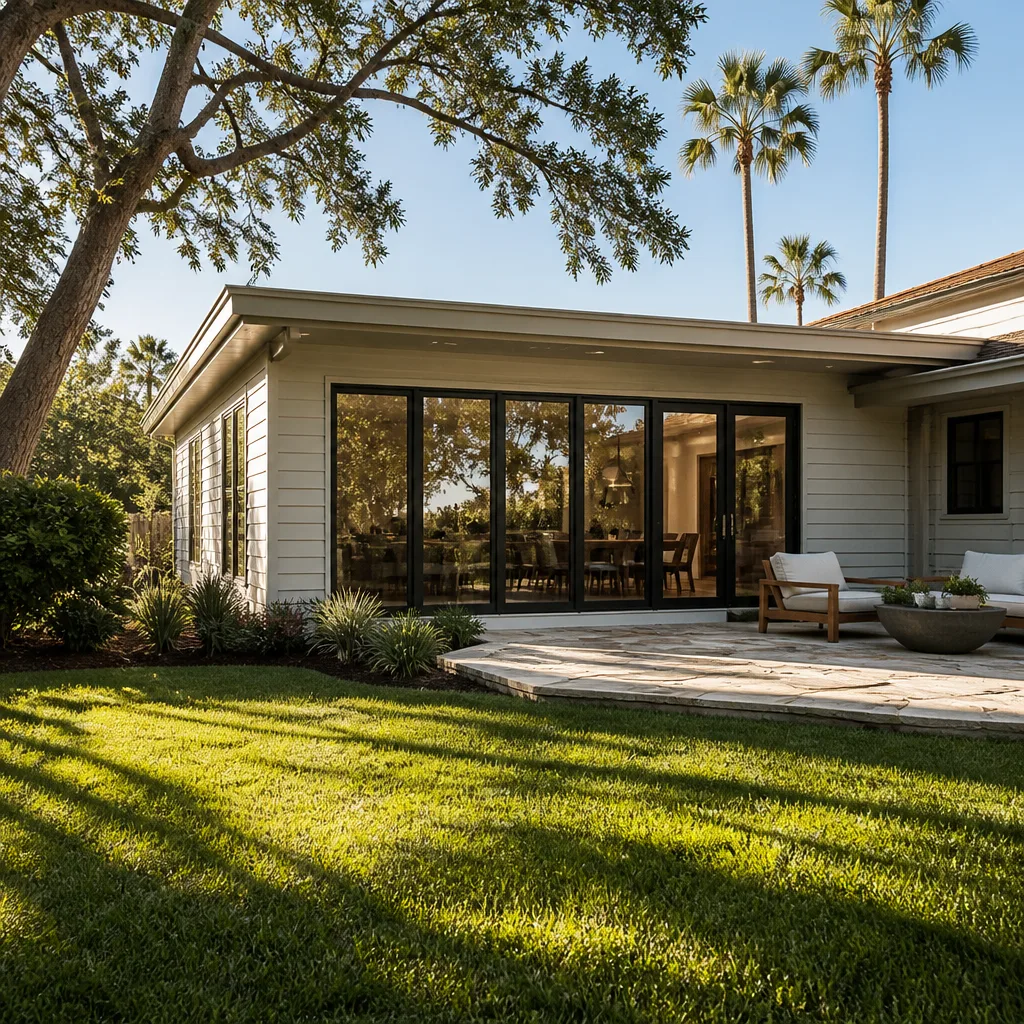
Rental projections are easy to love. Total project cost is where the honesty lives. West Covina ADU rents have been running in a wide band depending on size, finish level, and whether parking is included, so treat any single number you hear with suspicion and get local comparables. Then subtract the costs people leave off the spreadsheet:
- Utility connection and upgrade costs (panel, meter, water, sewer tie-in)
- Site work: grading, drainage, walkways, fencing around the new unit
- Permit and impact fees
- Landscaping restoration after trenching
- Ongoing maintenance on a second structure
A rough payback math: take gross annual rent, subtract vacancy and maintenance allowance, and divide your all-in project cost by that net number. Most West Covina ADU projects land somewhere between a 12 and 20 year payback on the rental income alone – but the property value lift often shortens the real return. Get a written, line-item estimate before you sign anything. Upfront pricing, no surprises, is the only way to run this math honestly. Our Groundwork Construction Co. of West Covina home page lays out how we approach estimates across every service line.
When to Call a Pro (and What to Check First)
Foundation work, panel upgrades, sewer laterals, and structural framing are the four places where a DIY instinct turns into a callback from the city inspector. None of that is a weekend project, and some of it is genuinely dangerous – a service panel swap on a live electrical feed is not a homeowner job, and we’d rather tell you that plainly than sell you a shortcut. If any of these show up on the assessment, bring in a licensed professional:
- Visible foundation cracks wider than a quarter inch, or doors that stick seasonally
- A panel with no available breaker space, or Federal Pacific or Zinsco equipment
- A sewer line with root intrusion or offset joints on camera
- Framing that’s been cut, notched, or modified by a previous owner
Our technicians have up to 12 years of experience with exactly these calls, and we walk the property before quoting a number. That’s also the moment to think about the surrounding site: if the ADU plan includes a new driveway approach or a privacy fence between the units, our Driveway & Pavers in West Covina and Fence Installation in West Covina teams fold those line items into the same scope, so you’re not juggling three contractors on one lot.
The Bottom Line
In West Covina, the repair-or-replace decision on a home addition or ADU comes down to what you find underground and inside the walls before you ever open a design catalog. Run the structural assessment first. Weigh garage conversion against detached build honestly, with the lot geometry and code reality in front of you. Then price the whole scope – utilities, site work, permits, and finish – in writing, so the ROI math actually means something.
Everything we build is covered by our 730-Day Done Right Promise – if it isn’t done right, we make it right. Calls get answered by a live person around the clock, and our background-checked technicians arrive in uniform, not in an unmarked van. There’s 0% financing for 18 months and $1,000 off projects over $10,000 to make the numbers work on your end. If you’re in West Covina and want a straight answer before you commit, Groundwork Construction Co. of West Covina offers free estimates – call (844) 662-2335.
Frequently Asked Questions
Yes, but plan on a structural and utility assessment first. Homes built before 1980 commonly need a panel upgrade, a sewer lateral inspection, and a foundation review before an ADU will pass plan check. Budget for those as line items, not surprises – most West Covina projects land between $8,000 and $25,000 in remediation before the ADU work itself starts. Call (844) 662-2335 and we’ll walk your property and put real numbers on it.
Usually, yes – roughly $95,000 to $175,000 for a permitted conversion versus $180,000 to $320,000 for a comparable detached build. The gap closes fast if the garage slab or framing is compromised. Call (844) 662-2335 for a free estimate and we’ll tell you which path your specific structure supports.
In most West Covina cases, yes. A 100-amp panel serving an older single-family home usually can’t carry a second dwelling with its own HVAC, water heater, and appliances. A 200-amp service upgrade is the common fix, and it has to be permitted and inspected. That’s a licensed electrician’s job – never a homeowner swap on a live panel. Call (844) 662-2335 and we’ll scope the electrical portion alongside the rest of the project.
Not on an upfront-priced contract – the number you see is the number you pay. The only legitimate reason a price moves is a condition hidden behind the walls that no inspection could have found, and that gets written up and approved by you before anyone picks up a tool. Call (844) 662-2335 to schedule a free estimate and design consult.
Written by the team at Groundwork Construction Co. of West Covina.
Need Construction Help?
Call Groundwork Construction Co. of West Covina - licensed & insured, here with fast after-hours help in West Covina.
(844) 662-2335