
Fence Installation: Repair or Replace? How West Covina Homeowners Decide
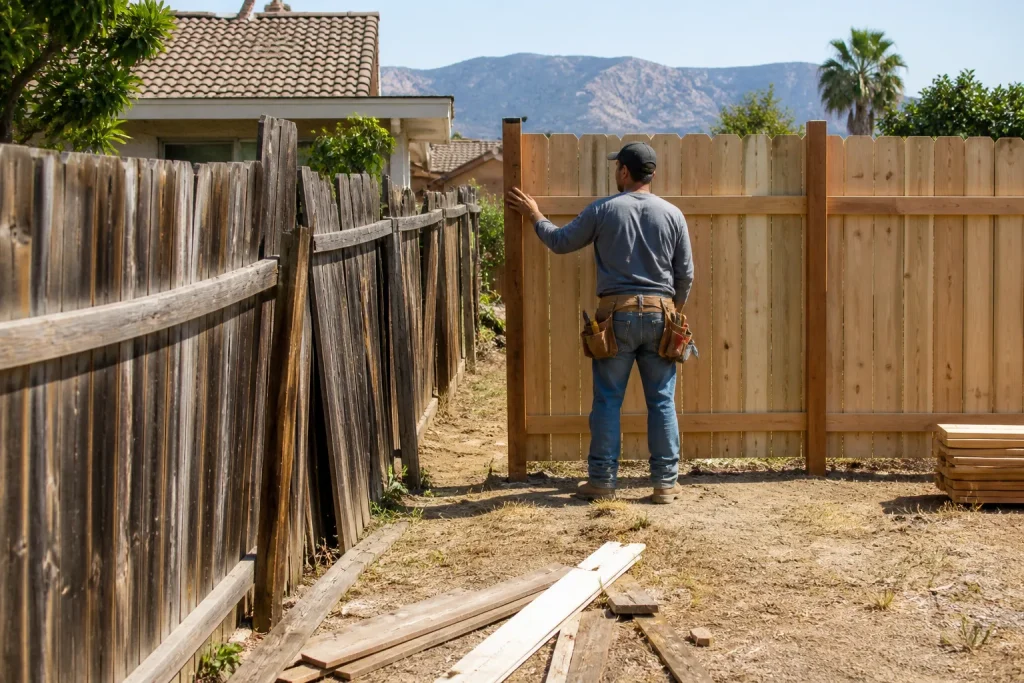
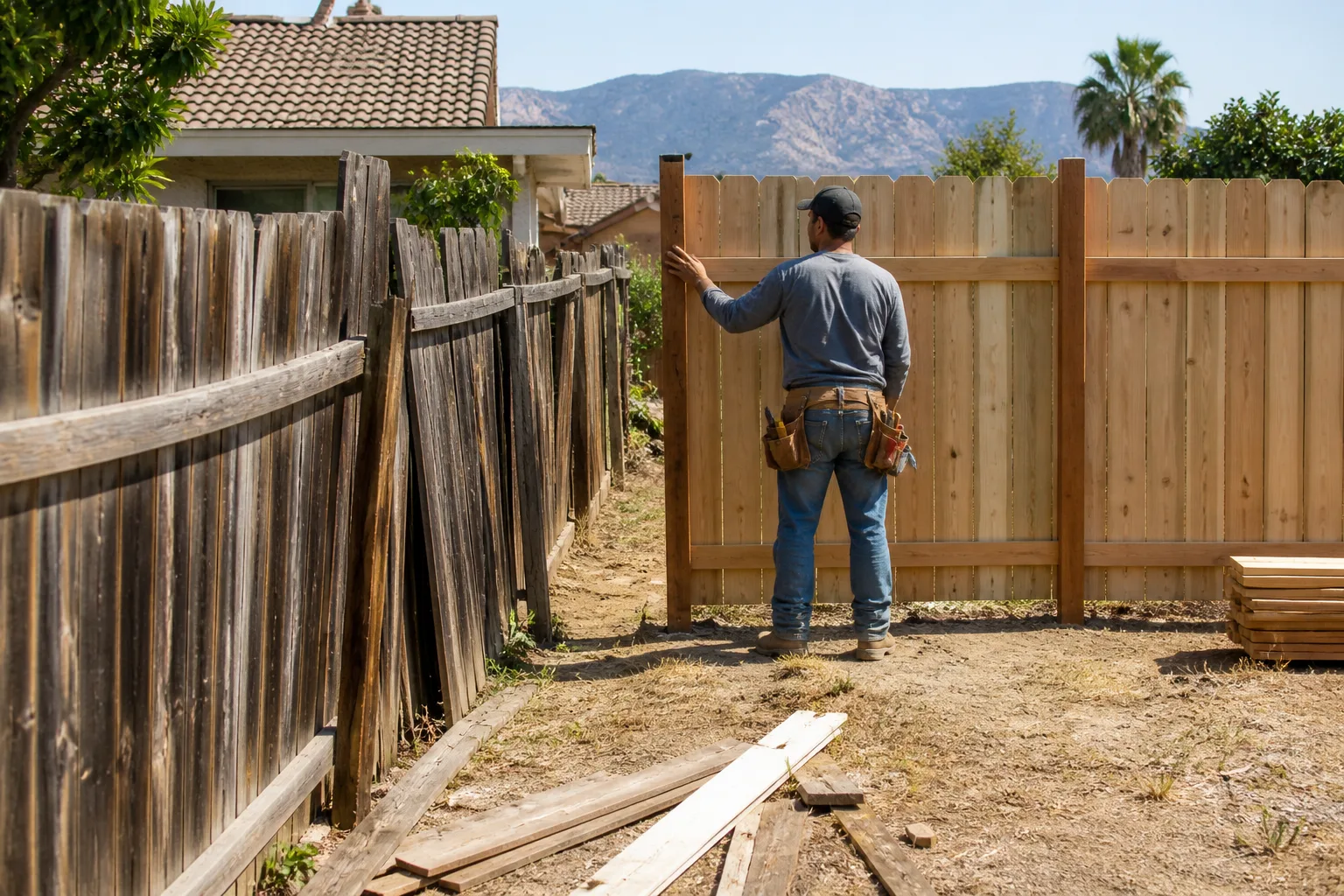
A leaning fence post isn’t a cosmetic problem. It’s a foundation problem, and in West Covina’s clay-heavy soil, one compromised post puts load on every panel connected to it. Most homeowners patch the visible panel and call it done, then watch the same section lean again within a year. The real decision comes down to three physical checkpoints – post footing integrity, rail rot depth, and panel warping – that tell you whether a targeted repair buys a decade or just delays the inevitable. This guide walks through each one so you can decide with facts instead of guesswork. And if you’d rather not dig post holes in July, call (844) 662-2335 for a free estimate.
Why West Covina Soil Changes the Repair-or-Replace Math
West Covina sits on some of the most expansive clay soil in Los Angeles County. That matters for fences more than most homeowners realize. Clay swells when it’s wet and shrinks when it dries, and our dry summers followed by winter rains work that soil like a bellows. Compared to the sandier, better-draining soils in places like Downey or Torrance, a fence post set in West Covina clay takes a beating at the base.
The practical result: post bottoms rot and shift faster here. We’ve pulled posts in the flats near Cortez Park that were soft six inches above the concrete line, while the same fence panel up top looked perfectly fine. Out toward South Hills, the soil composition changes again and you’ll see posts that heave upward through the dry season.
What that means for your decision:
- A post that’s loose but still solid wood can sometimes be reset or sistered to a new footing.
- A post with rot below grade can’t be saved, no matter how good the above-ground wood looks.
- Prep work matters more than materials here. Any replacement needs proper footing depth and gravel drainage if it’s going to last through ten wet seasons.
This is why a contractor who gives you a bid in five minutes without probing the post base is guessing. In our experience, a five-minute post check tells you more than an hour of looking at the panels.
The Three Structural Checkpoints That Decide Repair vs. Replace
Here’s the framework we use on every West Covina fence inspection. Run these three checks and you’ll have a clear answer.
1. Post Footing Integrity
Grab the post at hip height and push. A solid post moves less than an inch at the top. Any wobble means the footing has failed. Look for concrete that’s cracked away from the post, or a gap where the soil has pulled back. In West Covina clay, a failed footing usually shows up as a post that moved sideways during a wet winter and never came back. One or two failed posts in a run can be repaired by supporting the adjacent panels with temporary bracing and re-setting the problematic post. More than that and you’re often throwing money into a fence that keeps failing.
2. Rail Rot Depth
Push a screwdriver into the horizontal rails, especially where they meet the posts. If it sinks in easily, the wood is gone. Surface rot you can sand and seal. Rot that reaches past a quarter-inch into the rail means the structural strength is compromised. In West Covina’s dry summers, rot dries and looks cosmetic. It isn’t – the wood loses its grip on fasteners, and the fence becomes a wind-catching sail for the first Santa Ana event of the season.
3. Panel Warping
Stand at one end of the fence and sight down the line. A fence that waves like a water snake has panels that have twisted from moisture cycling. One or two warped panels can be replaced. A run of five or more means the underlying framing has moved and you’re facing repeat repairs.
Our rule: If a fence passes all three checks, repair it. If it fails two or more, replace it. If it fails one, we quote both so you can see the numbers side by side.
What West Covina HOA Fence Rules Actually Require
We hear a lot from customers about what “the HOA requires,” and much of it doesn’t match what the HOA documents actually say. Here’s the honest version.
Most West Covina HOAs set fence height at six feet for rear and side yards, with front-yard fences typically at three to four feet and often requiring a decorative design rather than solid privacy boards. Materials are usually the sticking point. Many HOA governing documents list acceptable materials – vinyl, composite, or wood in specific stains – and quietly disallow chain-link and some metal finishes in visible areas. Setback rules and design approval requirements vary property to property.
What contractors sometimes claim the HOA requires:
- “You need the exact same fence style as the neighbor.” Usually false. Most documents specify materials and height, not matching a neighbor’s design.
- “The HOA requires a permit for repairs.” Rarely true for like-for-like repairs, though replacement in some associations requires architectural review approval.
- “Approvals take six weeks, so we have to start now.” Sometimes timelines do stretch, but a contractor using that line to rush you into a deposit is a red flag.
Before any West Covina fence project, pull out your CC&Rs and look at the section on fences and walls. If it’s unclear, call the management company and ask for the current architectural review checklist. We do this on every job because a fence that passes city inspection but fails HOA review means tearing it back out.
The Cost-Per-Year-of-Life Math: When Repair Is the Wrong Answer
Here’s the part most fence conversations skip: repair versus replace isn’t a comparison of dollar amounts. It’s a comparison of dollars per year of remaining life.
Take a typical West Covina scenario. A twelve-year-old wood fence needs two posts reset and three panels replaced. A contractor quotes $400. That seems like the smart move compared to a new fence at $2,800. But if the underlying fence has used up most of its useful life, that $400 repair buys you maybe two years before the next round of failures. That’s $200 per year, and the new fence at $2,800 that lasts fifteen years works out to about $187 per year. Same math, worse outcome – and you still have an aging fence.
Flip it: a $400 repair on a six-year-old fence that will last another decade is a clear win at $40 per year. The fence has real life left in it and you’re preserving it.
Rules of thumb we use in West Covina:
- Repair beats replace if: the fence is under eight years old, fails only one checkpoint, and the total repair cost is under 20% of a replacement quote.
- Replace beats repair if: the fence is over twelve years old, fails two or more checkpoints, or the repair cost climbs above 30% of a replacement quote.
- Get both quotes whenever the fence falls in between, and compare them on the per-year basis, not on the total price.
One reminder on materials: a replacement at the low end usually means builder-grade wood that will be back on this list in ten years. A good fence should give you more years than that.
Getting a Written Scope That Commits to Outcomes, Not Just Materials
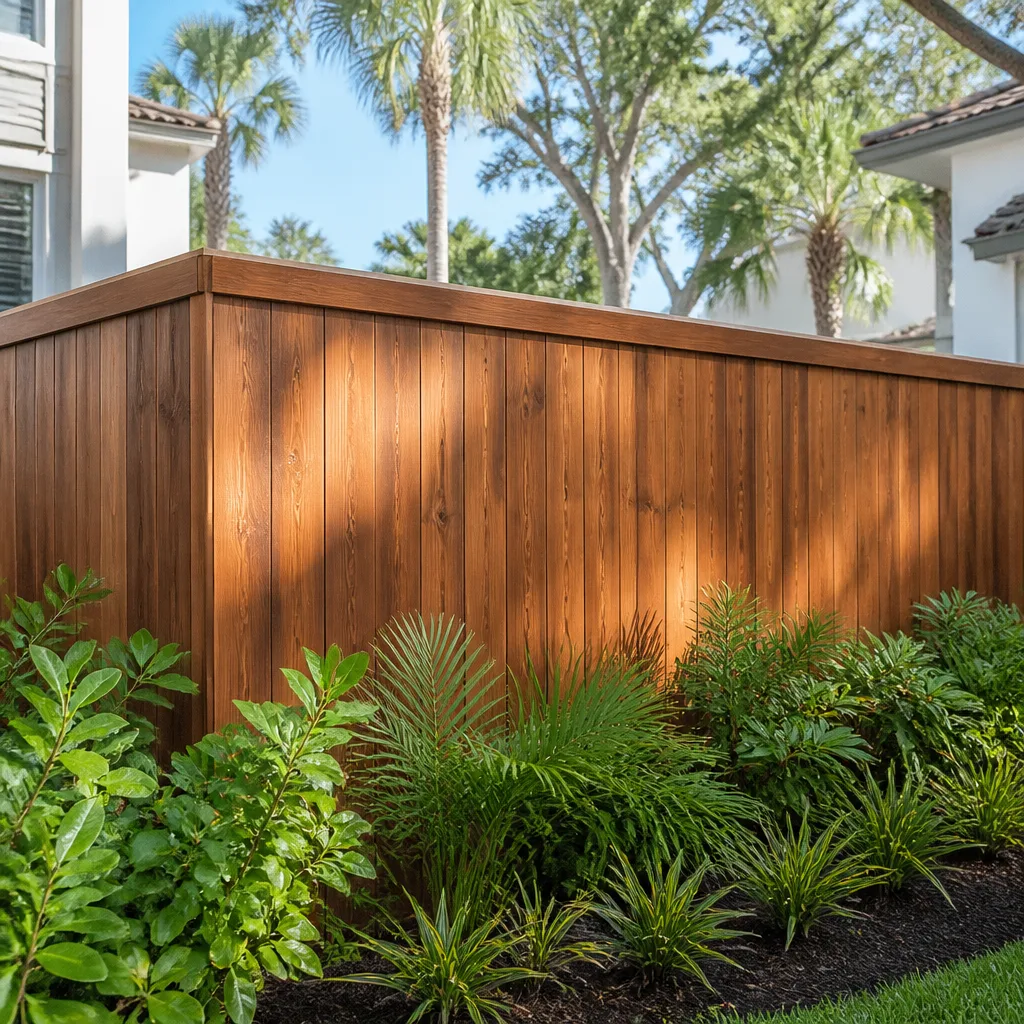
The single biggest source of fence disputes we see comes from a scope that says “install wood fence, 6 feet, cedar” and nothing else. A materials list isn’t a scope. It doesn’t tell you how the posts are footed, how the rails are attached, whether caps are included, or who tears out the old fence. Then the crew arrives and the fine print grows.
A usable written scope for a West Covina fence project spells out:
- Post footing specification – depth, concrete type, gravel drainage at the base. In West Covina’s clay, footings need to go past the active clay layer.
- Rail and fastener specification – what hardware, how attached, whether the fasteners are rated for exterior use.
- Removal and disposal – who pulls the old fence, who hauls it, who restores the ground.
- HOA and permit responsibility – who handles paperwork, and what happens if the design changes.
- Explicit outcome statements – for example, “fence will be plumb within 1 inch across 30 feet” and “no post will be footed in disturbed soil.”
Ask for the scope in writing before you sign anything. A contractor who can’t put the footing spec into writing is a contractor who’ll figure it out on your dime. We put the outcome commitments into the quote and back them with a 730-Day Done Right Promise, so if the fence isn’t what we said it would be, we come back and make it right.
When to Call a Pro
Fence posts sit in soil that may hide gas, water, or irrigation lines. Digging post holes near a utility easement is where DIY fence projects get dangerous, and the injury risk of a fence that’s failed structurally but looks fine is real. If you’ve run the three checkpoints and found rot below grade, footing failure, or multiple warped panels, call us. A free estimate gets you a written scope and both the repair and replacement numbers in writing.
Related services in West Covina: Fence Installation in West Covina for full replacement projects, Driveway & Pavers in West Covina for patio and hardscape work around a new fence line, and Home Additions & ADU in West Covina when a new structure changes your property line layout.
The Bottom Line
In West Covina, fence decisions come down to three checks: post footing integrity, rail rot depth, and panel warping. Run all three before you call anyone. Then compare the repair quote and the replacement quote on dollars per year of remaining life, not total cost. Pull your HOA documents and check what the rules actually say rather than what a salesperson claims. And never sign a scope that lists materials without committing to outcomes.
If you’re in West Covina and need help deciding, Groundwork Construction Co. of West Covina offers free estimates – call (844) 662-2335. We answer with a live person around the clock, show up with uniformed, background-checked technicians, and put our pricing and workmanship promise in writing. For the full scope of what we build, see the Groundwork Construction Co. of West Covina home page.
Frequently Asked Questions
Repair a leaning fence if the post is still solid and the footing failure is isolated to one or two posts – a properly reset post can add years of life. Replace it if more than two posts are failing, or if the rails show rot past a quarter-inch depth. West Covina’s clay soil makes post footing failure the most common issue, so the leaning post is often fixable if you catch it early.
Targeted repairs typically run in the low hundreds for one or two posts with panel work, and replacement of a full run runs several times that. A written quote should separate the post work, panel replacement, and disposal so you can see where your money is going. Call (844) 662-2335 for an exact quote – estimates are free and we’ll quote both repair and replacement so you can compare.
A good contractor will tell you what your HOA documents actually require and will submit the architectural review paperwork for you, but the approval decision belongs to the HOA. Read your CC&Rs before you sign a contract and check the height and material sections carefully. We build HOA compliance into the scope so you don’t get caught by a rejection after the fence is up.
No. Once the post has rotted below the concrete line, the structural connection between post and footing is gone and no surface treatment will bring it back. The post has to be pulled and a new post set in a fresh footing with drainage gravel. That’s a job for a trained installer – a failed footer near a utility line or gas easement is a real safety concern, and the injury risk of a structural post collapse isn’t worth the saved labor cost.
Written by the team at Groundwork Construction Co. of West Covina.
Need Construction Help?
Call Groundwork Construction Co. of West Covina - licensed & insured, here with fast after-hours help in West Covina.
(844) 662-2335