
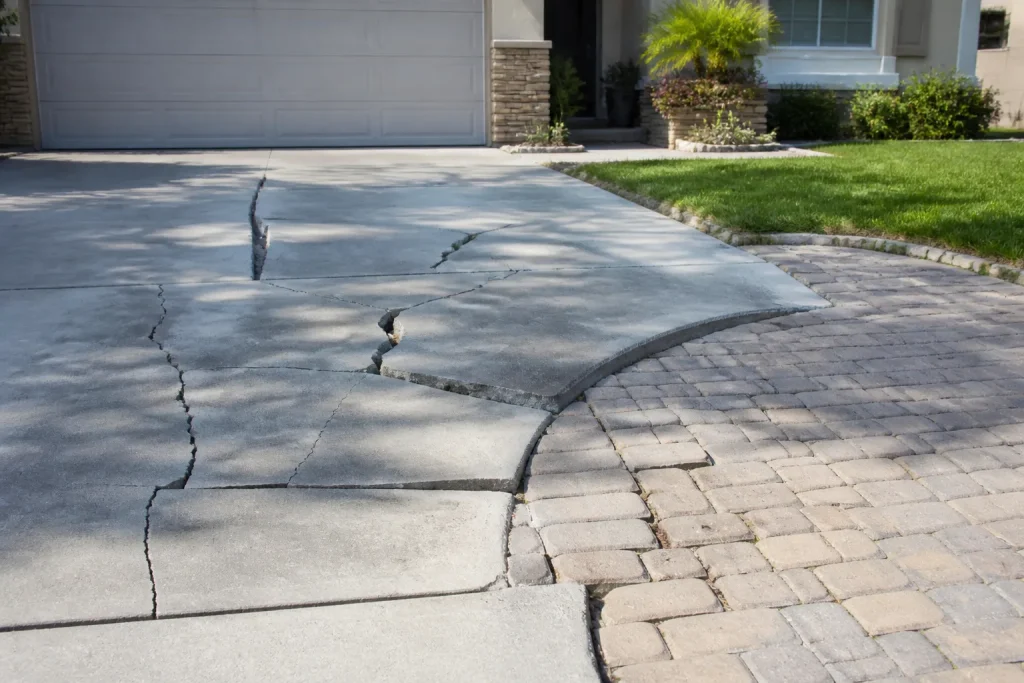
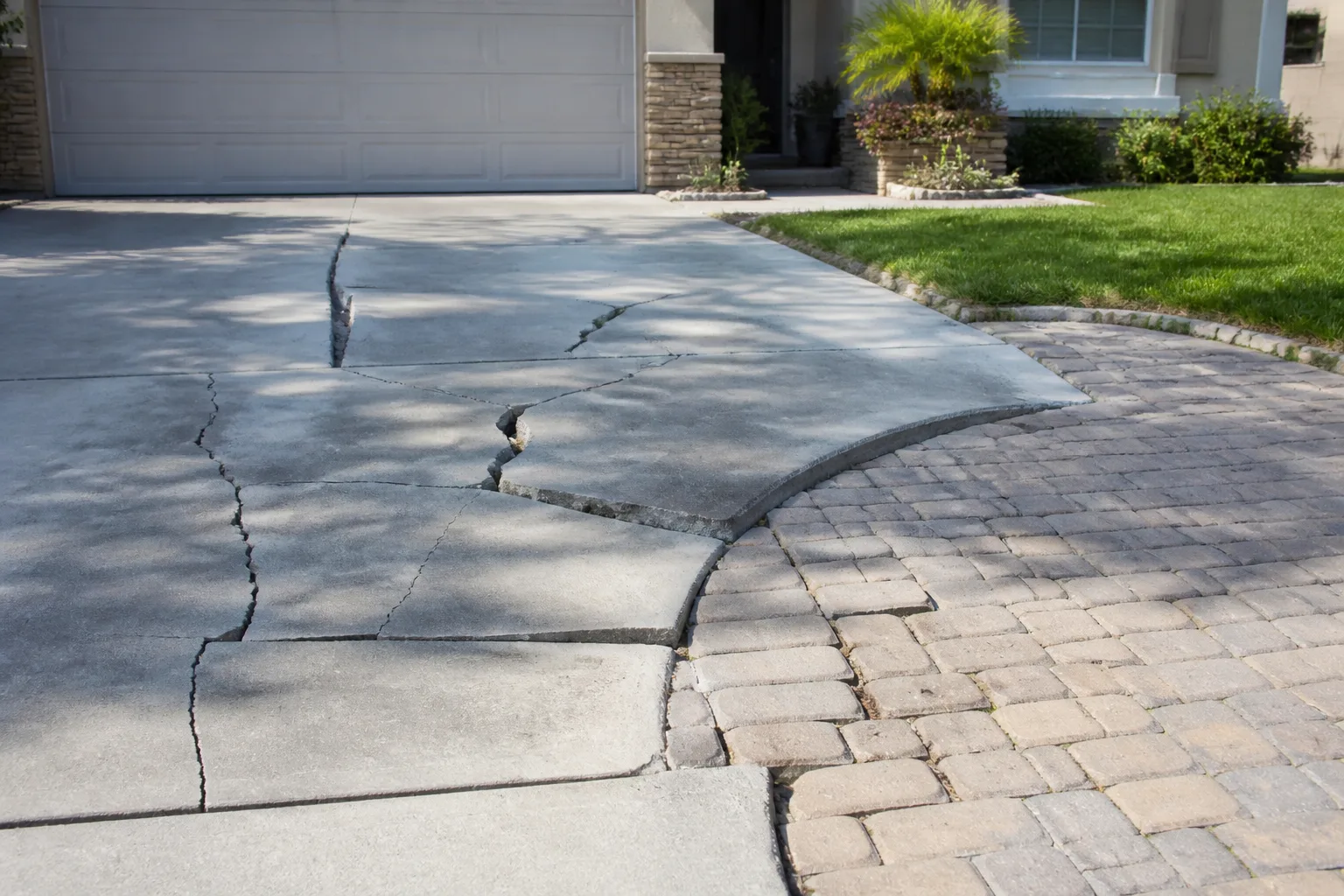
Driveway & Pavers: Repair or Replace? How West Covina Homeowners Decide
If a contractor recommends full driveway replacement before probing the base in at least three locations, they’ve skipped the one step that actually determines whether replacement is necessary. The repair-or-replace call on a paver driveway comes down to base condition, not surface appearance, and most West Covina homeowners never get to see that assessment because replacement carries better margins. Here’s the diagnostic framework to run yourself, so you can read a bid with clear eyes. If you’d rather not sort through it alone, call (844) 662-2335 and we’ll walk the driveway with you.
Why Does Base Condition Decide Repair vs. Replacement?
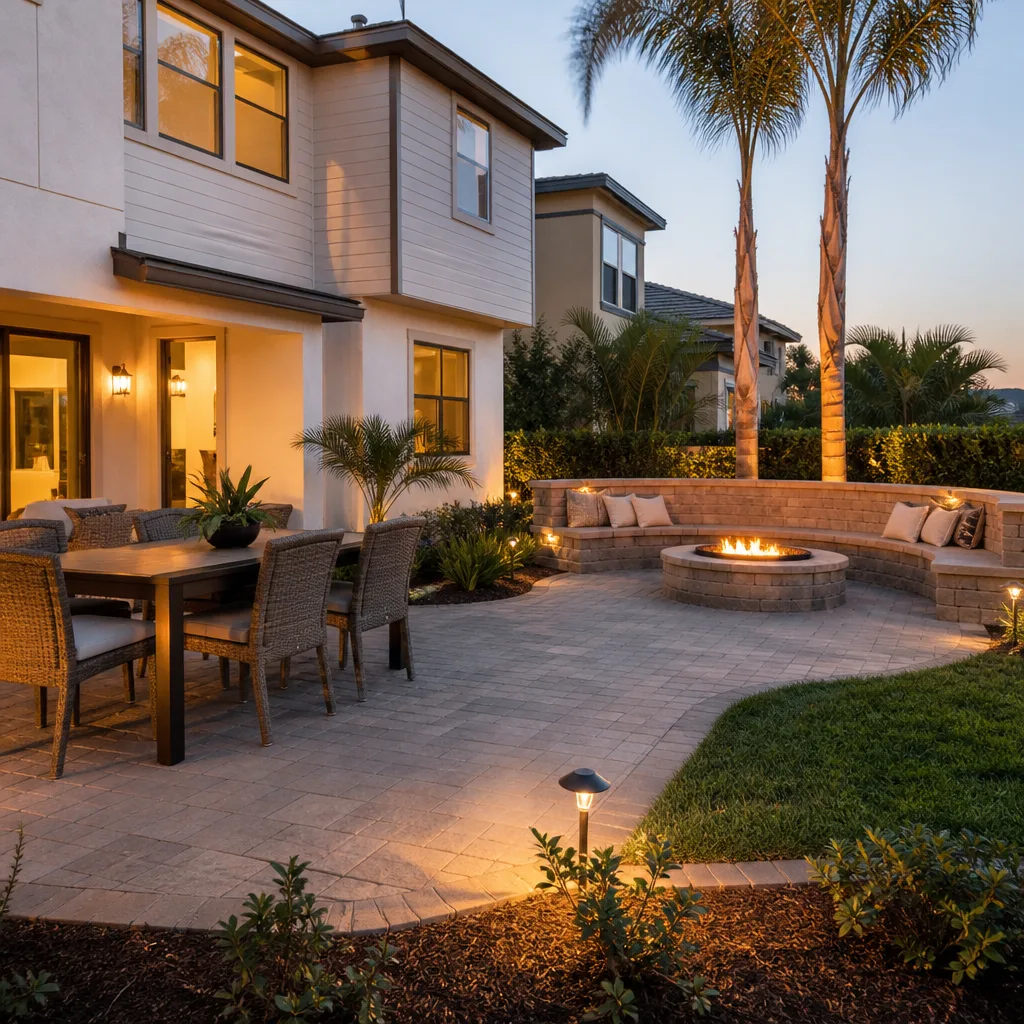
Pavers are the visible layer of a system. Underneath sits a compacted aggregate base, usually 4 to 6 inches on a residential driveway, plus a bedding sand layer an inch or so thick. The pavers can look rough while the base is sound, and they can look fine while the base is failing underneath. That’s why surface cracks, stains, or a few loose units tell you almost nothing on their own.
Our technicians have up to 12 years of experience on West Covina driveways, and the pattern holds: the base is what fails first, especially on the older lots around downtown and the Cortez Park area where original soil wasn’t always compacted to modern standards. When the base holds, you repair. When it doesn’t, you replace – and no amount of re-sanding or re-leveling will fix it for long.
The practical point: a driveway that’s 60% intact surface over a failing base is a replacement job. A driveway that’s 20% compromised over a solid base is a repair job. The percentage of bad pavers is the number everyone fixates on. The base is the number that matters.
What Is the Base-Probe Test, and How Do You Ask for It?
The base-probe test is a physical check of what’s under the pavers, done by pulling a few units and probing the aggregate with a soil probe or rebar, then checking compaction. It’s simple, fast, and it’s the single most useful thing a contractor can do before quoting you. Here’s what a proper assessment should look like:
- Three or more probe locations across the driveway – not one spot near the apron. Base problems are often localized to tree-root zones or low spots.
- Lift a paver or two in each suspect area and check the bedding sand for depth, cleanliness, and moisture.
- Probe the aggregate to check density. Loose, spongy, or shifting aggregate under the probe means the base has lost its structure.
- Check slope and drainage with a level or a quick water test. Water pooling against the garage or at the low edge is a base-killer regardless of how good the pavers look.
- Report the findings to you in writing – not “the base is bad,” but where, how deep, and how much.
If a contractor won’t lift a paver or probe a spot before quoting, that’s your answer about the bid. Ask for it directly. A real assessment takes maybe twenty minutes and saves thousands.
How Much Surface Damage Tips the Math Toward Replacement in West Covina?

In West Covina’s climate, we generally see the math tip toward replacement when roughly 30% to 40% of the driveway surface area is compromised – cracked, heaved, sunken, or loose. Below that, a targeted repair usually wins. Above it, piecemeal repairs start stacking up and you’re paying replacement prices in installments.
Why the range rather than a clean number? Climate matters. West Covina sits in a hot-summer inland pocket with dry, expansive clay soils common in the San Gabriel Valley. Those soils swell in the wet season and shrink in the dry season, and that cycle is brutal on a marginal base. A driveway that’s 30% compromised over expansive clay can fail much faster than the same percentage over a well-drained, sandy base. Our technicians see this in the higher-elevation pockets near Galster Park more than on the flatter lots closer to the 10.
- Under 25% compromised: repair is almost always the right call.
- 25% to 40%: the decision hinges on base condition, drainage, and age. Get the probe data.
- Over 40% compromised: replacement is usually the better long-term value, unless the base is pristine.
These aren’t laws – they’re the thresholds we’ve watched hold up on West Covina jobs. Your specific driveway needs the probe to confirm.
How Do Drainage, Tree Roots, and Utilities Shift the Calculation?
Surface condition isn’t the only variable. Three independent factors can flip a repair into a replacement regardless of how the pavers look:
Drainage. If water is pooling at the garage apron, at the street edge, or in a low spot in the middle, the base under that area is being undermined every rainy season. A repair that doesn’t fix the grading will fail. Sometimes the fix is aggressive – re-grading the surface, adding a channel drain, or re-sloping the base – and at that point, replacement with proper drainage built in is a smarter spend.
Tree roots. Mature ficus, liquidambar, and even palms are common in West Covina yards, and their roots can lift pavers from below or push a base out of level. If root intrusion is broad, spot repairs just buy time until the next root pushes through. Grinding the roots can buy a few seasons, but it’s a delaying tactic, not a fix.
Underground utilities. If there’s a gas, water, or sewer line running under the driveway that’s within a few years of needing replacement or repair, that’s relevant to the decision. It can be smarter to replace the driveway in phases and reset the pavers over fresh base once the utility work is done, rather than repair twice.
Any one of those three can tip the math even if the surface looks manageable. All three together decide it.
What Does the 10-Year Cost Comparison Actually Look Like?
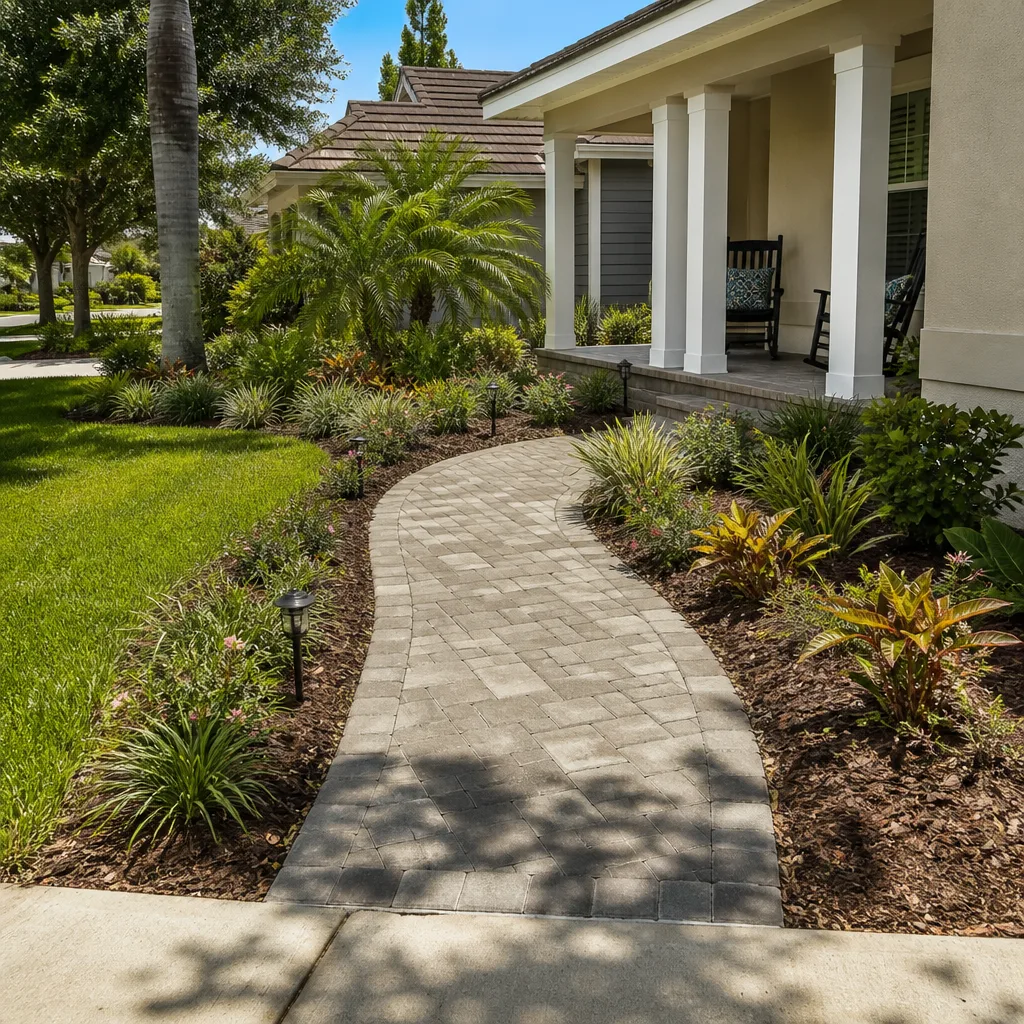
This is where the honest math lives, and it’s the number most bids leave out. A quality repair on a sound base generally costs a fraction of replacement up front, but the two paths aren’t equal over 10 years. Here’s the shape of it in West Covina terms:
- Quality repair (sound base): lower upfront cost, one or two rounds of re-sanding and joint refill over a decade, and predictable lifespans on the original pavers.
- Piecemeal repairs over a failing base: re-sand, reset, re-level every few seasons, and the sub-base keeps failing – total outlay can approach replacement cost, without the lifespan.
- Full replacement (proper base, drainage): higher upfront cost, but pavers laid correctly over a compacted base, with drainage, run a much longer lifecycle with minimal intervention. New pavers from a brand partner like Belgard come with the material durability to last decades when the base is right.
The rule of thumb we use: any repair plan that would total more than 50% of a replacement over 10 years, on a base that’s already compromising, isn’t a repair plan – it’s a slow replacement. Run that comparison before you sign anything.
Why the 730-Day Done Right Promise Factors Into the Decision
This one is often overlooked, and it matters. The 730-Day Done Right Promise – if it’s not done right, we make it right – covers workmanship on both repair and replacement projects. The distinction is what’s covered. On a repair, the promise applies to the work we did: the reset pavers, the re-sanded joints, the re-leveled surface. On a replacement, it applies to the entire installed system, including the base prep and drainage work that the repair scenario can’t address.
That’s a real economic difference. A repair on a base that’s going to keep moving is a repair you may be calling back on. A replacement where the base has been done correctly is a project where the promise has more to protect. We put the scope in writing on every estimate so you know exactly what’s covered either way. That’s the “built to last, backed in writing” standard, and it’s why we push for the probe before we quote, not after.
We pulled one out of a garage over in the Sunset area last month where the homeowner had been quoted a full replacement – 3,000 square feet of it – and the base probe showed the failure was confined to two root-lift zones near the apron. A targeted repair on the good base reset the driveway for a fraction of the number. The other bid wasn’t dishonest, necessarily. It just never probed. That’s the whole argument.
When to Call a Pro (and What to Have Ready)
If you’ve lifted a paver or two yourself, checked the grade, and the base looks spongy or the slope is off, that’s the moment to call in someone who can read it properly. Don’t try to diagnose a failing base yourself with a screwdriver and a hose – compaction and drainage behavior over time is what a trained tech reads, and a bad guess costs real money. Have these ready when you call:
- The driveway’s rough dimensions (length and width, or total square footage).
- Any history of water pooling, sinking, or lifting – when and where.
- What the previous repair attempts were, if any.
- Whether any utility work is planned in the next year or two.
That’s enough to schedule a free estimate and a proper on-site probe.
Related services in West Covina: for full-scope driveway and paver work, see our Driveway & Pavers in West Covina page. Planning a yard rework alongside the driveway? Our Fence Installation in West Covina and Home Additions & ADU in West Covina pages cover the adjacent trades, and our Groundwork Construction Co. of West Covina home page shows the rest.
The Bottom Line
The repair-versus-replace call on a West Covina paver driveway isn’t a gut judgment. It’s a base-condition assessment: three probe locations minimum, a written report, and a 10-year cost comparison run honestly. If a contractor won’t lift a paver before quoting, get a second bid. Our team stands behind the 730-Day Done Right Promise on both repairs and replacements, and we put the scope in writing – upfront pricing, no surprises.
If you’re in West Covina and need help, Groundwork Construction Co. of West Covina offers free estimates – call (844) 662-2335. Calls are answered by a live person, 24/7, and every tech arrives background-checked and in uniform.
Frequently Asked Questions
Most targeted paver driveway repairs in West Covina fall in the low-to-mid four figures, depending on square footage, how many units need lifting, and whether re-sanding is needed across the whole surface. Call (844) 662-2335 for an exact quote – estimates are free and include a base probe.
Yes, when the base is sound. If the base-probe test shows compacted, stable aggregate and drainage is working, a targeted repair on the compromised areas typically lasts years. If the base is spongy or the drainage is failing, replacement is the better long-term spend. The probe decides it.
No. We quote from the probe findings and put the scope in writing before work begins – the number you see is the number you pay. If we open the driveway and find something the probe missed, we stop and re-quote with you before touching anything else.
Most residential paver driveway replacements run several days to about a week for an average two-car driveway, depending on square footage, base depth required, and whether new drainage is being added. Repair work is typically faster – most repairs are completed in a single visit.
Where West Covina code requires a permit – usually when the scope touches grading, drainage, or work near the public right-of-way – we handle the permit and inspection as part of the project. We’ll tell you up front whether your specific job needs one. Call (844) 662-2335 to schedule your free estimate.
Written by the team at Groundwork Construction Co. of West Covina.
Need Construction Help?
Call Groundwork Construction Co. of West Covina - licensed & insured, here with fast after-hours help in West Covina.
(844) 662-2335