
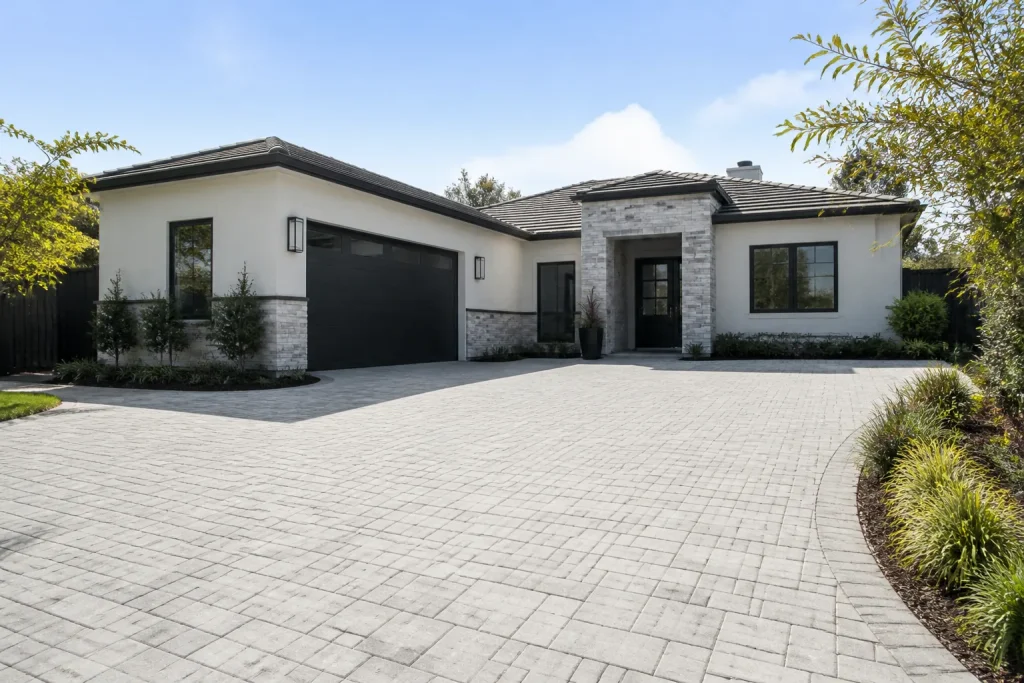
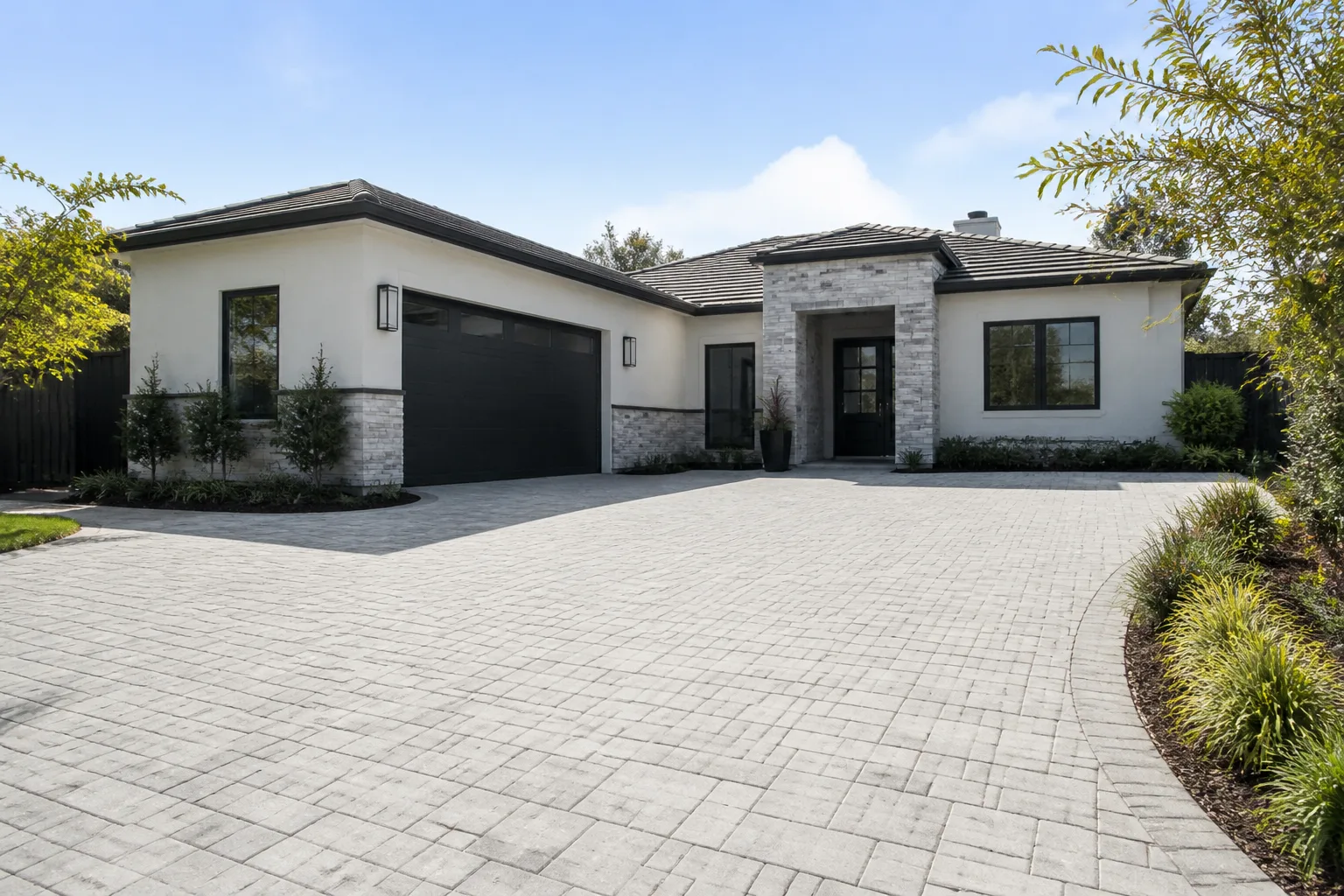
Blanco Driveway & Pavers in West Covina: A Homeowner’s Guide
Most paver failures we see in West Covina have nothing to do with the pavers. They come down to a number nobody asks about at the showroom: compressive strength. A paver rated for foot traffic will crack under a 4,000-pound SUV, sometimes inside two years, and several of Blanco’s decorative lines are engineered for exactly that pedestrian use. Buy the wrong tier for a driveway and you’ve paid for an expensive walkway. This guide covers how to read the specs, what West Covina driveways actually need, and where Blanco sits against poured concrete over ten years.
If you’d rather hand the spec sheet to someone who reads them for a living, call (844) 662-2335 and we’ll walk you through a free estimate.
How Do You Read Blanco’s Compressive Strength Ratings?
Compressive strength is measured in PSI (pounds per square inch), and it’s the first number you should ask for on any Blanco product sheet. For a residential driveway in West Covina, look for a minimum of 8,000 PSI. That’s the short answer. Here’s how to use it.
- Below 6,000 PSI: pedestrian and patio territory. Fine for a walkway or courtyard, wrong for anything a vehicle parks on.
- 8,000 PSI and up: the working floor for driveways. This is where most reputable driveway-grade Blanco lines land.
- 10,000 PSI+: belt-and-suspenders territory, useful on sloped driveways or where a heavy truck or RV regularly parks.
The catch is that Blanco’s catalog mixes tiers, and the decorative finishes homeowners fall in love with aren’t always the highest-rated ones. That’s the trap. A gorgeous textured paver with a pedestrian rating belongs on a front walk, not under the family minivan. Ask for the PSI in writing before you commit, and don’t let a pretty sample override the spec.
We get asked constantly whether the highest PSI is always the right call. It isn’t. Overpaying for 12,000 PSI on a garden path is wasted money. The goal is matching the rating to the load, and the load on a West Covina driveway is a vehicle, not a foot.
Why Does Base Compaction Matter More Than the Paver Brand?
Because the best Blanco paver on the market will fail if it’s sitting on loose ground. The paver is the visible surface; the base is the structure, and in West Covina the base is doing real work. Our hot, dry summers bake moisture out of clay-heavy soil, and when that soil shifts, the pavers above it move with it. We’ve pulled up driveways in the South Hills area where the Blanco pavers were perfectly good and the base underneath was three inches of uncompacted dirt. The homeowner paid twice for the same driveway.
What a properly built base involves:
- Excavation to depth: typically 6 to 8 inches for a residential driveway, more on soft ground.
- Class II base rock: graded aggregate, not fill dirt or leftover soil.
- Compaction in lifts: the base gets compacted in 2- to 3-inch layers with a plate compactor, not dumped and smoothed once.
- Edge restraint: a solid edge holds the whole system together so pavers don’t spread outward under load.
None of that has a brand name on it. It’s the part of the job you can’t see, and it’s the part that decides whether your Blanco driveway looks new in a decade or looks like a dropped jigsaw puzzle.
Which Blanco Colors and Finishes Hold Up Against West Covina’s Sun?
West Covina sees roughly 280 sunny days a year, and that UV load is brutal on any surface color. The practical answer: lighter tones and through-body colored pavers hold their look longest, while heavily surface-tinted products fade faster under sustained sun. Here’s how to choose.
- Light and mid-tone grays and tan blends: the safest bet. They reflect heat, stay cooler underfoot, and show fading less than dark colors.
- Charcoal and dark browns: striking used as borders or accents, but they absorb heat and can fade visibly if the color is applied at the surface.
- Through-body color: pigment mixed through the full paver, not just the top layer. Even if the surface wears, the color underneath matches.
- Textured finishes: better grip on sloped driveways and less glare in the afternoon sun, which matters in a west-facing West Covina driveway.
A smart approach many West Covina homeowners take: a light main field with a darker border for definition. You get the design pop without committing the whole driveway to a heat-absorbing dark tone that fades first.
What’s the Right Joint Sand, and Why Do Installers Rush It?
Polymeric joint sand. Not regular mason sand, which washes out in the first heavy rain and lets pavers shift. The joint sand is the thin bonded layer between each paver that locks the field together, and it’s the step most rushed on a fast job. The sand has to be swept in thoroughly, compacted into the joints, and activated correctly so it cures into a semi-solid bond.
Why it matters in West Covina specifically: our rainy season dumps water fast, and a driveway with weak joint sand lets that water penetrate the base instead of running off. Over a couple of seasons, that means settlement, weeds pushing through, and pavers that rock when you walk on them. We’ve seen Blanco driveways fail at the joints long before the pavers themselves wore out, purely because the sand wasn’t done right.
You can usually spot a rushed job within a year: washout lines down the slope, sand collecting at the bottom of the driveway, weeds in the seams. Good joint stabilization is invisible when it’s done, which is exactly why cheap installers skip the careful part.
Blanco Pavers vs. Poured Concrete: What’s the 10-Year Cost?
Blanco pavers cost more up front, usually 20 to 40 percent more than a basic poured slab, but the ten-year math often flips. Concrete cracks, and once it cracks, you’re patching or replacing. Pavers flex with ground movement, and if one does break, you replace one paver, not the whole slab. Here’s the honest comparison.
- Up-front cost: poured concrete wins. Pavers cost more to buy and more to install, because of the base and joint work.
- Maintenance: concrete needs crack sealing and occasional patching. Pavers need joint sand topped up and re-sealing every few years.
- Repair: a cracked concrete slab is a bigger, costlier fix. A single damaged Blanco paver lifts out and drops back in.
- Curb appeal and resale: a well-installed paver driveway reads as premium, and West Covina buyers notice, especially on a home where the front elevation is the first impression.
Over ten years, including sealing and routine maintenance, pavers tend to come out close to concrete on total cost, and ahead on looks and repair flexibility. Concrete is genuinely the cheaper-and-simpler choice for a rental or a tight budget. For a home you’re staying in, the pavers usually earn it back.
When to Call a Pro
You can handle color and finish selection yourself. The base compaction, joint stabilization, and matching the right Blanco PSI tier to your driveway load are where experienced hands matter, and where a rushed install turns a premium paver into a problem. If you’ve got a driveway project in West Covina and want it done right the first time, that’s our lane.
We’re Groundwork Construction Co. of West Covina home, and driveway and paver work is one of our core service lines. For the full breakdown of what we install, see our page on Driveway & Pavers in West Covina. If your project is part of a bigger plan, our Fence Installation in West Covina and Home Additions & ADU in West Covina teams handle the surrounding work too, so one contractor covers foundation to finish line.
Every project we take on is backed by our 730-Day Done Right Promise. If it’s not done right, we make it right. Calls are answered by a live person, 24/7, and our technicians are background-checked and arrive in uniform. You get upfront pricing, no surprises, plus 0% financing for 18 months and $1,000 off projects over $10,000.
The Bottom Line
Match the Blanco paver to the load, not the look. An 8,000 PSI minimum for a West Covina driveway, a properly compacted base underneath, and well-cured polymeric joint sand decide whether you get a driveway or an expensive walkway. Choose lighter through-body colors to survive 280 sunny days, and weigh the ten-year cost against poured concrete before you sign anything. Get the PSI and the base spec in writing.
If you’re in West Covina and need help, Groundwork Construction Co. of West Covina offers free estimates. Call (844) 662-2335.
Frequently Asked Questions
Look for a minimum of 8,000 PSI for a residential driveway. Below that, the paver is built for foot traffic and can crack under a vehicle. Ask for the compressive strength in writing before you buy, because Blanco’s decorative lines vary widely in rating. Call (844) 662-2335 for an exact quote, and estimates are free.
Lighter tones and through-body colored pavers fade very little. Darker surface-tinted colors can fade more visibly under 280-plus sunny days a year. Choosing a light main field with a darker border gets you the design without the fading risk. Call (844) 662-2335 and we’ll walk through the color options.
Not with upfront pricing. The number you see is the number you pay, provided the scope doesn’t change. The most common surprise in paver work is hidden base problems under an existing surface, which is why we inspect before quoting, not after. Call (844) 662-2335 for a free written estimate.
A typical residential driveway runs a few days to about a week, depending on square footage and base conditions. The base and joint work take time that a fast crew will cut, and that’s the part you can’t rush. Call (844) 662-2335 to schedule your free estimate and get a timeline for your specific West Covina driveway.
Written by the team at Groundwork Construction Co. of West Covina.
Need Construction Help?
Call Groundwork Construction Co. of West Covina - licensed & insured, here with fast after-hours help in West Covina.
(844) 662-2335