
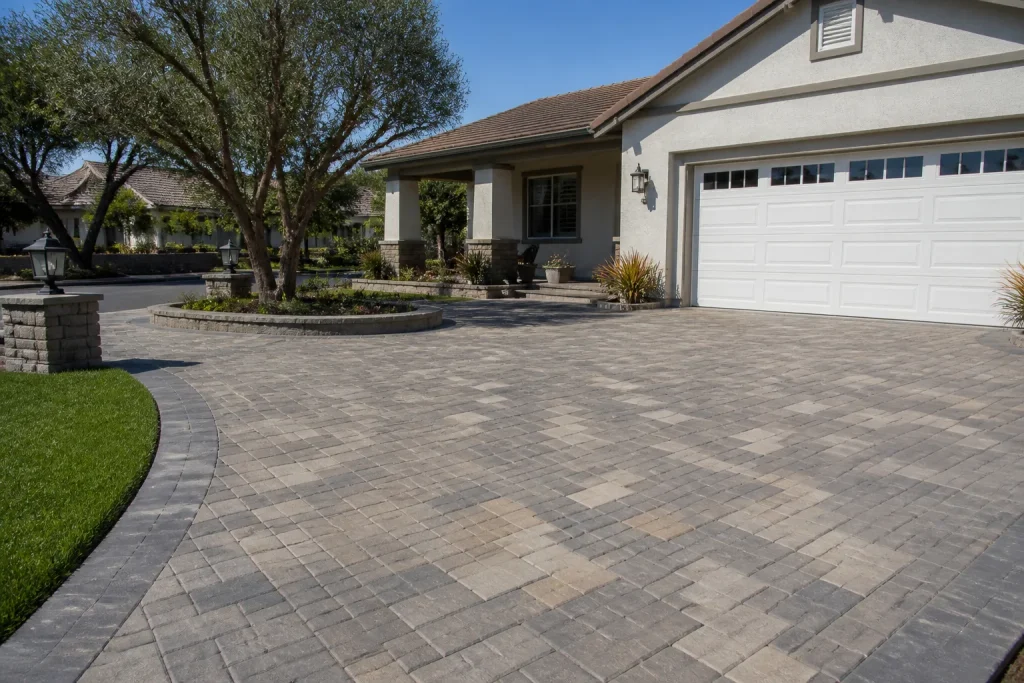
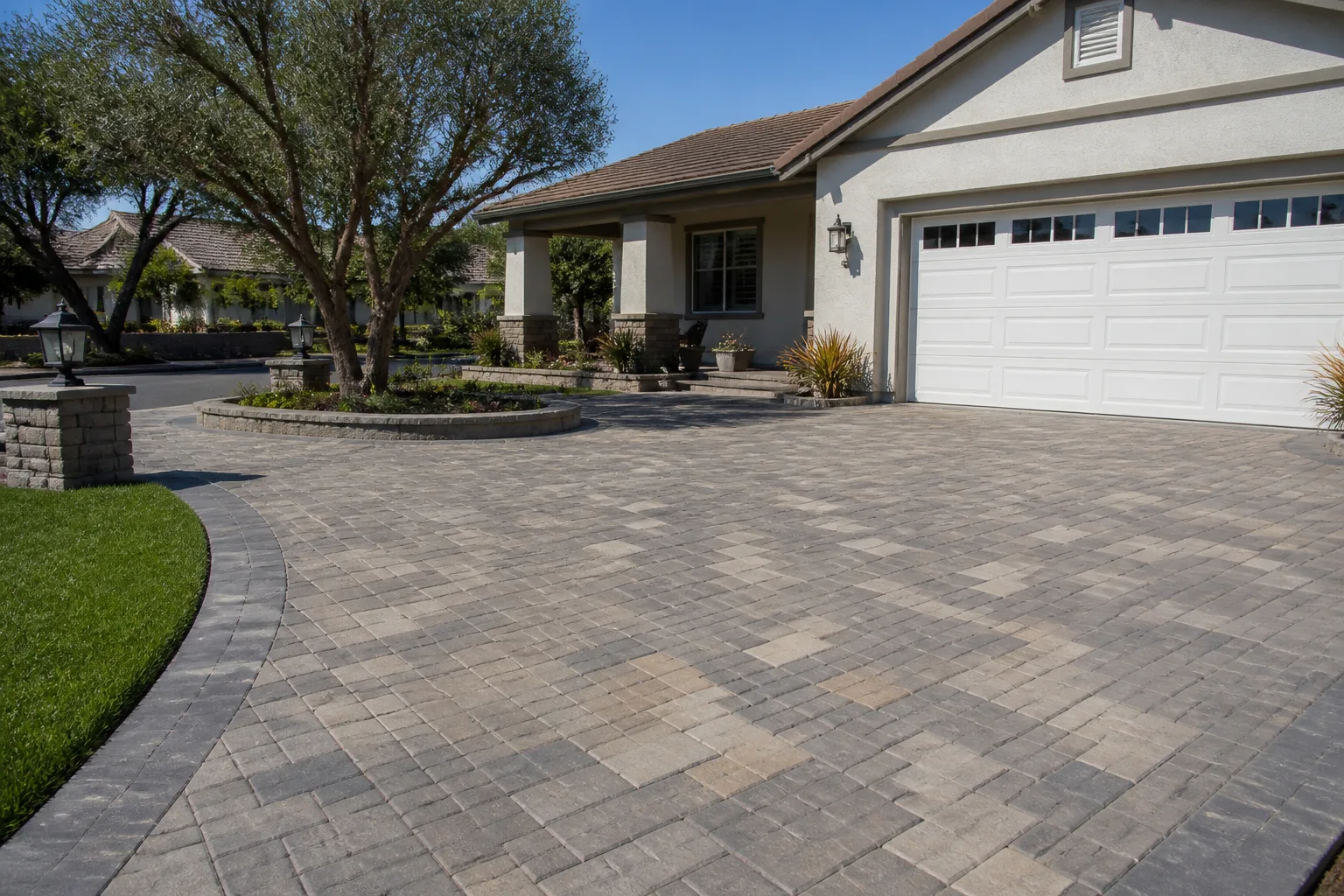
American Standard Driveway & Pavers in West Covina: A Homeowner’s Guide
American Standard publishes the installation tolerances and load ratings that most paver brands bury in fine print, and West Covina homeowners who actually read those specs end up with driveways that outlast the ones installed by feel. If you’re comparing bids and want to know what to demand in writing, here’s the honest version. And if you’d rather not sort through spec sheets yourself, call (844) 662-2335 and we’ll walk you through it.
Why the Spec Sheet Matters More Than the Color Swatch
Here’s the mistake we see most often around West Covina: a homeowner falls in love with a paver color at a showroom, signs a bid, and never asks about base depth, compaction, or joint sand. Six years later the driveway is rutted at the apron and the pavers are spreading at the edges. The color didn’t fail. The base did.
American Standard’s documentation is unusually open about what their product needs underneath it. Load ratings tell you what the finished system is engineered for. Installation tolerances tell you how flat and how tightly joined the pavers must sit. When a contractor’s proposal lists a base spec, you can check it against American Standard’s own data instead of trusting that the number sounded reasonable over the phone. That’s a real advantage, and few homeowners use it.
Three things to pull from the spec sheet before you sign anything:
- Load rating for your application – a passenger car driveway, a two-car driveway that parks an F-250, and a pizza oven pad are not the same requirement.
- Recommended base and bedding depth – this is what holds up against West Covina’s soil movement through a dry summer.
- Edge restraint and joint sand requirements – the two most commonly skipped steps, and the two that void warranties.
None of this is exotic. It’s just rarely done. That’s the whole point of this guide.
How West Covina’s Climate Stresses a Driveway
West Covina sits in a hot-dry summer, mild-wet winter pattern, and that swing is harder on pavers than a steady climate would be. Summer ground temperatures out near the San Bernardino foothills can push the surface past 140°F, which drives thermal expansion. Then the first winter rain arrives, water soaks the base, and the soil under the pavers swells. A base that wasn’t compacted in lifts with the right moisture content will heave and settle differently season to season.
In our experience, the failures show up in specific pockets. Driveways sloping toward the Vincent and Azusa Avenue corridors collect sheet flow and the joints wash out first. Properties near Galster Park and the Shadow Oak area deal with clay-heavy soil that holds water longer than the sandy mix closer to the freeway. Older homes off Workman Avenue often have shallow old concrete underneath that a crew needs to either remove entirely or break and stabilize before setting pavers over it.
What this means practically:
- Ask what base material the contractor plans to use and at what depth – American Standard’s spec will give you the minimum, don’t accept less.
- Confirm a compacted aggregate base rather than paver-over-dirt, which happens more than anyone wants to admit.
- Check that the slope drains away from the garage and foundation, not toward it. West Covina’s winter rain is mild but it arrives in a hurry.
The good news is that a correctly built American Standard driveway handles this cycle without drama. The pavers themselves aren’t the weak link. The subgrade is.
Using American Standard’s Load Ratings to Check a Contractor’s Base Depth
This is the part of the guide that pays for itself. American Standard publishes load ratings that tell you what the paver system is engineered to withstand, and installation tolerances that spell out the base requirements to reach that rating. A contractor who proposes a shallow base is effectively proposing a driveway below the product’s rated capacity – and you can prove it with a document, not a hunch.
Walk through a bid like this:
- Find the load rating for the American Standard paver you selected in their published technical data.
- Match it to your actual use. Passenger vehicles, a loaded work truck, or a boat trailer all push different loads through the pavement.
- Read the base requirement that supports that rating. American Standard publishes it; most competitors don’t.
- Check the bid. A proposal that lists a base depth thinner than the spec isn’t comparable – it’s a cheaper driveway that will fail sooner.
We’ve pulled bids apart in West Covina where two contractors quoted the same American Standard product and one was building six inches less base than the other. Same pavers, same color, wildly different lifecycle. The homeowner only found out because the spec sheet told them to ask.
A properly built American Standard system, matched to its published rating, is a product designed to hold up for decades. The spec sheet is what separates a driveway that does that from one that doesn’t.
Connecting Pattern to Structural Performance
Most homeowners pick a paver pattern because of how it looks on a Pinterest board, and there’s nothing wrong with that – up to a point. But bond patterns aren’t decoration. They determine how the pavers interlock, and interlocking is what spreads vehicle load across the driveway instead of driving it straight into one joint.
Three patterns and how they actually perform:
- Herringbone – the strongest interlocking pattern, because no continuous joint runs in the direction of travel. Under a heavy vehicle turning into a driveway, herringbone resists creep and spreading better than anything else. For a West Covina driveway with a loaded truck or a tight turn radius, this is the pattern we recommend.
- Running bond – simple, clean, and fine for light passenger use. It can creep at the edges under repeated heavy loads unless the edge restraint is solid.
- Basketweave – visually striking and moderately interlocking, a reasonable middle ground for walkways and lower-traffic driveways. Less forgiving under heavy vehicle stress than herringbone.
The pattern you choose should be driven by what’s parked on the driveway and how it enters and exits. A West Covina homeowner with a long flat pull-in has more flexibility than one with a short steep apron and a daily three-point turn. Ask your contractor to explain the interlocking logic for the pattern they’re proposing, and if they can’t, that tells you something.
Keeping the American Standard Warranty Valid
A paver warranty is only as good as the installation under it. American Standard’s warranty terms are specific about installation requirements, and if a homeowner can’t document that the installation followed them, the claim can be denied. That’s a hard lesson to learn after a failure.
Document these during installation, not after:
- Base depth and material – photos and the material spec for the aggregate base, taken before pavers went down.
- Compaction – whether the base was compacted in lifts. Ask the crew to photograph each lift.
- Edge restraint – photo evidence of the restraint in place before final joints were sanded.
- Joint sand – the product used and confirmation it was installed per American Standard’s spec.
- Final surface – level, drained away from the structure, and consistent with the manufacturer’s tolerances.
Beyond documentation, the warranty also expects reasonable maintenance: re-sanding joints as needed, keeping weeds out, avoiding de-icing salt that degrades the surface. In West Covina, joint sand replacement every few years is standard care. It’s cheap, it takes an afternoon, and it’s the single biggest thing that extends driveway life.
Why Three Bids on the Same Spec Sheet Expose Real Pricing
The most common mistake in comparing paver bids is comparing apples to rained-out apples – each contractor specs a different product, a different base, a different edge restraint, and the numbers look comparable when they aren’t. The fix is simple: hand every contractor the same American Standard product and the same base spec, in writing, and ask for a bid that matches it line for line.
When you do, the price differences that emerge are real, and they tell you something. They reflect labor rates, excavation requirements specific to your property, how the crew handles the old surface, and what level of finish and cleanup they include. They stop reflecting product and spec differences, because you’ve eliminated them.
We’ve watched three bids on the same American Standard spec swing by thousands of dollars in the West Covina area. The low bid wasn’t necessarily cheap – it was sometimes a crew cutting corners on base or skipping permits. The high bid wasn’t necessarily gouging – it was sometimes the only one that included proper excavation and disposal of the old surface.
The point isn’t that one bid wins. The point is that when everyone bids the same spec, you can see which contractor is willing to build to it, and which one is quietly planning to build under it.
When to Call a Pro Instead of Going It Alone
We’re all for homeowners who read the specs and ask hard questions. That’s exactly the kind of client we like working with. But driveway installation is not a weekend project, and there are real risks to doing it yourself that don’t show up on a spec sheet.
The base work – excavation, grading, compaction in lifts – is the difference between a driveway that lasts and one that fails. Getting that wrong by an inch or two is common, and it costs more to redo than it would have cost to hire a crew to begin with. Beyond that, cut blocks and edge restraints require specific tooling, and moving a pallet of pavers is back-breaking work even for a fit homeowner.
If you’re in West Covina and want the American Standard driveway built to spec the first time, our team at Groundwork Construction Co. of West Covina offers free estimates – call (844) 662-2335. We use American Standard and other verified brand partners including Belgard, and we stand behind the work with our 730-Day Done Right Promise. If it’s not done right, we make it right.
Related services in West Covina: Driveway & Pavers in West Covina and Fence Installation in West Covina are natural companions to a driveway build. If you’re planning a larger project, our Home Additions & ADU in West Covina page covers what a new build needs from the foundation up. And you can always start at our Groundwork Construction Co. of West Covina home page to see everything we do.
The Bottom Line
American Standard’s published load ratings and installation tolerances are the most underused tool in the paver market. Use them. Check the base depth against the spec. Ask about pattern interlocking for the loads your driveway actually gets. Document the installation so the warranty stays valid. Get three bids against the same spec sheet so the price comparison means something.
That’s how a West Covina homeowner ends up with a driveway built to last, backed in writing, instead of one that looks great in the first summer and starts to show problems in the third winter. If you’re in West Covina and want help getting there, Groundwork Construction Co. of West Covina offers free estimates – call (844) 662-2335. A live person answers, 24/7, and we’ll walk you through the spec sheet before you commit to anything.
Frequently Asked Questions
Most West Covina paver driveways land between roughly $12 and $22 per square foot installed, depending on the American Standard product, base requirements specific to your soil, and how much old surface needs removal and disposal. Call (844) 662-2335 for an exact quote – estimates are free, and we’ll give you a line-item price against the spec.
American Standard’s warranty is specific about installation requirements, and claims can be denied if the base, compaction, edge restraint, or joint sand wasn’t installed per spec. Document the installation as it happens – base depth, compaction photos, edge restraint, joint sand product – and keep the paperwork. If you’re not sure what to document, call (844) 662-2335 and we’ll tell you exactly.
Herringbone interlocks best under vehicle stress because no continuous joint runs in the direction of travel, so loads spread across the pavers instead of creeping along the joints. Running bond and basketweave work well for lighter traffic and walkways. A West Covina driveway that sees heavy trucks or tight turns does best in herringbone. Call (844) 662-2335 for a recommendation on your specific site.
With us, no – the number you see on the upfront quote is the number you pay. Unexpected soil conditions can affect scope on any paver project, but we identify those before we quote, not after. Call (844) 662-2335 to schedule your free estimate, and we’ll confirm the price in writing against the American Standard spec before any work begins.
When the scope requires it, yes – we pull permits and pass inspections before we close out the job. Different driveway scopes have different requirements, and we’ll tell you upfront what applies to your property. Call (844) 662-2335 for a free estimate and a straight answer on what your American Standard driveway project needs.
Written by the team at Groundwork Construction Co. of West Covina.
Need Construction Help?
Call Groundwork Construction Co. of West Covina - licensed & insured, here with fast after-hours help in West Covina.
(844) 662-2335