
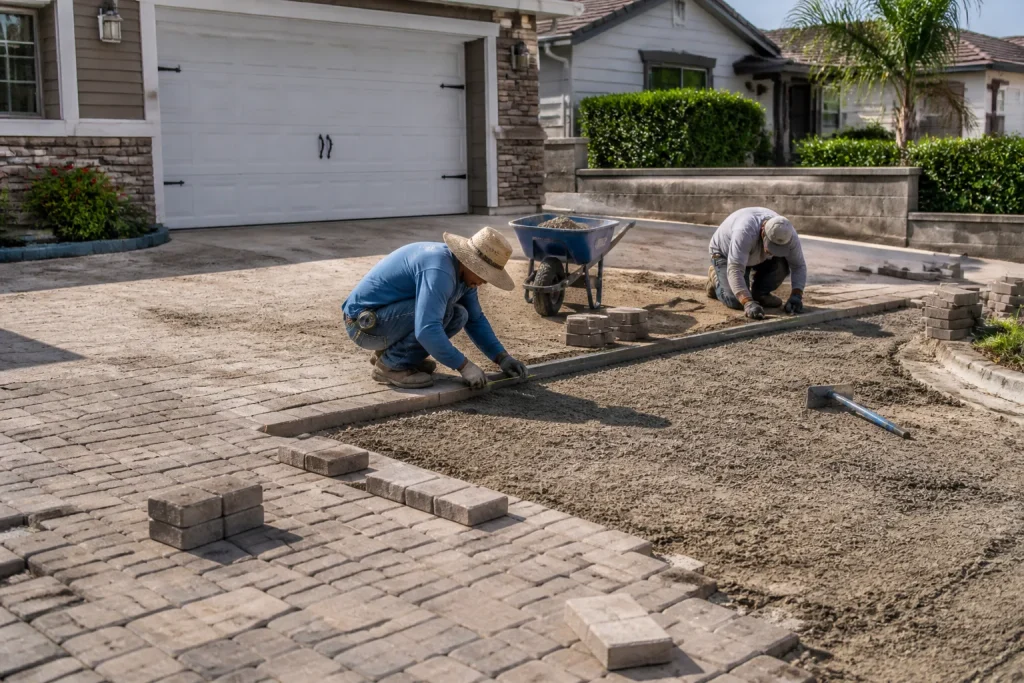
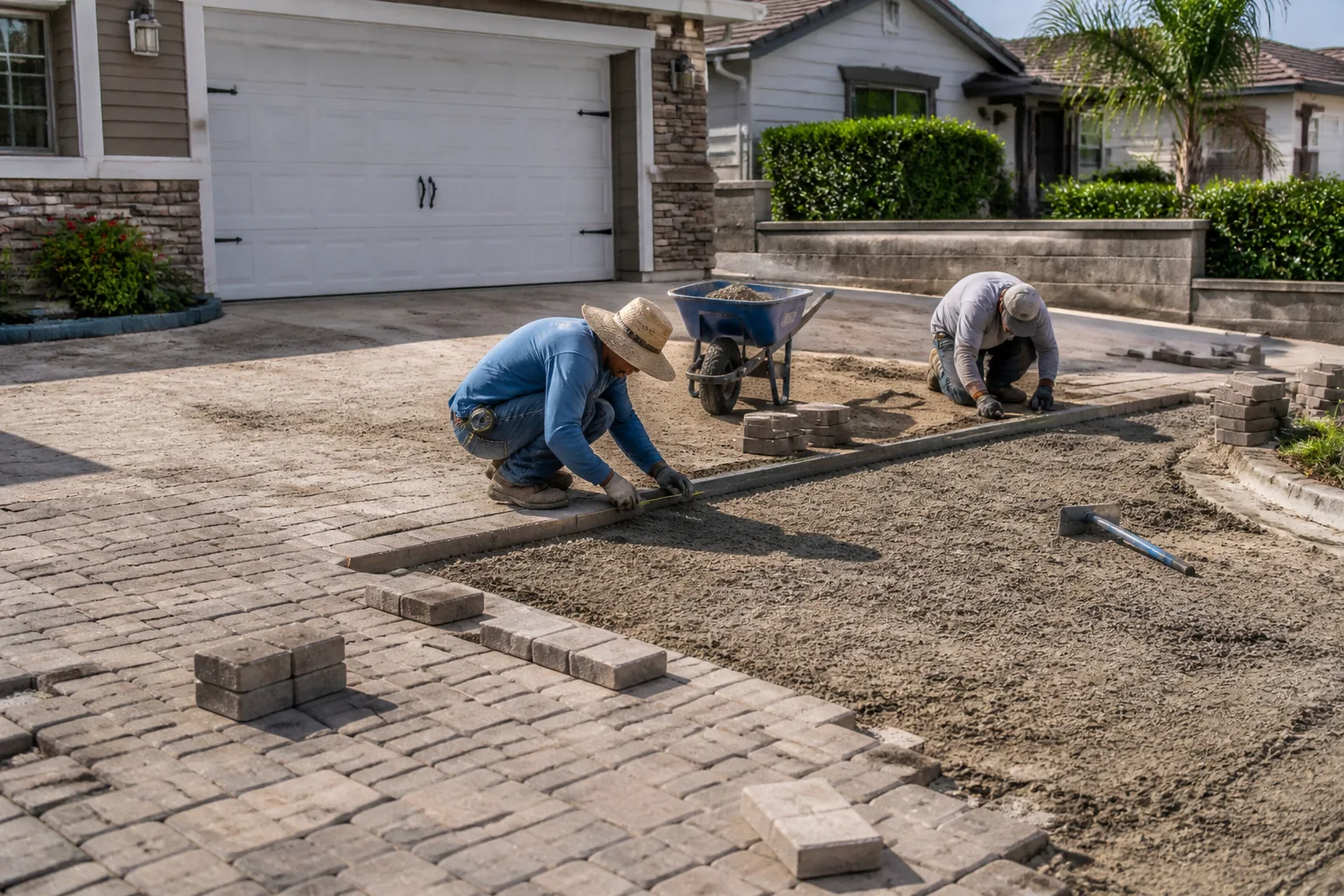
5 Mistakes to Avoid With Driveway & Pavers
Four out of five paver driveway failures we see across Southern California trace back to decisions made in the first week of a project, not to the pavers themselves or even the installation technique. The expensive problems almost always start with a scope definition, a base specification, or a handshake that skipped the paperwork. If you’d rather skip the risk entirely and hand the project to a crew that builds this daily, call (844) 662-2335 and we’ll walk your driveway with you.
The list below is ordered by how much money each mistake tends to cost when it goes wrong. The first two are the quiet killers. The last three are the ones you can catch by reading the contract closely before you sign it.
Key Takeaways
- Base depth means nothing without a soil compaction test attached to it, and West Covina’s clay soil behaves very differently from sand or decomposed granite.
- Lock in drainage slope before you pick a paver material, not after. The order of those two decisions controls where water ends up.
- Edge restraint belongs in the contract as a named product, not as “edge restraint included.”
- Standard polymeric sand and premium formulations perform differently in West Covina’s ant and weed pressure, so name the product.
- A defined change order threshold is the single best protection against a project landing 20% over budget.
Mistake #1: Accepting a Base Depth Number Without Asking What Soil It’s Based On
When a contractor tells you “four inches of base is standard,” ask the next question: standard for what soil? A base depth without a compaction test behind it is a guess dressed up as engineering. In West Covina, that guess gets expensive because much of the city sits on expansive clay that swells when it soaks up winter rain and shrinks through the dry months. Sand and decomposed granite settle and drain differently. A granular base that works in another market can flex and rut under a residential driveway here.
The fix is simple and costs almost nothing at the front end. Ask for a compaction test before the base spec is locked, or at minimum ask the contractor to describe how they tested the subgrade and what they found. A crew that has built driveways in West Covina should be able to tell you where the clay is heavy and where it isn’t without looking at a map.
Here’s what a proper base specification includes:
- The measured subgrade condition after excavation, not before
- Compaction results in a percentage, with the test method named
- Base material type and depth in inches, matched to that compaction number
- Geotextile fabric or a stabilized base callout where the soil demands it
We pulled a failed driveway out of a garage apron over near the Edgebrook area last winter where the base had been specified at four inches with no test at all. The pavers were fine. The base had moved, and the whole surface was rocking.
Mistake #2: Picking Paver Material Before Confirming Drainage Slope
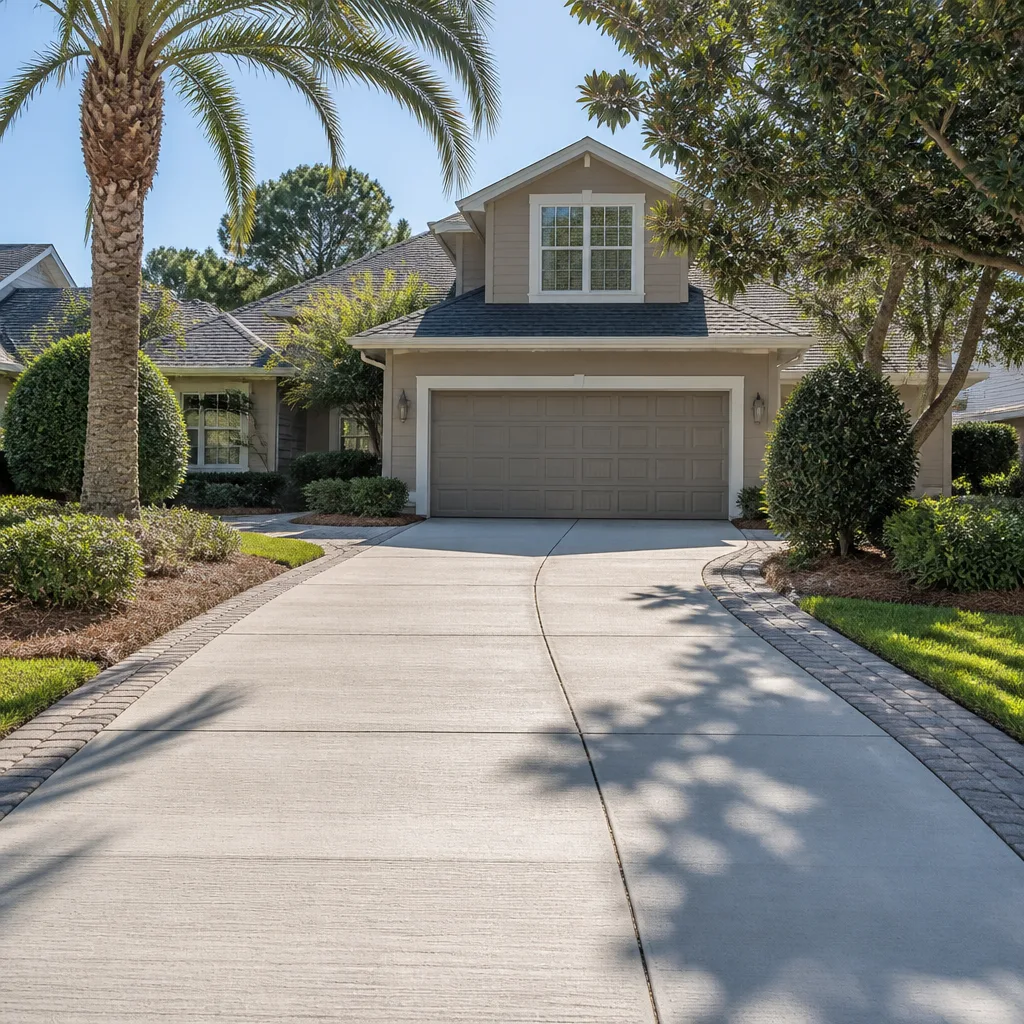
Homeowners usually choose the paver first. They see a Belgard pattern at a neighbor’s house in South Hills, fall in love with the color, and then ask how it drains. That’s backwards. Drainage slope decides whether water sheds away from your foundation or pools against it, and the paver material you pick has to work with that slope, not the other way around.
A few things get locked in by the slope decision:
- Minimum fall away from the structure, typically around 1% to 2% depending on the run and the exit point
- Where the water goes once it leaves the driveway: a swale, a channel drain, or the street
- Whether permeability matters, and whether you’re using a permeable joint or a solid pavers-and-drain combination
- Paver thickness and pattern, which shift slightly with slope and traffic load
CertainTeed and GAF both make excellent products, and neither of them will save a driveway where water runs toward the garage. The slope conversation happens first. The material conversation happens second. If a contractor quotes you a paver and a price before either of you has talked about where the water goes, that’s a sign to slow down. For the full picture of how we sequence this on a West Covina driveway, our Driveway & Pavers in West Covina page lays it out.
Mistake #3: Skipping Edge Restraint Specification in the Contract
This is the most common omission we find, and it’s the one that causes pavers to spread apart within two years. Edge restraint is what holds the field of pavers tight at the perimeter. Without it specified as a named product and a named installation method, crews default to whatever’s in the truck, and the driveway slowly opens up along the edges.
You want the contract to say exactly what’s holding the edge. Ask for:
- The edge restraint product by name, plus whether it’s pinned, spiked, or glued to the base
- How many fasteners per linear foot, and where they sit relative to the base
- How the restraint is secured around curves and at the apron where the driveway meets the street
A driveway that spreads isn’t just a cosmetic problem. Once the edges open up, water gets under the pavers and into the base, and that’s how a two-year-old driveway starts to look ten years old. The restraint is a small line item in the bid. Leaving it vague is the mistake.
Mistake #4: Not Confirming the Jointing Sand Type for West Covina’s Ant and Weed Pressure
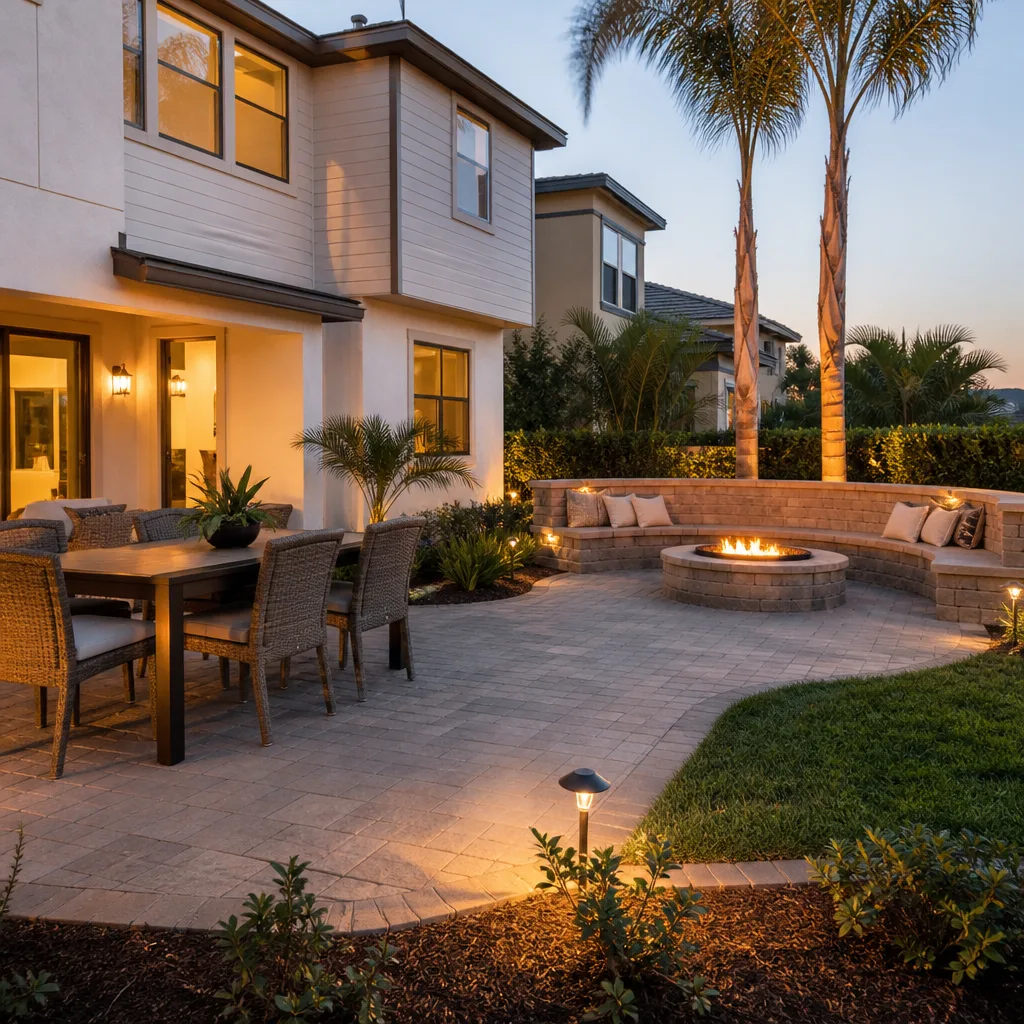
Jointing sand is the thin layer that fills the spaces between pavers. Every installer uses some version of it. The type they use matters more in West Covina than in most of the country, because our warm climate and mix of irrigated landscaping and dry stretches make the city tough on joints. Ants love the loose joints of a standard polymeric sand driveway. Weeds find their way into joints that haven’t fully cured or that were laid too thin.
Standard polymeric sand and the premium formulations are not the same product. The premium types have different binders, harder cured joints, and better resistance to the abrasion of foot traffic and tires. They cost more per bag. They also hold up longer in this climate, and they’re worth the upcharge on a West Covina driveway. Ask your contractor to name the product and the manufacturer in the bid.
One more thing worth asking: how the joints are filled and how the pavers are cleaned afterward. The right product applied to a wet, dirty surface will fail no matter how good it is. Compaction, application, and a controlled water curing step are all part of the answer.
Mistake #5: Signing a Contract Without a Defined Change Order Threshold
Almost every project that lands 20% or more over budget does it through change orders. A change order is a written amendment to a signed contract, and it’s the mechanism by which the price moves. If the contract doesn’t set a threshold for what requires a change order versus what’s included, you’re exposed to the smallest surprise becoming a billable extra.
The number you’re looking for is a dollar threshold, in writing, above which any work not in the original scope requires a signed change order before the crew proceeds. Some contracts set it at a few hundred dollars. Some set it as a percentage of the contract. Either is fine as long as it’s written down and the process is clearly described.
Ask for these three things in writing:
- The change order threshold, in dollars, and who signs it
- The written description of what’s included in the base price, itemized
- The process for any site condition discovered mid-job, including what happens to the schedule and to the price
Upfront pricing with no surprises is the phrase we use internally, and the way it holds up is by putting the mechanism in the contract so there’s no ambiguity when something shifts.
When to Call a Pro
Some of these decisions you can handle yourself, but a few of them are genuinely past the point where a homeowner should guess. The base specification, the drainage slope, and the subgrade compaction test are three places where an experienced crew with a real soil read makes a difference, and those three are where most of the money sits. For a driveway that ties into a fence line, a new porch, or an ADU addition, the interface between trades matters too. We handle those in-house.
Related services in West Covina:
The Bottom Line
The most damaging driveway and paver mistakes happen before the first paver is set. Base depth without a compaction test, material chosen before the slope, edge restraint left unnamed, jointing sand left to the installer’s habit, and a contract without a change order threshold: those five decisions control every outcome that follows in West Covina. Each one is cheap to get right at the front end and expensive to fix later.
Every project we run is covered by our 730-Day Done Right Promise, so if something isn’t done right, we make it right. The material partners on our driveway and hardscape work include Belgard and CertainTeed, and we spec them because they hold up to our climate, not because they’re easy to source. If you’re in West Covina and need help, Groundwork Construction Co. of West Covina offers free estimates, calls are answered by a live person 24/7, and technicians arrive background-checked and in uniform. Call (844) 662-2335 to get yours on the calendar.
Frequently Asked Questions
There’s no single number. The right base depth depends on what the compaction test shows about your subgrade, because West Covina’s expansive clay behaves very differently from sand or decomposed granite. A crew should test the subgrade and set the base depth against that result, then name the base material and depth in the written spec. Call (844) 662-2335 for an estimate that spells out the base instead of assuming one.
More often than you’d expect. When a driveway fails early, the pavers themselves are almost never the problem, and the base usually is. Ruts, rocking pavers, and joints that open up after a few rain seasons are the typical symptoms. The pavers get pulled and set again on a properly compacted base. Call (844) 662-2335 and we’ll walk your driveway and tell you what we’re seeing.
You do when the contract sets a change order threshold, and you want that threshold in writing before you sign. Small additions without a paper trail are how budgets slip past the planned number. Get the threshold, the itemized scope, and the site-condition process in writing, and any real change stays predictable. Call (844) 662-2335 to see how our estimates are itemized before you commit to anything.
You can shop for pavers, but you shouldn’t lock the material before the slope is confirmed. The slope decides where water goes and where the driveway needs a drain or a swale, and that constrains the paver choice. Get the drainage plan in writing first, then choose the material. Call (844) 662-2335 for a free estimate that starts with the drainage conversation.
Written by the team at Groundwork Construction Co. of West Covina.
Need Construction Help?
Call Groundwork Construction Co. of West Covina - licensed & insured, here with fast after-hours help in West Covina.
(844) 662-2335