Last updated November 18, 2026





Free written scope consultation - allowances, timeline, and change-order rules on paper before a single trade is scheduled
Windows & Doors Maintenance Schedule: What to Do and When
A $12 tube of exterior sealant applied every two years protects a $600 window frame from the rot that justifies a $1,400 replacement. That math is never in the brochure. Windows and doors are the most neglected maintained systems in most houses because nothing dramatic happens when you skip a year. Then the wood softens at a corner, the seal fogs, the frame racks out of square, and suddenly you’re pricing full replacements instead of a Saturday morning with a caulk gun. This guide gives you a real maintenance schedule tuned to West Covina conditions, tells you exactly what to inspect on each window and door type, and shows you where the small spend prevents the big one.
Quick Answer
A solid window and door maintenance routine means a light inspection every season, a full reseal every two years, hardware lubrication twice a year, and a weatherstripping replacement cycle of roughly three to five years in West Covina’s dry-heat climate. Do the heavy sealing in spring before heat season and again in fall before the Santa Ana winds arrive. That rhythm catches failed seals, dried weatherstripping, and minor rot while each is still a cheap fix instead of a replacement quote.
Styles & brands we work with
- Kitchen remodeling
- Bathroom remodeling
- Home additions & ADU
- Roofing
- Windows & doors
- Driveway & pavers
- Fence
Table of Contents
- The Southern California Seasonal Maintenance Calendar
- Spring Checklist: Sealing Before Heat Season
- Fall Checklist: Preparing for Santa Ana Winds
- What to Inspect on Each Window and Door Type
- Testing Weatherstripping Without Special Tools
- Hardware Maintenance: What to Lubricate and What Ruins It
- The Annual IGU Seal Check That Saves Your Frames
- Common Mistakes to Avoid
The Southern California Seasonal Maintenance Calendar
Most national maintenance guides are written for a four-season climate with hard freezes and snow load. West Covina doesn’t work that way. Our pressure comes from the other direction: months of dry heat, intense UV at 300-plus sunny days a year, and the dry Santa Ana wind events that push through the San Gabriel Valley in fall and winter. Those conditions attack seals, weatherstripping, and finish coatings differently than a Midwest winter does, and the calendar should reflect it.
Here’s the rhythm we recommend for a West Covina home, and it applies whether you’re in a 1950s tract house off Cameron or a newer build up near South Hills:
- Early spring (March – April): Full inspection, exterior caulk refresh, clean and lubricate hardware, check glass seals before the heat ramps up.
- Late spring (May): Touch-up paint on any exposed wood trim, verify door sweeps, confirm screens and sliding tracks run clean.
- Summer (June – September): Minimal work. Spot-check for fogging in double-pane glass as heat stress peaks.
- Early fall (October): Second full inspection, reseal exterior joints, replace worn weatherstripping, tighten hardware before wind season.
- Late fall / winter (November – February): Rain check. Look for water intrusion at sills and thresholds after the first storms.
The two anchor points are spring and fall. Everything else is a spot check. If you only do two things a year, do the full inspection-and-reseal in those windows. In our experience across West Covina, the homes with the least window and door trouble are the ones that got a spring and fall walkthrough, even a light one, every year.
Spring Checklist: Sealing Before Heat Season
Spring is when you want to close gaps, because summer is when the sun does the most damage to whatever’s already failing. A hairline crack in exterior caulk lets in a little moisture, then the heat drives it into the wood, and by August you’ve got a soft spot behind the trim. West Covina summers are dry, but the morning marine layer and occasional late rain mean caulk joints do see moisture cycles.
Work through each exterior opening in this order:
- Walk the perimeter once with a flashlight and look at the caulk line where frame meets siding or stucco. Any gap, crack, or separation gets marked.
- Press on the wood at the bottom corners of the frame with a screwdriver handle. Soft or spongy wood means moisture has been getting in and needs a closer look.
- Cut out failing caulk completely with a utility knife. Don’t caulk over old, cracked sealant. It won’t bond and you’ve wasted the tube.
- Apply a paintable exterior sealant rated for exterior use at the frame-to-wall joint. Tool the bead smooth with a wet finger.
- Check sill pans and thresholds on every door. Any standing water mark or stain on the interior floor near a threshold is a red flag.
- Clean sliding tracks with a stiff brush and a shop vac, then wipe with a damp rag. Grit in a track wears the rollers and the weatherstripping.
- Lubricate hardware (details below) before the heat makes everything stiffer.
That’s a two to three hour job on a typical single-family West Covina home. If you find a soft spot, get it looked at before the summer heat bakes it dry and hides the problem again. If the damage extends into the frame or the wall, that’s a job for a professional, and it’s the difference between a small repair and a full window replacement.
Fall Checklist: Preparing for Santa Ana Winds
The Santa Ana winds are the maintenance event most Southern California homeowners underestimate. Sustained wind gusts in the San Gabriel Valley can push 40 to 60 mph during a strong event, and they hit the same window and door assemblies for hours at a time. Loose weatherstripping that was doing fine in July gets peeled back. A door that was slightly out of adjustment starts slamming and racking. Caulk that was intact in August starts to lift at the edges.
Fall is when you button everything up. Do this before the first wind event, ideally in early October:
- Re-inspect every caulk joint you sealed in spring. Fill any new cracks before wind and rain get at them.
- Check door weatherstripping at all four sides. If you can see light or feel a draft, replace it now.
- Test the door closer and latch on every exterior door. Wind catching a poorly latched door is how hinges get bent.
- Verify window locks and latches work. During wind events, windows need to seal shut to avoid vibration and rattle damage.
- Look at tree branches and debris near windows and doors. Wind-driven debris is a leading cause of broken glass and dented frames.
- Confirm the weep holes at the bottom of every window frame are clear. Weep holes drain condensation and wind-driven rain. If they’re plugged, water backs up behind the frame.
We’ve seen plenty of West Covina homes where the only real damage was a gust that caught an unlatched door or a window left cracked during a wind event. The fall checklist catches those in advance. And if you’re replacing windows in the near future, the brand matters as much as the maintenance: CertainTeed and Owens Corning products hold up well under wind events when installed correctly, which is why we specify brands we trust rather than whatever’s in stock.
What to Inspect on Each Window and Door Type
Not every window or door is the same, and the maintenance points aren’t interchangeable. A casement has a crank and a hinge, a double-hung has a balance system, a slider has rollers and a track, and an entry door has a lock set, hinges, and a threshold. Here’s what to check on each type, in a West Covina context where heat, dust, and dry air all take a toll.
Casement Windows
Casement windows crank open like an awning. The moving parts are the crank mechanism, the hinges, and the operator arm.
- Crank operation: Open and close fully. A crank that feels gritty or binds tells you the operator arm needs lubrication. If it’s stiff, don’t force it, or you’ll strip the gear.
- Hinge points: Look for rust, loosening, and wear. A hinge that’s loosening lets the sash drift out of square.
- Weatherstripping seal: Grip a dollar bill between the sash and frame with the window closed. If it slides out with almost no resistance, the gasket is compressed and needs replacing.
- Screen: Casement screens pop out from the inside, so check they’re seated and not bent.
Double-Hung Windows
Double-hung windows have a sash that slides up and down on a balance system (spring, spiral, or weight-and-pulley on older homes). In West Covina’s dry heat, the balance springs loosen over time and the sash starts to feel heavy or won’t stay up.
- Sash movement: Open and close the window fully. If it’s hard to move or won’t stay at the height you leave it, the balance is going.
- Pivot pins and latch: Check both pins seat firmly. A loose latch is a security and seal problem.
- Tilt-in feature: If the window tilts in for cleaning, exercise the release and re-latch. The latches corrode.
- Weep holes: Bottom rail of double-hungs typically has weep passages. Keep them clear.
Sliding Windows
Sliding windows run on rollers in a top and bottom track. They’re common in West Covina homes, and the track is the whole story.
- Track cleanliness: Vacuum and wipe the tracks at least twice a year. Grit grinds the rollers and scores the track.
- Roller function: Test how smoothly the window slides. A window that sticks or jumps means worn rollers or a misaligned track.
- Roller gap: If the window feels loose in the frame or you can lift it noticeably, the rollers are worn and the whole window is out of adjustment.
- Anti-lift tabs: Look for the small tabs at the top track that prevent the window from lifting out. If they’re missing or broken, fix them.
French Doors
French doors are two hinged door panels that meet in the middle. They’re among the most maintenance-heavy assemblies because two panels have to stay aligned through heat and seasonal shifting.
- Astragal (center seal): The vertical strip where the doors meet. Check for wear and whether it seals fully when the doors are closed.
- Airlock adjustment: The active door should compress the passive door slightly when closed. If it doesn’t, adjust the strike plates.
- Hinges: French door hinges carry a lot of weight. Check screws for tightness and hinges for sag. A sagging door means the frame may need adjustment.
- Threshold and sweep: Bottom sweep should touch the threshold on both doors. Replace if worn.
Entry Doors
Your front entry door takes the most traffic. West Covina sun hits west- and south-facing entries hard, which dries wood and stresses finish.
- Lockset: Test dead bolt and latch separately. Both should engage cleanly. Locks with any grit get a graphite or dry-film lubricant.
- Hinges: Three hinges should hold the door square. An entry door that drags means a hinge has loosened or the door is sagging.
- Weatherstripping: Foam or kerf-style seals at all four sides. Replace at the first sign of compression set.
- Threshold and door sweep: The sweep should contact the threshold fully. Any gap and you’re losing efficiency and letting pests in.
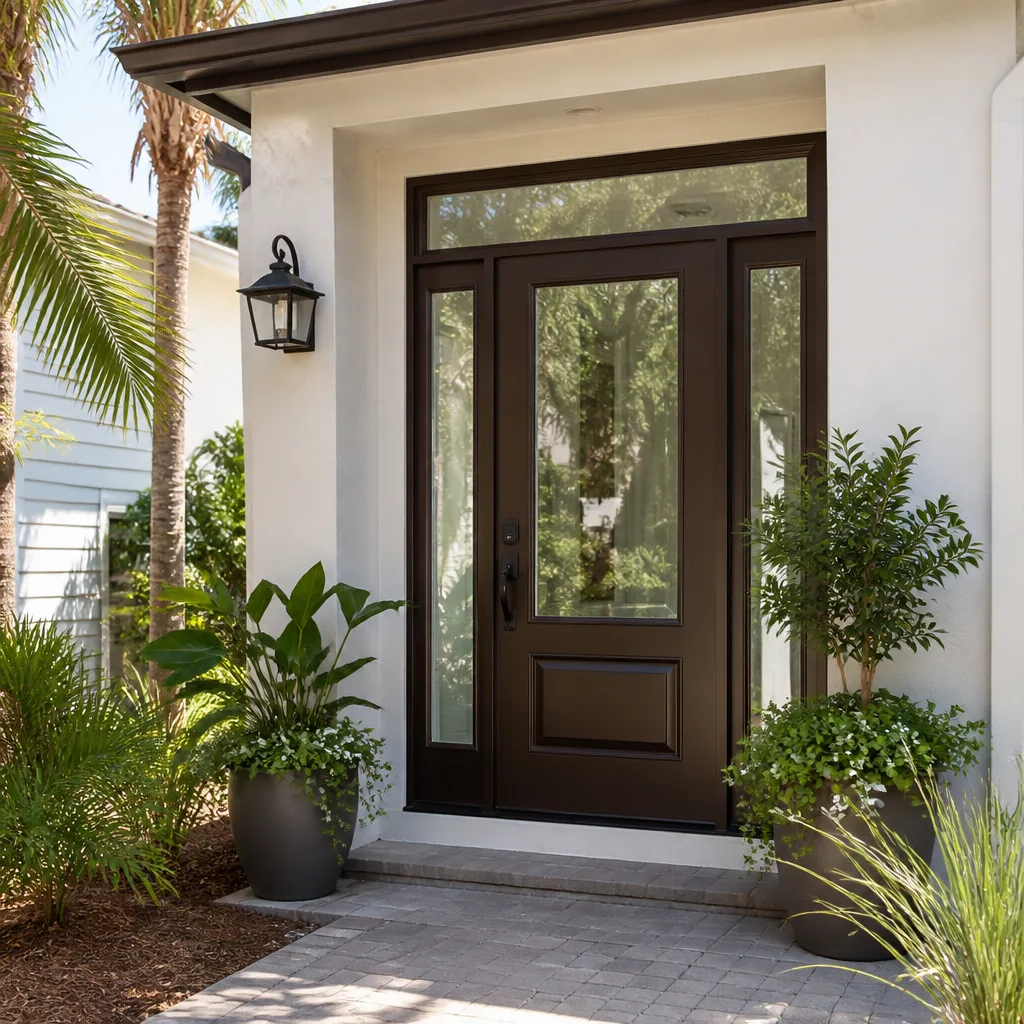
- Finish: The wood or composite finish on the entry is the first line of defense. This is the door where a $12 caulk-or-paint job beats a $1,400 replacement.
Every one of these inspections takes about five minutes per opening. If you’ve got 15 windows and two doors, that’s an hour or so twice a year. That’s the whole maintenance case.
Testing Weatherstripping Without Special Tools
Weatherstripping is the first thing to go in West Covina’s climate, and you don’t need any special gear to test it. You need a dollar bill, a flashlight, and a little patience. The test tells you whether the gasket is actually sealing, which is the difference between a “fine” window and one you’re losing money on.
Here are the practical tests:
- The dollar bill test: With the window or door closed, insert a dollar bill between the sash and frame. Try to pull it out. If it slides out with no drag, the gasket has lost compression and needs replacing. Test at least three points on each side (top, middle, bottom).
- The flashlight test: From a dark room, run a flashlight along the frame edges from outside. Any visible light tells you air is getting in. Do this at dusk or with interior lights off.
- The back-of-hand test: On a windy day, hold the back of your hand near the edges of a closed window or door. Cool air moving over your hand means the seal is open.
- The visual inspection: Weatherstripping that’s cracked, flaking, compressed flat, or missing is done. Kerf-style (the kind that fits into a groove) is often the easiest to replace. Foam tape weatherstripping has to be fully replaced when it’s compressed.
How often does weatherstripping actually need replacing? In a mild climate, every five to seven years. In West Covina, with our heat and dry air, we see it compressed down at three to five years, often faster on doors that get sun at the entry. If you’re testing yearly and replacing as needed, you never get to the compressed-to-nothing phase.
While you’re looking at weatherstripping, look at the exterior caulk joints too. The two do related work: weatherstripping seals the moving parts, caulk seals the stationary joints. If you find the caulking is failing across a large part of the exterior, it’s worth getting an estimate for a professional job. It’s part of a broader window and door program, the same one we’d include in a Home Additions & ADU in West Covina build. Existing homes get the same attention to detail.
Hardware Maintenance: What to Lubricate and What Ruins It
Hardware maintenance is where a lot of West Covina homeowners make the worst mistake: they grab the can of WD-40 from the garage shelf and spray the sliding door track. That single action will ruin vinyl tracks and damage many hardware components. WD-40 is a solvent and light lubricant designed for displacing water, not for long-term lubrication of moving parts. On vinyl tracks, it can attack the plastic and attract dust that then grinds the rollers. On locks, it dries to a sticky film that collects debris and seizes the pins.
Here’s the correct approach for each type of hardware:
- Window cranks and casement operators: Use a light silicone spray or a dry-film PTFE lubricant. Apply to the gear and operator arm twice a year. Never use grease, which collects grit.
- Hinges (doors and casement windows): A drop of light machine oil on door hinges annually works. For window hinges, use a dry lubricant to avoid dust attraction. Check hinge screws with a screwdriver once a year and tighten any loose ones.
- Sliding tracks and rollers: Clean first, then apply a dry-film silicone on the roller assembly only. Do not lubricate the track surface itself; lubricant attracts dust and the track will be worse next month.
- Locksets and dead bolts: Graphite powder or a dry-film lubricant only. Apply once a year.
- Entry door hinges: Light oil works here because entry hinges aren’t exposed to as much grit as a slider track. Two to three drops per hinge annually.
- Door closers: Don’t add lubricant unless the manufacturer says so. Most closers are sealed units.
This is where brands and build quality actually show up. High-end hardware on Andersen or Marvin products is engineered to take this level of maintenance and last. Cheap hardware wears faster and often doesn’t respond well to lubrication because the components are plastic. In our experience, the hardware you don’t have to think about 10 years down the line was the hardware that came with a quality window in the first place.
If you’re already planning a larger project (a kitchen that will need new windows, a new build that needs doors), getting the specifications right up front saves you years of maintenance headaches. Same goes for exterior durability questions, like whether that privacy fence will hold up better than your window frames. All of these connect to a broader Fence Installation in West Covina and exterior program if you’re upgrading the outdoor envelope.
The Annual IGU Seal Check That Saves Your Frames
Here’s the check almost every homeowner skips, and it’s the one that saves you the most money. IGU stands for insulated glass unit: the double- or triple-pane sealed assembly inside the window frame. The seal between the panes holds a specific gas (usually argon) and keeps moisture out. When that seal fails, moisture gets in, condensation forms inside the glass (not on it), and the whole unit loses efficiency. If it goes long enough, the trapped moisture can affect the frame and the surrounding wood or wall.
Check for a failed IGU seal at least once a year, ideally on a cool morning when temperature differences are most obvious. Here’s what to look for:
- Fog or haze between the panes. Any fog, condensation, or film that appears inside the glass is a seal failure. Not the same as condensation on the inside face of the glass, which is a humidity issue in the room.
- Water droplets or streaks inside the unit. This is the advanced stage of a failed seal.
- A visible “rainbow” or metallic sheen. Often the low-E coating breaking down, which is a related issue.
- Condensation pattern that doesn’t clear. Surface condensation dries. Inside-the-glass condensation doesn’t.
- Window that feels noticeably cooler or warmer near the glass. A quick thermal touch test after a hot day reveals a failed unit sometimes.
A failed seal on a small double-hung unit might run $200 to $450 to replace the glass only, keeping the frame. Wait five years and the moisture works into the frame, and now you’re looking at $600 to $1,200 per window or more for a full unit replacement. Multiply that across a house and the case is obvious.
The cost math for West Covina replacement windows generally runs $500 to $1,400 per unit for standard sizes, all-in, depending on frame material and brand tier. Premium brands like Andersen and Marvin sit at the upper end. We’ve also seen that window replacement is a common addition during larger envelope work, and the same attention to detail applies when upgrading driveways to match the new exterior. If you’re already planning envelope upgrades, consider a Driveway & Pavers in West Covina project at the same time to unify the whole exterior look.
If you’re buying windows or doors, ask how the IGU seal is warranted. Most quality brands (CertainTeed and Owens Corning window products included) carry a multi-year seal warranty. That’s a material signal, and it’s why we specify brands we trust.
Common Mistakes to Avoid

These are the ones we see repeatedly across West Covina homes, and each one turns a small fix into a bigger one:
- Caulking over old, cracked caulk. The new caulk won’t bond to the old, so it lifts within a season and the joint looks fine while it’s actually failing. Cut it out first, then apply fresh sealant.
- Spraying WD-40 on vinyl tracks or locks. This is the most common. It attracts dust, can attack certain plastics, and doesn’t actually lubricate long-term. Use dry-film silicone or graphite instead.
- Ignoring IGU fog until the frame is affected. A failed unit is a $200 to $450 fix. A failed unit plus a rotted frame is $600 to $1,200 or more. Waiting a few years to “get around to it” multiplies the cost.
- Skipping the fall weatherstripping check before Santa Ana winds. A door loses its seal during a wind event and the homeowner doesn’t notice until water damage shows up inside. Two minutes in October prevents that.
- Pressure-washing windows and door frames. High-pressure water drives moisture behind the frame and into the caulk joints. A gentle spray from a hose is fine. Pressure washing windows directly is a bad idea.
- Painting over weatherstripping. Paint on weatherstripping creates an uneven seal and looks sloppy. Mask or remove it before painting.
- Replacing a weatherstrip seal on a French door without checking alignment first. If the doors aren’t aligned, a new seal won’t fix the draft. Realign first, then seal.
Each of these is a manageable fix if you catch it early. The common thread is that maintenance shortcuts cost more than the maintenance itself.
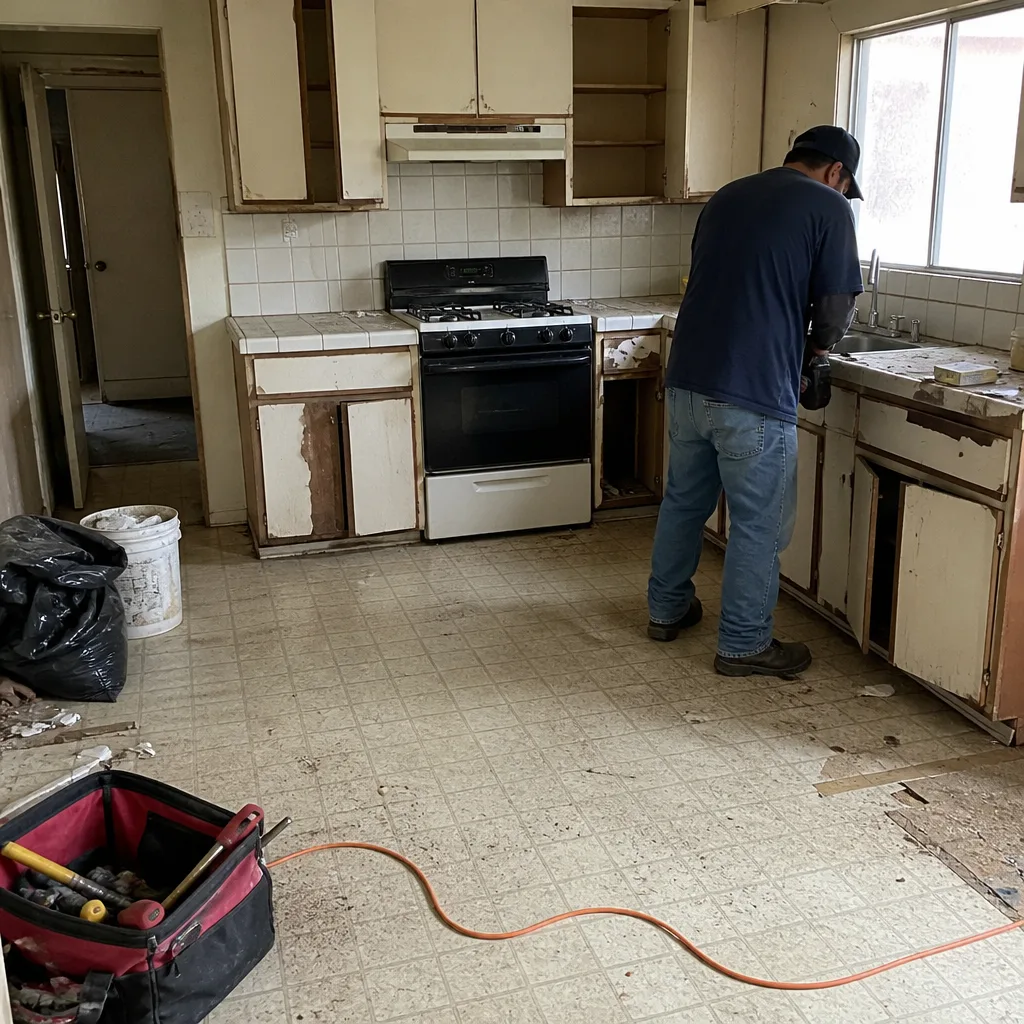
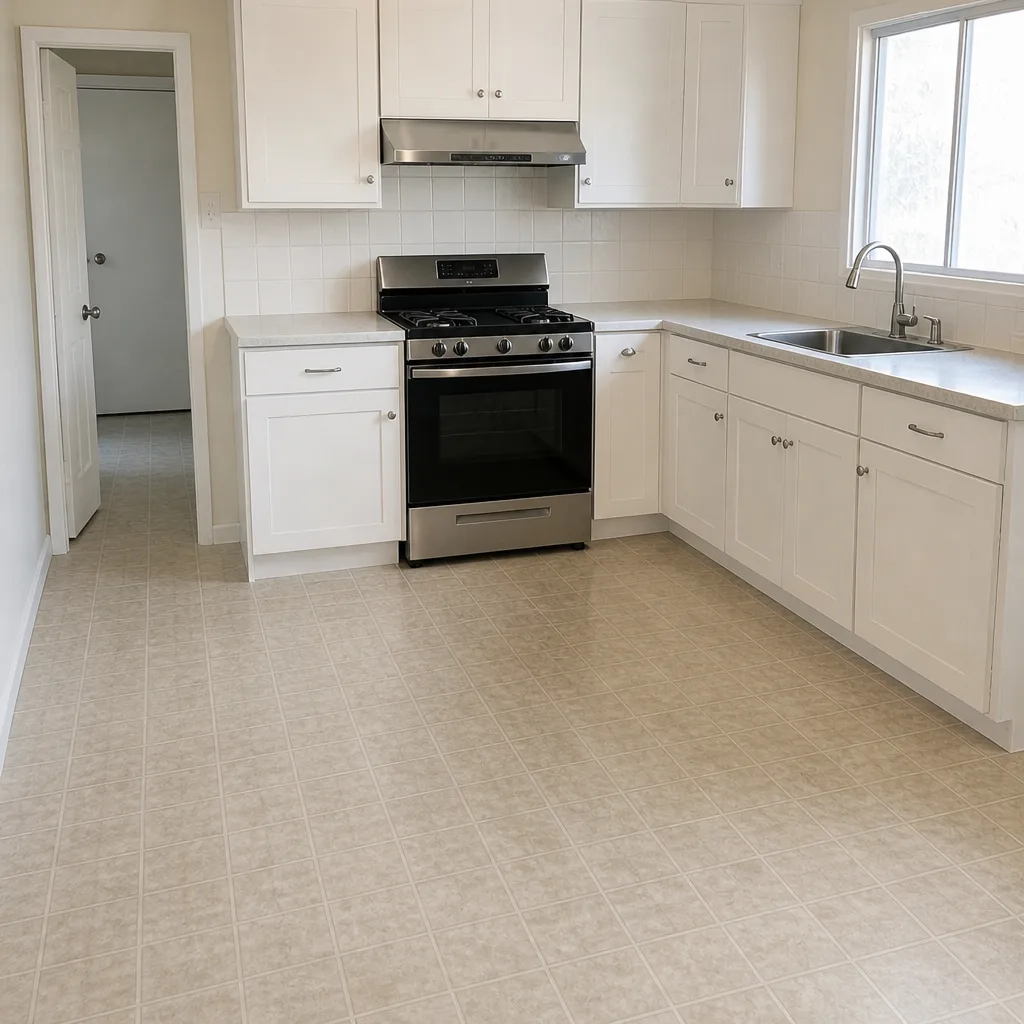
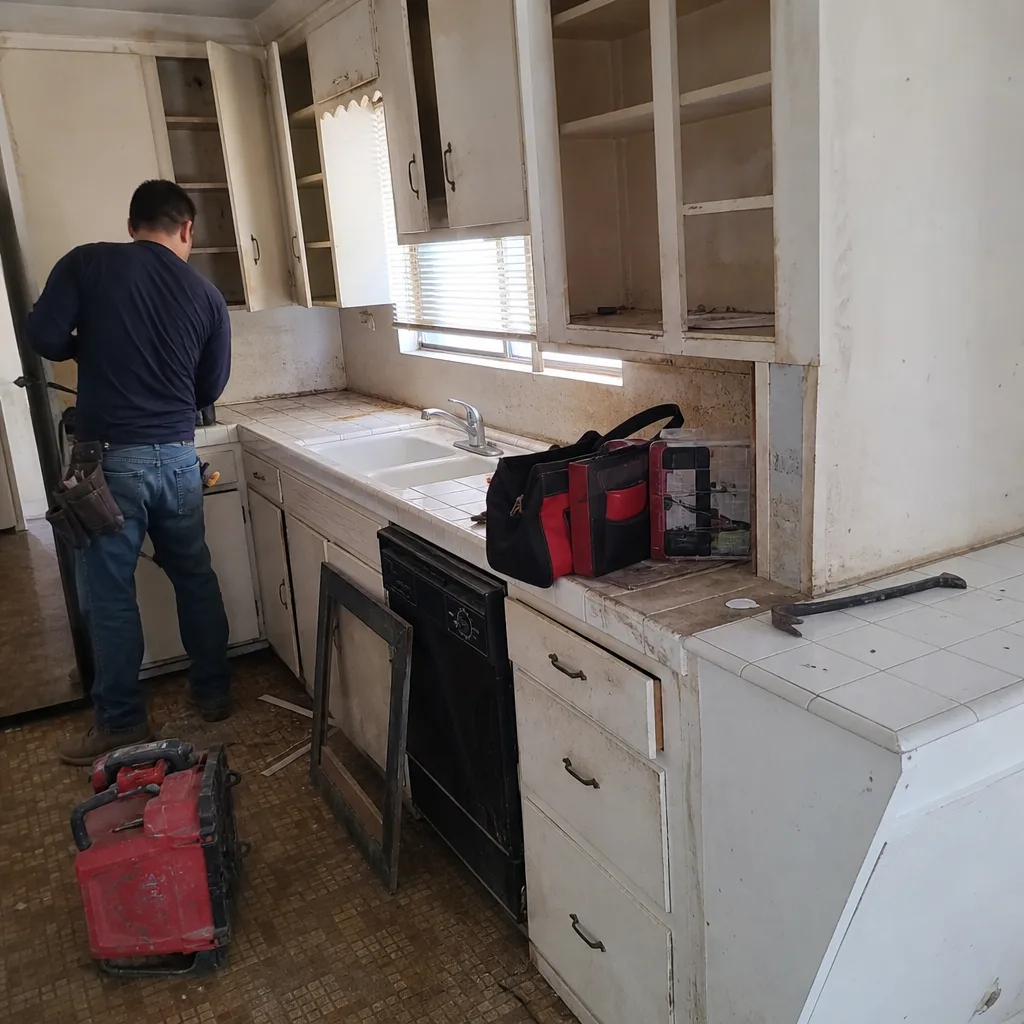
See the difference
 Before
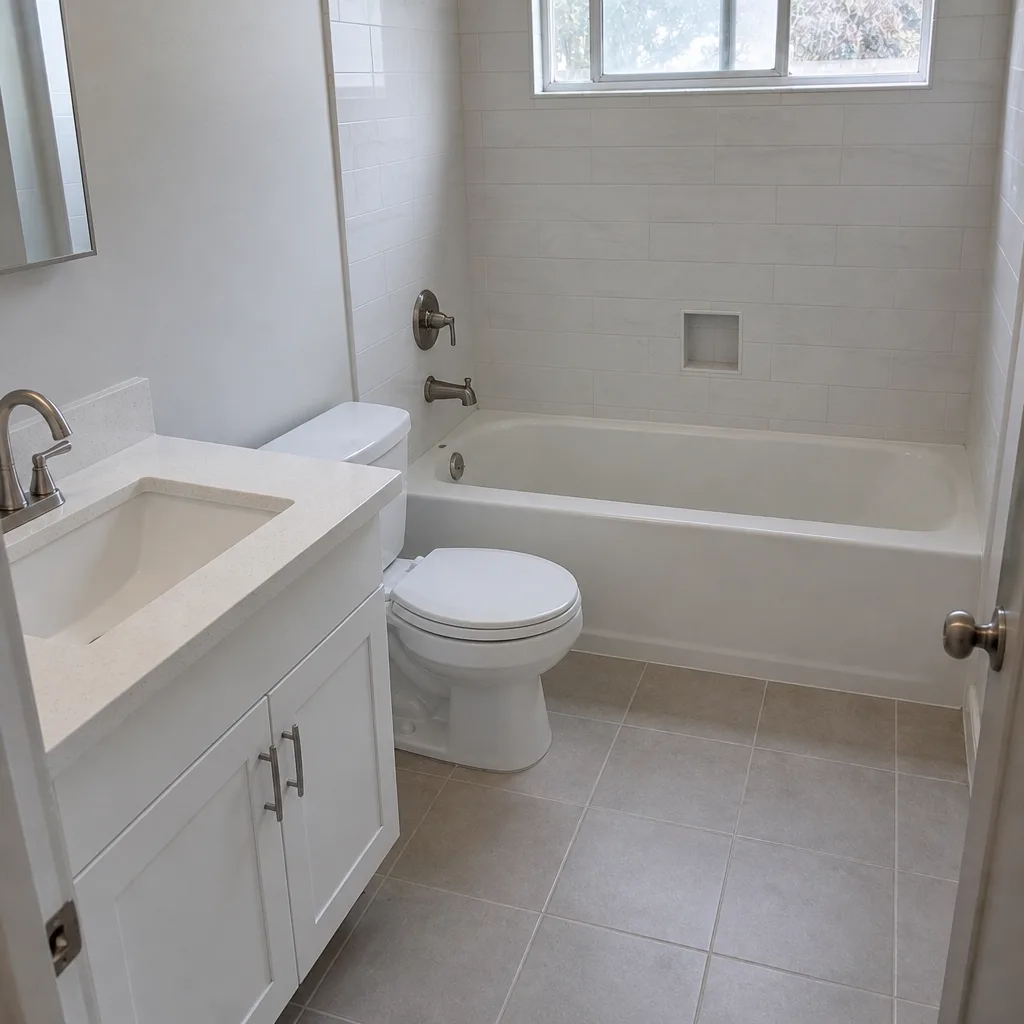 After
 Before
 After
 Before
 After
When to Call a Professional
Most of the schedule in this guide is homeowner work: inspect, caulk, lubricate, clean, replace weatherstripping. The line where you stop and call a professional is when the problem has moved from the surface into the assembly. Specific scenarios that warrant a call:
- Soft or spongy wood at any frame. Once rot is present, you can’t fix it with caulk. It needs to be cut out and replaced.
- Failed IGU seals on multiple windows. Replacing glass in a handful of units is a job for a glass and window specialist.
- A door or French door that no longer closes and latches cleanly. Alignment issues need hinge adjustments, strike adjustments, or in some cases re-framing.
- Water intrusion at a sill or threshold after a rain. Water is getting behind the assembly, and the source has to be found and repaired before more damage occurs.
- A window that’s hard to open and close across the whole house. Frame settling, balance failure, or a structural issue. Get it inspected before the damage spreads.
Groundwork Construction Co. of West Covina offers free estimates in West Covina and surrounding areas. Every estimate is a no-hassle upfront price, the number you see is the number you pay, and our work is covered by the 730-Day Done Right Promise. Call (844) 662-2335 to schedule yours.
Frequently Asked Questions
Aim for a light inspection twice a year, in spring and fall, with a full reseal every two years. Hardware lubrication happens twice a year; weatherstripping replacement generally lands every three to five years in West Covina’s heat and dry air. That’s the whole schedule. Call (844) 662-2335 for a free inspection estimate if you’re not sure where your windows and doors stand today.
Check the exterior caulk joints and the exterior wood every spring. West Covina’s heat and sun accelerate caulk aging, and the caulk joint is the first line of defense against water damage to the frame. In our experience, caulk is the cheapest defense and the most overlooked. The spring reseal is the highest-value maintenance item on this entire list.
Yes, and it’s the core of the maintenance case. A $600 window frame that develops rot through an unsealed caulk joint justifies a $1,400 or more replacement. A $12 tube of exterior sealant, applied every two years, protects the frame and the seal. The math isn’t subtle when you price the alternative. Call (844) 662-2335 if you want a free estimate on a full window resealing or on window replacement.
Sliding doors need track cleaning twice a year and dry-silicone lubrication on the rollers only. Never oil the track surface itself; oil attracts dust and grime that grinds the roller. West Covina’s dry, dusty summers make this even more important than in more humid climates. Clean, dry tracks and dry-silicone rollers are the routine.
Look for fog or moisture between the panes. That’s the classic sign of a failed IGU seal. It’s different from condensation on the inside face of the glass, which is a room-humidity issue. Fog inside the unit means the seal is broken and the gas fill is gone. Get it looked at before moisture damages the frame. Call (844) 662-2335 for a free estimate on replacement glass or full window replacement.
Stop caulking over it and get it inspected. Soft wood means moisture has been getting into the frame long enough to break down the material, and caulk won’t fix that. The fix is either a partial frame repair or a full window replacement, depending on how far the rot extends. In West Covina’s heat, soft wood dries and hides the problem temporarily, so a poke test at the bottom corners of every frame is worth doing every spring.
We handle window and door projects ranging from full replacement to complete resealing and hardware repair. Every project is covered by our 730-Day Done Right Promise, and we only work with brand partners we trust, including Andersen and Marvin for windows. Requests for repair-only maintenance are handled on a case-by-case basis. Call (844) 662-2335 to schedule a free estimate.
The Bottom Line
Windows and doors don’t fail dramatically. They fail quietly, one skipped spring at a time, and the bill always lands on the replacement side of the ledger. A twice-a-year inspection, a two-year reseal cycle, a hardware lubrication routine that avoids WD-40, and an annual IGU fog check together represent maybe four to six hours of homeowner time a year. That routine protects a set of assemblies that would cost thousands to replace across a typical West Covina home. Do the schedule, get the small problems fixed early, and call a professional when wood is soft or seals have failed. It’s the cheapest window and door work you’ll ever do.
If you’re planning window replacement, door replacement, or a larger envelope project, start with a free estimate. Groundwork Construction Co. of West Covina has been serving local communities since 2014, and our technicians bring up to 12 years of experience to every job. We answer the phone with a live person, 24/7, our technicians are background-checked and arrive in uniform, and we back every project with the 730-Day Done Right Promise. Call (844) 662-2335 for a free estimate, or visit our home page at Groundwork Construction Co. of West Covina home to learn more about everything we do. From foundation to finish line, we’ll make sure the work is built to last, backed in writing.
Written by the team at Groundwork Construction Co. of West Covina.